Month: September 2025

  • From Data Overload to Strategic Insight: Driving Business Transformation with AI-Driven Decision Platforms

    From Data Overload to Strategic Insight: Driving Business Transformation with AI-Driven Decision Platforms

    Modern businesses collect more data than ever before. Customer activity, financial performance, operations, marketing, supply chains, service requests, employee workflows, and digital systems all generate large amounts of information every day.

    But more data does not automatically lead to better decisions. Many organizations have dashboards, reports, spreadsheets, analytics tools, and business systems, yet still struggle to understand what matters most and what action should be taken.

    This is data overload.

    To create business value, companies need to move beyond collecting information. They need to turn data into insight, insight into action, and action into measurable transformation.

    What Data Overload Means

    Data overload happens when an organization has access to more information than it can effectively understand, prioritize, or use.

    This often happens when data is spread across:

    • Finance systems
    • CRM platforms
    • ERP systems
    • Project trackers
    • Service management tools
    • HR systems
    • Procurement systems
    • Spreadsheets
    • Department-level reports
    • Manual presentations

    The problem is not always a lack of data. In many cases, the problem is too much disconnected data without a clear execution structure.

    Why Data Overload Becomes a Problem

    When data is scattered across teams and systems, leaders may struggle to get a clear view of business performance. Different departments may report different numbers, use different formats, or define success differently.

    This can create several problems:

    • Slow decision-making
    • Conflicting reports
    • Unclear priorities
    • Weak ownership of follow-up actions
    • Missed risks and delays
    • Poor visibility into transformation progress
    • Manual reporting effort
    • Difficulty connecting data with business outcomes

    As a result, teams may spend more time preparing reports than acting on the insights inside them.

    From Insight to Action

    Data becomes valuable only when it leads to action.

    For example, a report may show rising costs, declining service performance, delayed projects, supplier issues, or missed operational targets. But identifying the problem is only the first step.

    The organization still needs to answer:

    • What action should be taken?
    • Who owns the action?
    • What timeline applies?
    • What financial impact is expected?
    • What risks need to be monitored?
    • What approvals are required?
    • How will progress be reported?
    • How will success be measured?

    Without this structure, insights may remain inside dashboards, reports, and presentations without creating real business change.

    Role in Business Transformation

    Business transformation depends on the ability to make better decisions and execute them consistently. Data can help organizations understand where change is needed, but transformation only happens when teams act on that information.

    Data-driven transformation can support areas such as:

    Customer experience: Understanding customer feedback, service issues, buying behavior, and improvement opportunities.

    Operations: Identifying delays, inefficiencies, waste, bottlenecks, and productivity gaps.

    Finance: Reviewing cost trends, budget risks, profitability drivers, savings opportunities, and investment priorities.

    IT and service management: Tracking service performance, incidents, delays, risks, and improvement actions.

    Supply chain: Understanding supplier risks, delivery performance, inventory challenges, and logistics issues.

    Workforce planning: Reviewing productivity, capacity, skills, workload, and resource allocation.

    In each case, the real value comes from converting insight into structured initiatives with owners, milestones, risks, approvals, and measurable outcomes.

    Common Barriers

    Many organizations struggle to turn business data into transformation because the execution layer is weak.

    Common barriers include:

    Data silos: Teams work from different systems, reports, and sources of truth.

    Manual reporting: Leadership updates are created through spreadsheets and presentations instead of live execution visibility.

    Unclear ownership: Insights are discussed, but no one is clearly responsible for follow-up.

    Too many priorities: Teams identify many issues but do not know which initiatives matter most.

    Weak governance: Decisions, approvals, and escalations happen informally.

    Poor tracking: Actions are not connected to milestones, financial impact, risks, or outcomes.

    Limited visibility: Leadership cannot easily see what is moving, what is delayed, and what value is being delivered.

    How to Turn Data into Transformation

    To make data useful, organizations need a structured approach that connects insight with execution.

    1. Define business goals: Start with clear outcomes such as cost reduction, service improvement, operational efficiency, revenue growth, risk reduction, or transformation progress.
    2. Identify useful data: Focus on the data that supports decisions, not every available report.
    3. Prioritize actions: Decide which insights require action and which can simply be monitored.
    4. Assign owners: Every action should have a responsible person or team.
    5. Set milestones: Break transformation work into clear steps, deadlines, and review points.
    6. Track risks and dependencies: Monitor the issues that may delay progress or reduce impact.
    7. Connect actions to outcomes: Link initiatives to financial impact, service improvement, operational performance, or strategic goals.
    8. Report clearly: Leadership should have a consistent view of progress, risks, delays, and results.

    How Cataligent Supports Execution

    Turning data into transformation requires more than reports and dashboards. Organizations need a structured way to manage the actions that come from business insights.

    Cataligent supports this execution layer through CAT4. The platform helps organizations manage transformation initiatives, owners, milestones, workflows, approvals, risks, dependencies, financial impact, dashboards, and executive reporting.

    For example, if business data highlights a cost-saving opportunity, service issue, operational bottleneck, or transformation priority, CAT4 can help teams convert that insight into a tracked initiative. Teams can assign owners, define milestones, monitor risks, manage approvals, track progress, and report outcomes to leadership.

    Transformation needCommon challengeHow Cataligent can help
    Turning insight into actionReports highlight issues, but follow-up is not trackedHelps structure initiatives, owners, milestones, and workflows
    Transformation executionMultiple teams work on different priorities without one clear viewProvides visibility into progress, risks, dependencies, and outcomes
    GovernanceDecisions and approvals are handled through meetings or emailsSupports workflows, approvals, review steps, and accountability
    Financial impact trackingExpected value is not consistently compared with actual resultsTracks planned, forecast, and actual impact where relevant
    Leadership reportingUpdates are manually prepared from different sourcesSupports dashboards and management-ready reports
    Cross-functional coordinationBusiness, IT, finance, and operations teams work separatelyHelps connect responsibilities, deadlines, actions, and reporting

    Cataligent does not replace BI tools, ERP systems, data platforms, or analytics software. Instead, it helps organizations manage the execution and governance layer around transformation initiatives.

    This is especially useful when data insights support Business Transformation, Cost-Saving Programs, IT Service Management, or Multi-Project Management.

    In simple terms, data can show where change is needed. Cataligent helps organizations manage the work required to turn that change into measurable execution.

    Why Execution Matters

    Many transformation efforts fail because organizations focus heavily on strategy, reporting, or technology, but do not create enough structure around execution.

    Successful transformation requires:

    • Clear priorities
    • Defined initiatives
    • Responsible owners
    • Milestone tracking
    • Risk visibility
    • Approval workflows
    • Financial impact tracking
    • Leadership reporting
    • Continuous follow-up

    Without these elements, insights may remain in dashboards and presentations instead of creating real business change.

    Conclusion

    Data overload is a common challenge for modern organizations. Businesses often have more reports, dashboards, and systems than ever before, but still struggle to turn information into clear action.

    The key is not simply collecting more data. The key is connecting the right insights with structured execution.

    Cataligent supports this execution layer through CAT4 by helping organizations manage transformation initiatives with clearer ownership, accountability, visibility, and reporting.

    Business data can show where change is needed. Cataligent helps organizations manage the work required to turn that change into measurable transformation.
  • Business Transformation in the Age of AI: Redefining How Enterprises Grow

    Business Transformation in the Age of AI: Redefining How Enterprises Grow

    Business transformation is no longer about upgrading systems or digitizing processes. In today’s environment, it’s about reimagining how an organization creates value, adapts to change, and builds resilience for the future. With Artificial Intelligence (AI) reshaping industries at lightning speed, companies that treat transformation as a one-off initiative risk falling behind. True transformation must be continuous, holistic, and deeply embedded into the DNA of the business.

    The Shifting Landscape of Business Transformation

    Every organization faces unprecedented pressures: volatile markets, rising costs, customer expectations for hyper-personalization, and disruptive technologies. Traditional transformation—focused on IT upgrades or operational efficiency alone—no longer delivers enough. Modern transformation blends strategy, culture, technology, and execution into a single, agile framework.

    AI plays a pivotal role in this shift. It enables businesses to make decisions at scale, automate repetitive tasks, and uncover opportunities that human analysis alone cannot. However, AI is just one piece of the puzzle. To succeed, enterprises must rethink leadership, planning, and execution models alongside technology adoption.

    Why Business Transformation Is Non-Negotiable Today

    • Competitive Pressure: Startups are born digital, while legacy players must reinvent themselves to remain relevant. Traditional advantages like brand strength or scale are no longer enough when smaller, tech-native competitors can pivot faster.
    • Cost Efficiency: Businesses can’t simply cut costs; they need smarter ways to reinvest savings into innovation. Cost optimization through automation, outsourcing, and AI enables organizations to reduce overhead while freeing resources for strategic initiatives.
    • Customer Experience: Digital-first customers demand fast, personalized, and seamless interactions. A clunky process or delayed service can push them straight to competitors. Transformation ensures businesses are designed around customer needs, not outdated systems.
    • Sustainability and Compliance: Regulatory and societal pressures make sustainable business practices an essential part of transformation. Companies that ignore this risk penalties, reputational damage, and losing consumer trust.

    The Role of AI in Modern Transformation

    AI doesn’t replace transformation—it accelerates it. Enterprises leveraging AI strategically can:

    • Optimize Operations: Predictive analytics streamline supply chains, reduce downtime, and improve efficiency. For example, manufacturers can anticipate equipment failures before they happen, saving millions in lost productivity.
    • Enhance Customer Journeys: AI-driven personalization makes every interaction meaningful, improving satisfaction and loyalty. E-commerce companies, for instance, can recommend products tailored to each shopper’s preferences and behaviors.
    • Support Smarter Decisions: Leaders gain data-backed insights, reducing guesswork and enabling faster pivots. Instead of waiting weeks for market analysis, executives can make near-real-time decisions.
    • Scale Without Proportional Cost: Automation allows organizations to expand while keeping costs lean. A finance team using AI-powered reconciliations, for example, can handle ten times more volume without needing ten times more people.

    But AI adoption must be purposeful. Deploying it without a broader transformation strategy leads to fragmented initiatives with limited impact.

    Key Pillars of Successful Business Transformation

    1. Strategy with a Future-Ready Vision

    Transformation begins with clarity of purpose. Organizations must define not just what they want to achieve but why. Today’s strategies need to anticipate AI disruption, sustainability goals, and workforce evolution, aligning them with long-term business vision.

    Businesses should answer: Where do we want to be in five years? What new markets do we want to serve? How can AI help us differentiate? By grounding transformation in purpose, organizations ensure every decision supports broader ambitions instead of piecemeal fixes.

    2. Leadership That Inspires Change

    Technology alone cannot drive transformation—people do. Leaders must act as change champions, communicating openly, empowering teams, and modeling the behaviors they expect. In an age of hybrid work, visible and authentic leadership builds trust and accelerates adoption.

    For instance, when leaders adopt new collaboration tools themselves instead of delegating, they show employees that transformation is non-negotiable. Leaders who celebrate quick wins and acknowledge challenges build confidence across the workforce.

    3. Agile and Data-Driven Planning

    Rigid, long-term roadmaps are no longer practical. Planning today requires agility, guided by real-time analytics and scenario modeling. Businesses must identify high-impact areas for transformation—like customer experience or operations—while leaving room to adapt as new challenges arise.

    Instead of creating a five-year plan set in stone, organizations should embrace rolling forecasts and iterative planning cycles. By continuously reviewing data, businesses can pivot strategies in response to market shifts, technological advances, or new risks.

    4. Strong Program Management

    Transformation involves multiple moving parts. Establishing a centralized program management framework ensures alignment, governance, and accountability. Modern program management integrates agility with discipline, enabling teams to move fast without losing control.

    Program management offices (PMOs) should act as nerve centers—tracking progress, resolving conflicts, and keeping everyone aligned with strategic objectives. Without this structure, organizations risk fragmented efforts, wasted resources, and inconsistent results.

    5. Resources That Empower Change

    The right resources—financial, technological, and human—are non-negotiable. Investment in AI, automation, and cloud is vital, but so is reskilling the workforce. When employees see transformation as an opportunity, adoption becomes smoother and resistance diminishes.

    Businesses should prioritize funding projects with measurable ROI while eliminating redundancies. At the same time, training programs should prepare employees for digital roles, ensuring they can thrive alongside AI rather than feel threatened by it.

    6. Execution with Agility

    Execution isn’t a single rollout; it’s an ongoing process. Enterprises that adopt agile methodologies can pilot, test, refine, and scale quickly. Transparency and communication during execution keep momentum strong and stakeholders aligned.

    Instead of betting everything on a big-bang launch, organizations should embrace smaller sprints. These allow for quick feedback loops, course correction, and minimized risk. Agile execution ensures that transformation stays on track—even when unexpected challenges arise.

    7. Integration for Long-Term Impact

    Transformation must become the “new normal.” Integrating new processes, technologies, and cultural shifts into daily operations ensures the change sticks. Continuous improvement loops and measurement frameworks help organizations sustain momentum beyond initial success.

    This means embedding new practices into KPIs, performance reviews, and company culture. By doing so, transformation evolves from a temporary project into an ongoing capability—one that helps the business adapt continuously to new challenges.

    Cataligent’s Role in Business Transformation

    At Cataligent, transformation is not just a project—it’s a partnership. Cataligent helps organizations move beyond incremental change and embrace holistic, future-ready transformation. Their services cover every stage of the journey:

    • Strategic Transformation Roadmapping: Designing blueprints that align IT, business goals, and cultural evolution.
    • Leadership Enablement: Coaching executives to become transformation champions who drive adoption.
    • Agile Planning & Scoping: Using data-driven insights to prioritize initiatives that deliver measurable impact.
    • Program Management Expertise: Building governance frameworks that balance agility with accountability.
    • Resource Optimization: Ensuring businesses deploy the right mix of technology, financial investment, and talent development.
    • Agile Execution Support: Guiding organizations through iterative rollouts that minimize risks and maximize ROI.
    • Sustainable Integration: Embedding transformation into culture, processes, and systems for enduring success.

    Conclusion

    Business transformation in the age of AI is about more than adopting new tools—it’s about redefining how enterprises grow, adapt, and sustain success. Companies that view transformation as a continuous journey, not a one-off event, will outpace competitors, delight customers, and future-proof their organizations.

    With Cataligent as a partner, businesses don’t just transform; they thrive in disruption, achieving measurable growth today while building resilience for tomorrow.

  • The 7 Phases of Business Transformation: A Complete Guide for Modern Enterprises

    The 7 Phases of Business Transformation: A Complete Guide for Modern Enterprises

    Business transformation is more than a corporate buzzword—it’s a structured approach to rethinking how organizations operate, deliver value, and remain competitive in an environment of constant change. It requires more than just technology upgrades or a few process improvements. True transformation touches strategy, leadership, operations, resources, and culture, ensuring the business adapts to shifting customer expectations, technological advancements, and market dynamics.

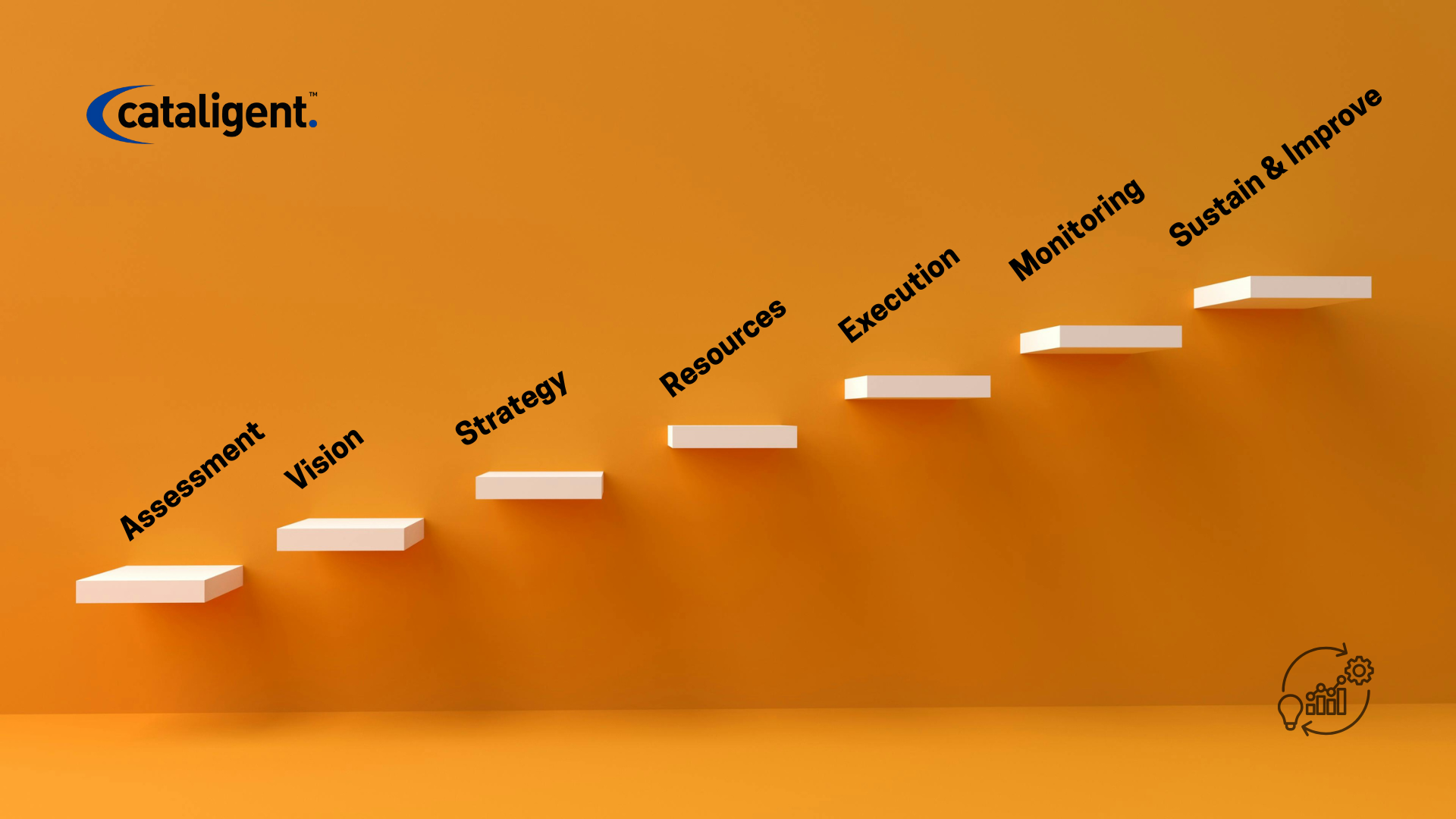
    To manage this journey effectively, businesses can follow seven essential phases of transformation. Each phase builds on the last, offering a clear roadmap to turn disruption into growth.


    Phase 1: Strategy – Laying the Foundation for Change

    A strong transformation begins with clarity of purpose. Strategy defines the direction, scope, and goals of the journey.

    • Clarify the “Why”: Transformation cannot succeed without a compelling reason. Whether it’s digital disruption, declining efficiency, or new growth opportunities, leaders must articulate why change is needed.
    • Vision and Objectives: Define outcomes such as cost reduction, market expansion, or customer experience enhancement. These objectives should align with the organization’s long-term vision.
    • Current State Assessment: Businesses must evaluate their current processes, technology stack, and organizational strengths to identify gaps. For example, a company may realize its legacy IT systems hinder scalability.
    • Outcome: A well-defined strategy acts as a compass, ensuring every action taken supports overarching business goals.

    Example: A retail company undergoing e-commerce disruption creates a strategy to digitize its supply chain and customer engagement platforms, aligning with its mission to provide convenience and value.


    Phase 2: Leadership – Driving Change from the Top

    Leadership is the engine of transformation. Without strong champions, even the best strategies will stall.

    • Appoint Transformation Leaders: Identify individuals or teams responsible for driving the initiative, ensuring accountability.
    • Inspire and Communicate: Leaders must share the transformation vision clearly and consistently across the organization to reduce resistance and build excitement.
    • Model Change Behavior: Employees take cues from leadership. If leaders embrace new tools, processes, and values, teams are more likely to follow.
    • Outcome: Strong leadership fosters alignment, keeps teams motivated, and ensures transformation doesn’t lose momentum when challenges arise.

    Example: A financial services firm appoints a Chief Transformation Officer to lead digital banking initiatives, ensuring executive sponsorship at every stage.


    Phase 3: Planning and Scoping – Charting the Path Forward

    Planning ensures transformation moves from vision to actionable steps.

    • SWOT Analysis: Conduct an in-depth analysis of strengths, weaknesses, opportunities, and threats. This reveals what needs immediate attention.
    • Define Boundaries: Clarify which areas are in scope. Will the transformation focus on IT systems, business models, or cultural shifts—or all three?
    • Timelines and Milestones: Break the journey into phases with achievable deadlines. This prevents burnout and enables quick wins.
    • Resource Allocation: Assign budgets, teams, and tools based on scope. Planning without resourcing is a recipe for failure.
    • Outcome: Clear scoping avoids scope creep, helps stakeholders understand expectations, and sets the stage for smooth execution.

    Example: An automotive company planning to digitize its production floor sets clear boundaries: focus on supply chain automation first, then extend to customer experience later.


    Phase 4: Program Management – Orchestrating the Journey

    Business transformation involves many moving parts. Program management ensures harmony, accountability, and consistency.

    • Governance Structures: Establish frameworks for decision-making, escalation, and reporting.
    • Defined Roles: Assign responsibilities to departments, preventing duplication and confusion.
    • Progress Tracking: Use KPIs, dashboards, and regular reviews to measure success.
    • Cross-Functional Collaboration: Transformation impacts every department; program management fosters collaboration across silos.
    • Outcome: Program management keeps transformation structured, reducing risks of delays and cost overruns.

    Example: A healthcare provider implements a program management office (PMO) to oversee its electronic health record rollout, ensuring IT, compliance, and clinical staff remain aligned.


    Phase 5: Building Resources – Equipping for Success

    Resources are the fuel of transformation. Without adequate tools, talent, and capital, execution collapses.

    • Financial Resources: Secure budgets for technology, consulting, and training investments.
    • Human Resources: Upskill existing staff or hire new talent to fill capability gaps in data, analytics, or automation.
    • Technological Resources: Choose scalable platforms—cloud computing, AI, or automation—that enable agility.
    • Training Programs: Equip employees to adapt to new systems and processes, reducing resistance.
    • Outcome: Robust resourcing ensures the organization is prepared to carry transformation plans through execution and beyond.

    Example: A telecom company invests in cloud-based CRM platforms and reskills employees in data analytics to enhance customer service.


    Phase 6: Execution – Turning Plans into Action

    This is the phase where strategy and planning meet reality. Execution demands discipline, agility, and resilience.

    • Agile Methodologies: Instead of rigid, linear processes, adopt iterative methods that allow adjustments as challenges arise.
    • Communication is Key: Share progress updates widely to maintain transparency and trust.
    • Monitor in Real-Time: Use KPIs and dashboards to detect deviations early.
    • Adaptability: Be ready to pivot when obstacles appear; rigid execution can derail the initiative.
    • Outcome: Execution delivers tangible changes that move the organization closer to transformation goals.

    Example: A logistics firm rolling out a new route-optimization system tests it in one region first, refines based on feedback, and then scales globally.


    Phase 7: Integration – Embedding Change into the DNA

    The final step ensures transformation isn’t temporary but permanent and sustainable.

    • Measure Outcomes: Compare results against strategic goals to validate success.
    • Cultural Integration: Reinforce new values, behaviors, and practices so they become second nature.
    • Sustain Improvements: Establish continuous improvement processes to keep evolving and adapting.
    • Knowledge Transfer: Document lessons learned to guide future initiatives.
    • Outcome: Integration embeds transformation into everyday operations, ensuring the organization continues to benefit long after execution.

    Example: A global bank integrates digital lending tools into its operations and continuously refines them, making digital-first services its long-term norm.


    Why Following All Seven Phases Matters

    Skipping or rushing through any phase undermines the whole journey:

    • Without strategy, efforts lack clarity.
    • Without leadership, change loses momentum.
    • Without integration, transformation fades back into old habits.

    Together, these seven phases provide a structured, proven pathway to transformation that lasts.


    How Cataligent Accelerates Business Transformation

    At Cataligent, transformation isn’t just about implementing new systems—it’s about helping organizations rethink and rebuild their futures. Cataligent provides end-to-end expertise across all seven phases:

    • Strategic Roadmapping: Designing blueprints that align IT, business, and cultural goals.
    • Leadership Coaching: Empowering executives to champion and sustain change.
    • Comprehensive Planning: Mapping realistic scopes, budgets, and timelines.
    • Program Management Frameworks: Creating governance structures that ensure accountability.
    • Resource Empowerment: Equipping organizations with financial, human, and digital resources.
    • Agile Execution: Delivering measurable results while remaining adaptive to change.
    • Sustainable Integration: Embedding transformation into culture and systems for long-term success.

    With Cataligent’s expertise, organizations don’t just adapt—they thrive, becoming more resilient, efficient, and future-ready.


    Conclusion

    Business transformation is a structured journey requiring vision, discipline, and resilience. By following the seven phases—strategy, leadership, planning, program management, resource building, execution, and integration—organizations can turn disruption into opportunity.

    ★ Cataligent is the trusted partner that ensures these phases are not only executed but sustained. With Cataligent’s guidance, transformation becomes more than a project—it becomes a way of doing business, paving the way for growth, innovation, and enduring success. ★

  • Harnessing AI in ITSM: Revolutionizing IT Service Management

    Harnessing AI in ITSM: Revolutionizing IT Service Management

    Artificial Intelligence (AI) is no longer a futuristic concept—it’s transforming the way organizations manage IT services today. AI-powered ITSM enables companies to automate repetitive tasks, anticipate potential issues, and deliver faster, smarter, and more reliable IT support. By integrating AI into IT Service Management, organizations can shift from reactive problem-solving to proactive, predictive, and strategic IT operations.


    How AI Transforms ITSM Processes

    Intelligent Incident Management

    AI-driven incident management leverages machine learning and predictive analytics to detect potential outages or system failures before they impact users. AI can automatically categorize and prioritize incidents, assign them to the right technician, and even provide suggested solutions.

    • Key Benefits: Reduced downtime, faster resolution, minimized human error.
    • Real-World Example: A multinational bank implemented AI-driven monitoring tools that identified unusual server activity and automatically triggered alerts. This prevented a potential outage affecting hundreds of customers.

    Predictive Problem Management

    Through historical data analysis, AI can identify recurring issues and uncover root causes faster than manual processes. Predictive insights allow IT teams to prevent incidents from recurring and optimize system performance.

    • Key Benefits: Reduced recurring incidents, improved system reliability, enhanced productivity.
    • Real-World Example: An e-commerce company used AI analytics to pinpoint frequent checkout errors caused by outdated APIs. Resolving the root cause reduced incident tickets by 35% within three months.

    Automated Change Management

    AI enhances change management by simulating the impact of proposed changes across IT infrastructure. By predicting risks and dependencies, AI reduces disruptions and ensures smoother deployment of updates and patches.

    • Key Benefits: Minimized risk, faster implementation, compliance adherence.
    • Real-World Example: A software development firm applied AI modeling to predict the impact of a critical software patch. This proactive approach prevented downtime during peak usage hours.

    Smarter Service Desk Operations

    AI-powered chatbots and virtual assistants streamline service desk functions, handling routine queries and tasks automatically. This reduces the workload for human agents and improves response times for users.

    • Key Benefits: 24/7 support, consistent user experience, increased efficiency.
    • Real-World Example: A global logistics company deployed AI chatbots to handle 60% of common service requests, allowing IT staff to focus on complex issues and improving resolution times by 40%.

    Knowledge Management Optimization

    AI can analyze ticket trends and user queries to identify gaps in existing knowledge bases. It can automatically suggest updates or generate content to make self-service portals more effective.

    • Key Benefits: Improved knowledge accessibility, reduced repeat tickets, empowered employees.
    • Real-World Example: A telecom company implemented an AI-driven knowledge system that recommended articles to users based on previous queries, reducing repetitive tickets and improving self-service satisfaction scores.

    Predictive Analytics for Service Level Management

    AI enables predictive SLA monitoring, identifying potential service breaches before they occur. IT teams can take proactive steps to ensure SLA compliance and maintain customer satisfaction.

    • Key Benefits: Improved SLA adherence, proactive issue resolution, enhanced stakeholder confidence.
    • Real-World Example: An insurance company used AI-driven SLA monitoring to anticipate system load spikes, reallocating resources in real-time to maintain uptime during peak claim processing periods.

    Benefits of AI-Integrated ITSM

    1. Efficiency Gains: Automates repetitive IT tasks and accelerates incident resolution.
    2. Enhanced Accuracy: Reduces human errors in categorization, prioritization, and resolution.
    3. Proactive IT Management: Identifies and addresses issues before they escalate.
    4. Improved Employee and Customer Experience: Faster response times and accessible self-service support.
    5. Strategic Insights: Provides data-driven insights to optimize IT operations and resource allocation.

    Challenges and Considerations

    While AI offers tremendous benefits, successful integration into ITSM requires careful planning:

    • Data Quality: AI models rely on accurate, comprehensive historical data.
    • Employee Training: Staff must be trained to work alongside AI systems effectively.
    • Governance and Compliance: AI decisions must comply with organizational policies and regulatory requirements.
    • Continuous Monitoring: AI models need regular updates and monitoring to ensure accuracy.

    How Cataligent Drives AI-Powered ITSM Success

    Cataligent helps organizations unlock the full potential of AI within ITSM. Their AI-driven ITSM solutions combine strategic consulting, advanced technologies, and process optimization to create smarter, faster, and more reliable IT operations. Cataligent’s offerings include:

    • Predictive Analytics: Anticipate problems, prevent outages, and optimize service delivery.
    • Enhanced Knowledge Management: Use AI to dynamically update knowledge bases and provide relevant solutions.
    • Smart Service Desk Solutions: evaluates current workflows, ticketing processes, and performance metrics to identify areas for improvement
    • Six Sigma Integration: Cataligent also incorporates Six Sigma methodologies to continuously improve ITSM processes, ensuring measurable efficiency and quality enhancements.

    Conclusion: Integrating AI into ITSM is no longer optional for modern enterprises—it’s essential for achieving efficiency, resilience, and agility. By embracing AI-powered ITSM, organizations can redefine how IT supports and drives business growth, while leveraging predictive insights, automation, and process excellence for lasting competitive advantage with Cataligent.

  • ITSM Processes and Practices: Transforming IT into a Strategic Asset

    ITSM Processes and Practices: Transforming IT into a Strategic Asset

    IT Service Management (ITSM) is no longer just about reacting to problems or providing support. Modern ITSM is a strategic framework that aligns technology operations with business objectives, ensuring that IT is a driver of growth, efficiency, and customer satisfaction. By implementing structured ITSM processes, organizations can improve service delivery, reduce downtime, and enhance the overall IT experience for both employees and customers.


    Incident Management: Restoring Services Quickly and Efficiently

    An incident in ITSM refers to any unplanned disruption or outage of IT services. Incident management focuses on quick resolution, aiming to restore normal operations with minimal impact on business activities. Efficient incident management relies on clear protocols, automation, and proper communication to ensure that issues are resolved systematically.

    • Key Benefits: Reduces downtime, minimizes business disruption, enhances user satisfaction.
    • Best Practices: Implement automated ticketing, establish incident response teams, monitor recurring issues.

    For example, if a critical application goes down, the IT team can immediately follow a predefined incident management workflow to restore functionality, inform stakeholders, and prevent operational delays.


    Problem Management: Addressing Root Causes to Prevent Recurrence

    Problem management takes a proactive approach, focusing on identifying and eliminating the root causes behind recurring incidents. Unlike incident management, which addresses immediate disruptions, problem management ensures that the underlying issues are resolved to prevent future occurrences.

    • Key Benefits: Reduces repeated incidents, saves resources, enhances reliability of IT services.
    • Best Practices: Conduct root cause analysis, maintain a problem database, integrate problem management with incident management systems.

    For instance, if multiple users report login failures, problem management investigates whether the root cause is a network configuration error or software bug, enabling a permanent fix.


    Change Management: Safeguarding IT Operations During Transitions

    As businesses evolve, IT systems must adapt. Change management establishes structured procedures to handle updates, upgrades, or new implementations without causing disruption. By managing risk and maintaining compliance, change management ensures smooth transitions.

    • Key Benefits: Reduces service disruptions, mitigates compliance risks, ensures controlled deployment of changes.
    • Best Practices: Evaluate change impact, obtain approvals, use automated workflows for tracking.

    For example, when deploying a new CRM system, change management ensures all data migrations, software configurations, and user trainings are coordinated to prevent downtime.


    Configuration Management: Mapping and Monitoring IT Assets

    Configuration management involves tracking all IT assets and their interrelationships, including hardware, software, and network components. Tools like Configuration Management Databases (CMDBs) provide a centralized view, helping IT teams manage dependencies and plan updates effectively.

    • Key Benefits: Improves visibility, reduces errors, aids in risk management.
    • Best Practices: Maintain an up-to-date CMDB, document asset relationships, integrate with other ITSM processes.

    For example, knowing which servers host critical applications allows IT teams to plan maintenance without disrupting dependent services.


    Service Request Management: Streamlining User Needs

    Employees, customers, and partners frequently submit requests for new access, permissions, or IT assets. Service request management ensures these requests are handled efficiently, often through self-service portals or automation.

    • Key Benefits: Faster response times, reduced manual workload, improved user satisfaction.
    • Best Practices: Implement service catalogs, automate routine requests, track metrics for continuous improvement.

    For example, an automated workflow for laptop provisioning ensures employees receive devices promptly without overburdening IT staff.


    Service Catalog: Your IT Service Marketplace

    A service catalog is a centralized directory of all IT services available to users. It integrates with service request management to offer a self-service experience, helping users select and request services with minimal friction.

    • Key Benefits: Increases transparency, educates users on available services, streamlines service delivery.
    • Best Practices: Keep the catalog up-to-date, categorize services clearly, integrate with service request systems.

    A well-designed service catalog allows employees to request services like software installations or access permissions without manual intervention, improving efficiency.


    Knowledge Management: Capturing and Sharing Expertise

    Knowledge Management (KM) ensures IT teams capture valuable information, processes, and solutions in an accessible repository. A searchable knowledge base empowers users to resolve issues independently and reduces repetitive IT tickets.

    • Key Benefits: Faster problem resolution, improved collaboration, institutional knowledge retention.
    • Best Practices: Regularly update documentation, enable self-service portals, monitor usage metrics to improve content.

    For example, a knowledge base with step-by-step instructions for common troubleshooting reduces the volume of repetitive service desk tickets.


    Service Level Management: Defining Expectations and Accountability

    Service Level Management (SLM) involves creating, monitoring, and enforcing Service Level Agreements (SLAs) that define expected service quality. SLAs ensure accountability and transparency between IT and business stakeholders.

    • Key Benefits: Establishes clear expectations, measures performance, drives continuous improvement.
    • Best Practices: Define realistic SLAs, monitor compliance, adjust SLAs based on evolving business needs.

    For instance, an SLA may guarantee 99.9% uptime for a critical application, with reporting mechanisms to track performance and ensure adherence.


    IT Service Desk: The Central Point of Contact

    The IT service desk serves as the central hub for managing incidents, service requests, and problems. Beyond basic support, modern service desks manage licensing, vendor contracts, and maintain self-service portals and knowledge bases.

    • Key Benefits: Provides a single point of contact, ensures consistent service delivery, improves user experience.
    • Best Practices: Implement multi-channel support, integrate AI-driven automation, continuously train staff.

    For example, a service desk can handle software installations, password resets, and access requests efficiently, while providing analytics for continuous improvement.


    IT Asset Management: Optimizing Resources

    IT Asset Management (ITAM) tracks and manages all IT assets, including hardware, software, and cloud services. Effective ITAM ensures assets are fully utilized, compliant, and cost-effective.

    • Key Benefits: Reduces waste, prevents redundancy, enhances compliance and security.
    • Best Practices: Centralize asset tracking, conduct regular audits, optimize lifecycle management.

    For example, ITAM ensures that expired software licenses are retired and underused devices are reassigned, reducing costs.


    ITSM for Different Business Sizes

    • Startups and SMEs: ITSM ensures that growing businesses scale efficiently without service disruption. Lightweight, automated processes help small teams manage IT tasks effectively while maintaining flexibility.
    • Medium to Large Enterprises: Comprehensive ITSM frameworks integrate complex systems, multi-location operations, and regulatory compliance requirements. Structured processes improve visibility, collaboration, and service quality at scale.

    Regardless of size, ITSM provides the discipline, automation, and strategic alignment that modern organizations need to thrive.


    How Cataligent Elevates ITSM Practices

    Cataligent transforms ITSM from a reactive function into a strategic growth enabler. Leveraging deep expertise in IT operations, service management, and process optimization, Cataligent ensures organizations achieve reliable, scalable, and efficient IT services.

    Key offerings include:

    • End-to-end ITSM implementation tailored to organizational needs.
    • Knowledge management frameworks that enhance collaboration and reduce repeated issues.
    • Change and configuration management strategies to minimize risk during updates or expansions.
    • IT asset optimization for cost efficiency and compliance.
    • Service desk modernization evaluates current workflows, ticketing processes, and performance metrics to identify areas for improvement
    • Integration of Six Sigma frameworks to drive continuous improvement and operational excellence.

    With Cataligent, ITSM isn’t just about keeping systems running—it’s about turning IT into a competitive advantage that drives innovation, efficiency, and measurable business outcomes.


    Final Thought

    Effective ITSM processes and practices are no longer optional—they are essential for businesses to stay competitive, agile, and customer-focused. By adopting these best practices and partnering with Cataligent, organizations of all sizes can ensure that IT not only supports but accelerates their business transformation journey. ✨

  • ITSM and Six Sigma: The Hidden Blueprint for Excellence

    ITSM and Six Sigma: The Hidden Blueprint for Excellence

    When businesses think of IT Service Management (ITSM), they often imagine ticketing systems, automation, and process streamlining. What many organizations overlook is the hidden potential of pairing ITSM with Six Sigma principles. This isn’t just about improving IT efficiency—it’s about transforming IT into a strategic powerhouse that drives business value, innovation, and customer satisfaction.

    While ITSM provides the structure for managing IT services, Six Sigma introduces a data-driven discipline that focuses on minimizing errors, reducing waste, and ensuring consistent quality. Together, they form a powerful synergy that most companies have yet to fully leverage—but should. Let’s break down how this combination works and why it matters for today’s digital-first businesses.


    What Is Six Sigma in the Context of ITSM?

    Six Sigma is a methodology that originated in manufacturing but has since expanded across industries. At its core, Six Sigma seeks to eliminate defects, improve efficiency, and enhance customer satisfaction. When applied to ITSM, these principles ensure IT services are not only reliable but also aligned with business goals and continuously improving.

    Six Sigma within ITSM can be seen as a roadmap for operational excellence. It helps IT leaders make smarter, data-backed decisions, optimize workflows, and ultimately transform IT from a support function into a strategic driver of business success.


    The Six Sigma DMAIC Framework in ITSM

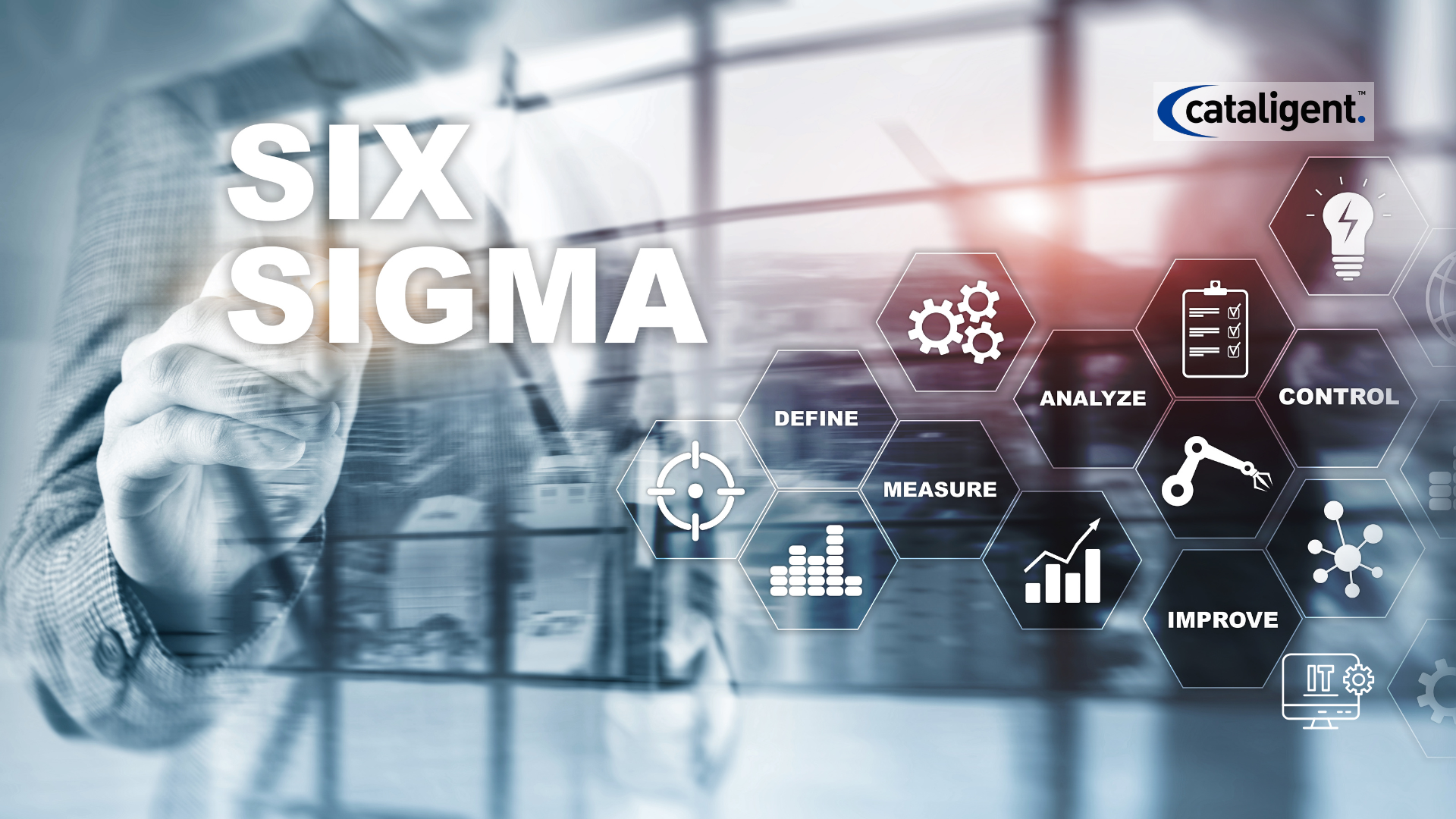
    The DMAIC cycle—Define, Measure, Analyze, Improve, and Control—is the foundation of Six Sigma. Applied to ITSM, this framework ensures IT operations evolve with precision and predictability.

    1. Define: Setting the Right ITSM Goals

    The journey begins with clarity. Businesses must define what success in ITSM looks like, whether it’s reducing downtime, improving service desk response times, or enhancing customer satisfaction scores. This step aligns IT goals with broader business objectives, ensuring every ITSM improvement directly supports growth, efficiency, and competitive advantage.

    Example: A company may define its goal as reducing average service request resolution time from three days to one day. That single definition sets the stage for focused transformation.

    2. Measure: Gathering the Right Metrics

    In ITSM, data is the backbone of progress. The measurement phase involves identifying KPIs such as incident response time, system uptime, mean time to repair (MTTR), and customer satisfaction scores. By quantifying current performance, organizations establish a baseline to track improvement.

    Example: Measuring the number of recurring incidents caused by outdated processes helps identify where automation or standardization can eliminate inefficiencies.

    3. Analyze: Finding the Root Causes

    Here lies the heart of Six Sigma’s power. Rather than treating symptoms, Six Sigma analysis dives into the root causes of IT problems. IT leaders use tools like cause-and-effect diagrams, Pareto analysis, and process mapping to uncover why service bottlenecks or failures occur.

    Example: If service desk tickets for password resets are overwhelming IT staff, analysis might reveal the need for a self-service password reset tool—saving time, cost, and employee frustration.

    4. Improve: Designing Better ITSM Processes

    Improvement means designing and implementing smarter, leaner processes. IT teams can introduce automation, eliminate redundancies, and create standardized workflows that enhance service delivery. This step is where ITSM truly shifts from reactive to proactive innovation.

    Example: Automating common tasks like onboarding requests can drastically reduce turnaround time while improving employee satisfaction.

    5. Control: Sustaining ITSM Excellence

    Without control, improvements fade. The control phase introduces monitoring tools, governance frameworks, and feedback loops to ensure ITSM processes stay efficient long-term. Continuous performance tracking ensures that teams don’t revert to old habits.

    Example: Using dashboards and periodic audits, IT leaders can ensure that service desk resolution times remain consistent even as demand scales.


    Why Businesses Overlook Six Sigma in ITSM

    Many organizations mistakenly view ITSM as a stand-alone practice that only requires software tools or frameworks like ITIL. Six Sigma, however, introduces a discipline of continuous improvement that is often overlooked. Businesses miss out on Six Sigma benefits in ITSM because:

    • They assume ITSM alone is sufficient.
    • They underestimate the impact of process defects in IT services.
    • They lack awareness of how Six Sigma applies outside manufacturing.

    Yet, in today’s era of digital acceleration, where every second of downtime costs revenue and customer trust, ignoring Six Sigma principles is a costly mistake.


    Business Benefits of Applying Six Sigma to ITSM

    Pairing Six Sigma with ITSM creates measurable value across several dimensions:

    • Higher Efficiency: Processes become streamlined, eliminating redundancy and wasted effort.
    • Reduced Errors: By minimizing process defects, IT services become more reliable.
    • Improved Customer Experience: Faster response times and higher consistency enhance user satisfaction.
    • Data-Driven Decisions: Leaders make informed choices based on evidence, not intuition.
    • Long-Term Scalability: Continuous improvement ensures ITSM evolves alongside business needs.

    Six Sigma ITSM Strategies Businesses Should Know

    Beyond the DMAIC cycle, there are specific strategies organizations should adopt to make the most of Six Sigma in ITSM:

    Lean ITSM for Cost Optimization

    Applying Lean principles within ITSM helps identify waste, whether in resources, time, or processes. This is especially critical as companies balance tight budgets with rising IT demands.

    Continuous Feedback Loops

    Embedding regular stakeholder feedback ensures IT services are consistently meeting business needs. Six Sigma tools like Voice of the Customer (VoC) provide invaluable insights for ITSM improvement.

    Proactive Risk Management

    Using Six Sigma’s data-driven risk assessment tools, IT teams can anticipate issues before they escalate, strengthening business resilience against cyberattacks, downtime, or compliance failures.

    Building a Culture of Quality

    Six Sigma emphasizes a culture where quality is everyone’s responsibility. Applied to ITSM, this creates empowered teams that proactively look for ways to improve service delivery.


    Why Six Sigma ITSM Matters for Today’s Businesses

    Modern businesses operate in a high-stakes digital environment where efficiency, reliability, and agility are non-negotiable. Six Sigma ITSM helps companies:

    • Adapt to rapid digital transformation.
    • Optimize cloud service management.
    • Improve cybersecurity processes.
    • Deliver seamless customer and employee experiences.

    For businesses of all sizes, this isn’t just a framework—it’s a competitive advantage that can define market leadership.


    How Cataligent Elevates ITSM with Six Sigma

    At Cataligent, ITSM isn’t treated as a basic support function—it’s a strategic enabler of business transformation. What makes Cataligent stand out is its integration of Six Sigma frameworks into ITSM services, ensuring organizations achieve measurable, sustainable improvements.

    Cataligent helps businesses by:

    • Designing ITSM strategies with Six Sigma precision to minimize waste and boost efficiency.
    • Implementing continuous improvement cycles that ensure IT services evolve with business needs.
    • Providing governance and control frameworks to sustain long-term ITSM excellence.
    • Embedding a culture of quality across teams, helping organizations consistently deliver world-class IT services.

    By combining ITSM expertise with Six Sigma discipline, Cataligent ensures that businesses don’t just manage IT—they master it, creating reliable, scalable, and innovative IT environments that fuel growth.


    Final Thought

    Businesses that embrace Six Sigma in ITSM gain more than process efficiency—they unlock a future where IT consistently drives innovation, reduces risk, and elevates the entire organization. With Cataligent as a trusted partner, this future isn’t just possible—it’s achievable.