Month: September 2025

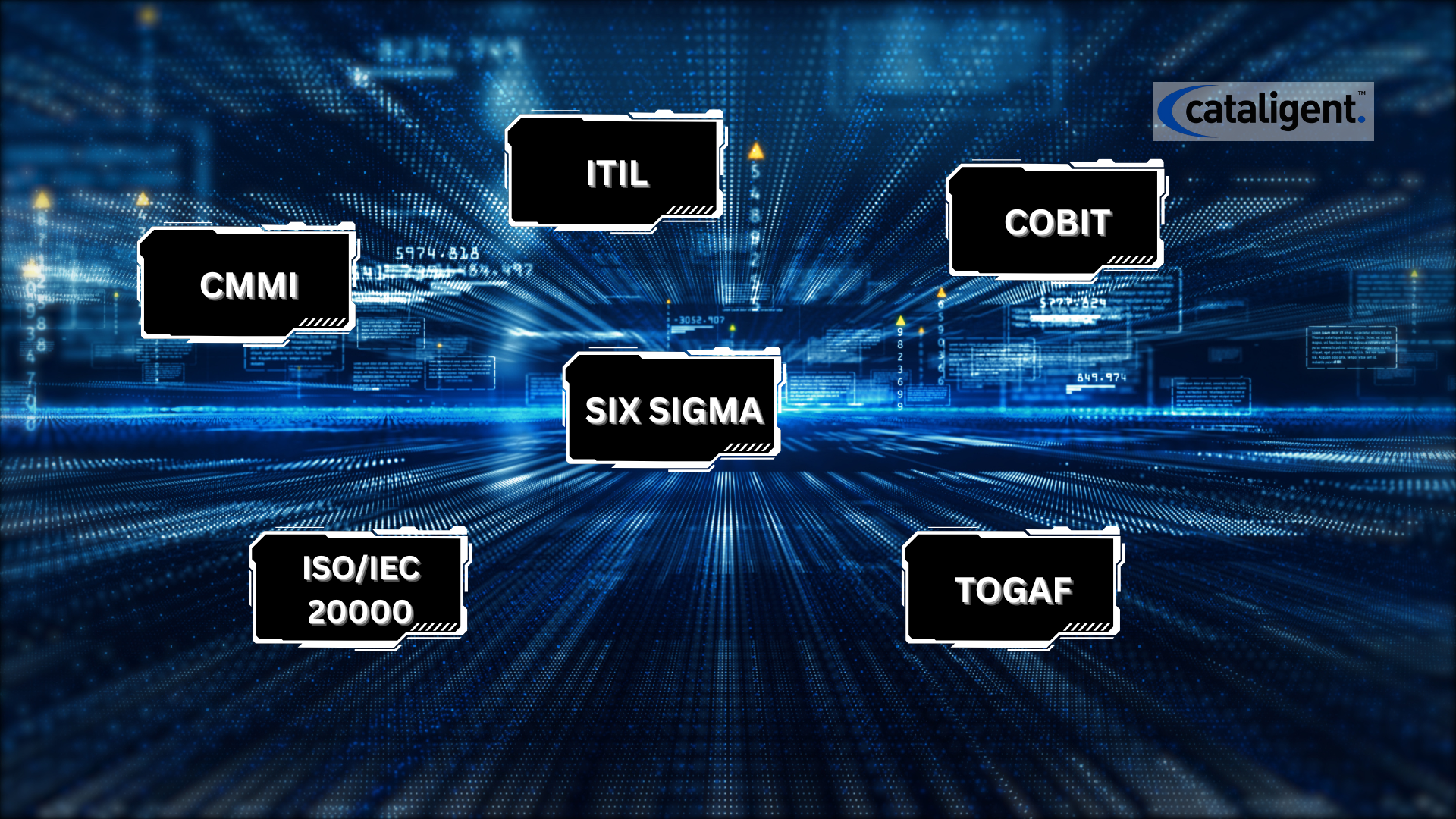
  • Important ITSM Frameworks: A Comprehensive Guide for Modern Enterprises

    Important ITSM Frameworks: A Comprehensive Guide for Modern Enterprises

    Information Technology Service Management (ITSM) has evolved into a cornerstone of modern enterprises, ensuring that IT operations align seamlessly with business goals. With growing dependence on digital ecosystems, companies are under constant pressure to deliver reliable, secure, and customer-centric IT services. While ITSM is not a one-size-fits-all approach, several frameworks have been developed to provide structure, guidance, and best practices for organizations embarking on their ITSM journey. Each framework comes with its unique strengths, focus areas, and practical applications.

    In this expanded guide, we’ll explore the most important ITSM frameworks, dive into their roles in streamlining IT operations, and analyze how businesses can leverage them for better outcomes. Finally, we’ll show how Cataligent helps organizations harness these frameworks for transformation and long-term success.


    Why ITSM Frameworks Matter

    At its core, ITSM is about improving how IT services are delivered, managed, and optimized across the enterprise. Without frameworks, organizations risk creating fragmented processes, inconsistent service delivery, and reactive IT cultures. Frameworks:

    • Standardize IT practices to ensure efficiency and reliability.
    • Promote proactive management instead of firefighting.
    • Enable measurable improvements in service quality and customer experience.
    • Reduce risks associated with compliance, governance, and cybersecurity.
    • Create pathways for continuous improvement and innovation.

    Now, let’s break down the most widely adopted and impactful frameworks shaping ITSM today.


    1. Information Technology Infrastructure Library (ITIL)

    What It Is

    ITIL is the most widely adopted ITSM framework worldwide. First created in the 1980s by the UK government, ITIL has evolved into a comprehensive library of best practices that covers every stage of IT service management.

    Key Elements

    • Service Strategy: Aligns IT services with organizational objectives.
    • Service Design: Defines how IT services are planned and structured.
    • Service Transition: Provides guidance for implementing new or modified services.
    • Service Operation: Focuses on day-to-day delivery and performance.
    • Continual Service Improvement: Encourages ongoing analysis and refinement of IT processes.

    Why It’s Important

    The most recent version, ITIL 4, emphasizes digital transformation, agility, and a holistic approach to value delivery. ITIL enables organizations to adopt a lifecycle view of IT, ensuring services continuously evolve to meet changing customer and business demands.

    Real-World Example

    A global retail chain used ITIL 4 to streamline incident management and reduce downtime across its e-commerce platform. By standardizing workflows, they improved customer satisfaction and accelerated recovery times from hours to minutes.


    2. DevOps

    What It Is

    More than a framework, DevOps is a cultural and methodological shift designed to bridge the gap between software development and IT operations. Its primary focus is speed, collaboration, and continuous improvement.

    Key Principles

    • Collaboration: Breaking down silos between developers and operations teams.
    • Automation: Streamlining testing, deployment, and monitoring.
    • Continuous Delivery: Ensuring frequent, reliable releases.
    • Feedback Loops: Rapidly gathering and acting on user feedback.

    Why It’s Important

    DevOps accelerates the delivery of software and services, which is essential in today’s fast-paced digital world. While ITIL focuses on structure and governance, DevOps complements it by prioritizing agility and innovation.

    Real-World Example

    A fintech startup implemented DevOps alongside ITIL to speed up product launches. Automated pipelines reduced deployment errors by 40%, while ITIL ensured compliance and governance standards were still met.


    3. COBIT (Control Objectives for Information and Related Technologies)

    What It Is

    COBIT, developed by ISACA in 1996, is a framework for IT governance and management. Unlike ITIL or DevOps, which focus on service delivery, COBIT emphasizes governance, compliance, and alignment with business goals.

    Key Elements

    • Risk Management: Identifies, evaluates, and mitigates IT-related risks.
    • Regulatory Compliance: Ensures adherence to legal and industry standards.
    • Governance Models: Establishes decision-making roles and accountability.
    • Performance Measurement: Uses KPIs to evaluate IT effectiveness.

    Why It’s Important

    COBIT is particularly useful for enterprises in heavily regulated industries such as banking, healthcare, or government. It ensures IT functions not only support but also protect business objectives.

    Real-World Example

    A multinational bank adopted COBIT to strengthen its compliance posture. By integrating COBIT into its ITSM practices, it reduced audit preparation time by 60% and minimized compliance breaches.


    4. ISO/IEC 20000

    What It Is

    ISO/IEC 20000 is the first international standard for IT service management. It provides formal requirements for establishing, implementing, and improving ITSM processes.

    Key Elements

    • Service Delivery: Requirements for planning, monitoring, and reporting.
    • Leadership & Governance: Clearly defines roles and responsibilities.
    • Planning & Evaluation: Ensures alignment between IT strategy and business goals.
    • Certification: Organizations can formally prove compliance through audits.

    Why It’s Important

    ISO/IEC 20000 provides credibility. Organizations that achieve certification demonstrate a commitment to best practices and continuous improvement, giving them a competitive edge.

    Real-World Example

    A mid-sized IT services provider achieved ISO/IEC 20000 certification to differentiate itself in a crowded market. This certification won them government contracts that required adherence to international standards.


    5. Microsoft Operations Framework (MOF)

    What It Is

    MOF, introduced in 2008 by Microsoft, is tailored to businesses that rely heavily on Microsoft products. It offers a structured approach to managing IT services through Microsoft technologies.

    Key Elements

    • Service Lifecycle: Guidance on planning, delivering, operating, and optimizing IT services.
    • Risk Management: Emphasis on minimizing operational and security risks.
    • Optimization: Focuses on improving efficiency through monitoring and feedback.

    Why It’s Important

    Because many businesses rely on Microsoft ecosystems, MOF provides practical guidance that integrates seamlessly with everyday tools like Outlook, Azure, and Office 365. While often used in tandem with ITIL, it’s uniquely positioned for Microsoft-heavy environments.

    Real-World Example

    An enterprise that migrated to Microsoft 365 used MOF to streamline adoption, improve system reliability, and enhance security protocols, resulting in a 25% increase in workforce productivity.


    Choosing the Right Framework

    While all ITSM frameworks provide value, organizations should select the ones that best fit their industry, goals, and existing IT maturity. In many cases, businesses adopt a hybrid approach, blending ITIL’s structure, DevOps’ agility, COBIT’s governance, ISO’s certification, and MOF’s technology-specific guidance.

    Key considerations when choosing a framework:

    • Industry-specific compliance requirements.
    • Level of digital maturity.
    • Size and scale of operations.
    • Balance between agility and governance.
    • Long-term business goals and vision.

    How Cataligent Helps Organizations Maximize ITSM Frameworks

    Navigating ITSM frameworks can feel overwhelming, especially when organizations need to balance agility, compliance, and innovation. This is where Cataligent steps in as a trusted partner.

    Cataligent helps businesses:

    • Strategically Align IT with Business Goals: Ensuring every ITSM initiative directly supports organizational outcomes.
    • Implement Tailored ITSM Solutions: Leveraging frameworks like ITIL, COBIT, and ISO while adapting them to unique business needs.
    • Drive Business Transformation: Cataligent’s expertise ensures ITSM isn’t just about technology—it’s about enabling smarter decisions, innovation, and resilience.
    • Provide End-to-End Support: From advisory and design to execution and continuous improvement, Cataligent ensures ITSM strategies remain relevant and impactful.

    By combining industry expertise with hands-on execution, Cataligent enables organizations to modernize IT operations, embrace agility, and sustain long-term success. With Cataligent, ITSM frameworks move beyond checklists—they become catalysts for enterprise-wide transformation.


    Final Thoughts

    In today’s digital-first world, effective ITSM is non-negotiable. Frameworks like ITIL, DevOps, COBIT, ISO/IEC 20000, and MOF provide the structure, governance, and agility required to deliver reliable and innovative IT services. However, the key to success lies not just in adopting frameworks but in adapting them to organizational needs.

    With Cataligent’s guidance, businesses can cut through complexity, avoid costly missteps, and implement ITSM practices that drive measurable impact. The future of IT management is agile, compliant, and transformative—and Cataligent helps organizations make that future a reality.

  • Reimagining IT Service Delivery with ITSM

    Reimagining IT Service Delivery with ITSM

    In a world where businesses run on technology, smooth and reliable IT services are not just an advantage—they’re a necessity. Yet, as IT landscapes grow more complex, relying on scattered, ad hoc processes simply doesn’t cut it anymore. This is where IT Service Management (ITSM) makes a powerful impact. By creating structured, repeatable, and predictable ways to deliver services, ITSM helps organizations achieve greater efficiency, resilience, and customer satisfaction.

    Here’s how ITSM transforms the way companies deliver IT services and why it’s essential for any modern enterprise.


    1. Adapting to Change with Flexibility

    Technology never stands still—new tools, security updates, and compliance requirements arrive faster than ever. Without a system in place, every change can feel like a disruption. ITSM introduces a clear framework for managing change, ensuring updates are rolled out smoothly, with minimal risk or confusion.

    For example, when a new enterprise collaboration tool is introduced, ITSM ensures structured rollout with pilot groups, phased deployments, and backup plans in case of issues. Instead of a disruptive switch, employees experience a smooth transition. This flexibility helps businesses embrace innovation without sacrificing stability or productivity.


    2. Creating Consistency Through Standardization

    Unstructured IT practices often lead to miscommunication, inconsistent results, and wasted time. ITSM changes this by establishing standard protocols and processes that everyone follows. With a shared language and clear playbooks, employees know exactly what to expect and how to act.

    For instance, password reset requests are handled through the same process every time, using automated verification systems. This reduces delays, improves security, and ensures employees know exactly how to get help. In regulated industries like healthcare or finance, standardization also ensures compliance, avoiding hefty fines and reputational risks.


    3. Delivering Greater Visibility and Transparency

    One of IT’s biggest challenges is lack of clarity—stakeholders often don’t know where requests stand or what resources are being used. ITSM addresses this with real-time dashboards, analytics, and self-service portals.

    Imagine a marketing manager requesting cloud storage for a new campaign. With ITSM, they can log into the portal, view the request status, and even track approvals in real time. This visibility eliminates unnecessary follow-up emails, builds trust, and ensures that both IT and business users are aligned. Transparency also helps leadership spot bottlenecks and allocate resources more effectively.


    4. Driving Efficiency with Smarter Processes

    Picture this: an employee needs a new laptop. Without ITSM, the process may involve endless emails, unclear approvals, and delays. With ITSM, the request is submitted through a service desk, routed automatically to the right team, and tracked through a ticketing system. Everyone knows the status at every step, eliminating guesswork and delays.

    On a larger scale, companies rolling out security patches across thousands of devices benefit from ITSM workflows that schedule, test, and monitor deployments automatically. This efficiency reduces downtime, strengthens security, and frees IT staff to focus on proactive improvements instead of firefighting.


    5. Accelerating Response and Resolution Times

    Slow response times can bring productivity to a halt. ITSM combats this with automation and AI-powered tools that handle routine tasks instantly—like password resets or software access requests. Tickets are auto-assigned, errors are flagged in real time, and repetitive work is eliminated.

    For example, an AI-powered ITSM tool can automatically recognize and resolve recurring printer issues without requiring IT staff intervention. Employees get solutions instantly, and IT professionals can focus on complex, high-value projects. This not only accelerates resolution times but also boosts overall satisfaction across the organization.


    Why Cataligent is the Right Partner for ITSM Success

    Implementing ITSM effectively requires expertise, strategy, and alignment with business goals. That’s exactly what Cataligent brings to the table. As specialists in IT Service Management, Business Transformation, Intelligent Automation, and Project Management, Cataligent doesn’t just implement ITSM—they turn it into a competitive advantage.

    • Tailored ITSM Solutions: Cataligent builds ITSM frameworks designed around your unique needs, ensuring scalability, efficiency, and long-term value.
    • End-to-End Business Transformation: Their services go beyond IT, helping organizations reimagine operations and prepare for the future.
    • Intelligent Automation Integration: By weaving automation into ITSM, Cataligent accelerates service delivery, eliminates repetitive tasks, and boosts workforce productivity.
    • Expert Project Management: Every ITSM initiative is executed with strong governance, clear milestones, and measurable outcomes.

    With Cataligent, ITSM is not just about managing technology—it’s about unlocking agility, enhancing customer experience, and enabling sustainable growth.


    ITSM transforms service delivery by making it flexible, consistent, transparent, efficient, and fast. With Cataligent as your trusted partner, you gain more than an IT solution—you gain a strategic edge in today’s competitive digital landscape.

  • IT Management: Functions, Challenges, and Best Practices for Modern Enterprises

    IT Management: Functions, Challenges, and Best Practices for Modern Enterprises

    In an era where software powers customer experiences, supply chains, and employee productivity, IT management has become the strategic nerve center of every organization. This expanded guide dives deeper into each function, offers practical how‑to steps, metrics to track, common mistakes to avoid, and real‑world patterns that separate resilient IT organizations from the rest.


    What Is IT Management

    IT management is the coordinated practice of planning, provisioning, operating, and optimizing all technology resources that a business depends upon. Beyond infrastructure, it includes the governance, lifecycle management, vendor relationships, and the people who design and run those systems.

    Practical components:

    • Asset lifecycle (procurement → maintenance → retirement)
    • Change and release governance
    • Service level management and SLAs
    • Vendor and cloud provider management
    • Data governance and privacy controls

    How to get started:

    1. Create an inventory of critical systems and business dependencies.
    2. Map owners and escalation paths for each asset.
    3. Define basic SLAs (uptime, MTTR, response time) for core services.

    Leading indicators to track: mean time to detect (MTTD), mean time to repair (MTTR), change failure rate, and service availability.


    Why IT Management Matters

    IT management is the bridge between technological possibility and business reality. When it performs well, it reduces friction across the enterprise and creates capacity for innovation.

    Business outcomes driven by strong IT management:

    • Faster product releases with LOWER operational risk.
    • Improved customer experience through reliable services and data integrity.
    • Measurable cost savings via cloud optimization and automation.
    • Better compliance posture, which reduces fines and reputational damage.

    Executive playbook:

    • Use IT scorecards to brief the board monthly.
    • Translate technical metrics into business KPIs (e.g., 99.9% uptime → $X revenue protected).
    • Prioritize investments using business value, risk, and cost lenses.

    Core Responsibilities of an IT Manager

    Below each core responsibility we add concrete actions, suggested tooling, and KPIs.

    1. Strategic IT Planning

    Actions:

    • Run annual technology strategy workshops with business leaders.
    • Maintain a 3‑5 year technology roadmap tied to business outcomes.
    • Adopt FinOps practices to control cloud costs while enabling scale.

    KPIs: % of roadmap delivered, ROI per initiative, cloud cost per service.

    2. Network Management

    Actions:

    • Design for segmentation and least privilege.
    • Implement observability: synthetic transactions, flow logs, and service maps.
    • Adopt SD‑WAN or cloud WAN architectures for hybrid environments.

    KPIs: Network latency, packet loss, bandwidth utilization, incident counts.

    3. Risk Assessment & Cybersecurity

    Actions:

    • Conduct quarterly threat modeling and pen tests.
    • Maintain an incident response plan and run tabletop exercises twice a year.
    • Enforce MFA, least privilege, and least exposure for critical systems.

    KPIs: Time to detect/respond, # high severity vulnerabilities, patch cadence.

    4. Budgeting & Resource Management

    Actions:

    • Use activity-based costing for IT services.
    • Implement chargeback/showback to align consumption with accountability.
    • Reserve budget for continuous modernization (20% of IT spend suggested).

    KPIs: Total cost of ownership (TCO), cost per user, percent budget used for innovation.

    5. Talent & Organization Development

    Actions:

    • Design career paths for engineers (IC and leadership tracks).
    • Sponsor certifications, internal guilds, and mentorship programs.
    • Hire for attitude: prioritise learning agility and problem solving.

    KPIs: Time to hire, retention rate, training hours per person, internal promotion rate.


    The Role of IT Management in Business Success

    IT is the connective tissue that enables business processes to flow. Below are concrete examples showing how IT impacts core functions.

    • Sales: Integrated CRM and quoting systems reduce order-to-cash times.
    • Operations: Automated orchestration reduces manual handoffs in supply chains.
    • Customer Support: Self-service portals and AI chatbots reduce first‑response times and free agents for complex issues.

    Example metrics to prove value:

    • % reduction in order processing time
    • % increase in customer self‑service adoption
    • Revenue per IT-enabled feature

    IT Management Best Practices

    Each practice below now includes tactical steps and pitfalls to avoid.

    1. Continuous Learning & Upskilling

    Tactics: Run a quarterly learning day, provide micro‑learning subscriptions, fund certifications with ROI targets.

    Pitfalls: Training without application — pair learning with on-the-job projects.

    2. Automation-First Mindset

    Tactics: Start with automating repetitive tasks (patching, backups, ticket routing) and expand toward infrastructure as code and CI/CD.

    Pitfalls: Automating broken processes; always optimize the process BEFORE automating.

    3. Adopt ITIL + Agile Hybrids

    Tactics: Use ITIL for governance and incident management, apply Agile for delivery teams—create a clear RACI for overlaps.

    Pitfalls: Rigid adherence to process — remain pragmatic and continuously adapt frameworks.

    4. Zero-Trust Security Framework

    Tactics: Implement identity-first security, microsegmentation, continuous authentication checks, and device posture checks.

    Pitfalls: Treating zero-trust as a tool rather than an operating model; it requires culture and process changes.

    5. Cloud-First Strategy (Practical Steps)

    Tactics: Choose a migration approach—lift-and-shift, replatform, or rearchitect—based on value and risk. Apply tagging and observability from day one.

    Pitfalls: Uncontrolled cloud sprawl; apply governance guardrails and FinOps.

    6. Cross-Functional Collaboration

    Tactics: Create Product/Platform teams aligned to business domains, embed SRE/Ops engineers into product squads, and run joint retrospectives.

    Pitfalls: Siloed KPIs that create local optimization rather than global flow.


    Challenges in IT Management Today

    Let’s unpack common issues and mitigation strategies.

    Cybersecurity and Ransomware

    Reality: Attacks are more targeted and often exploit human or misconfiguration weaknesses.
    Mitigation: Defense in depth, frequent backups, immutable storage, tabletop exercises, cyber insurance.

    Rapid Technology Change

    Reality: Staying current is costly and time consuming.
    Mitigation: Use a small innovation budget, engage vendor partnerships, and subscribe to focused proof-of-concept cycles.

    Shadow IT and Compliance

    Reality: Business units adopt apps outside IT’s control.
    Mitigation: Offer secure alternatives, streamline procurement, and implement discovery tools.

    Cost Overruns in Cloud

    Reality: Cloud flexibility leads to waste.
    Mitigation: Implement FinOps, automate idle resource shutdown, and chargeback for accountability.


    Modern Trends Shaping IT Management

    AIOps and Observability

    Use ML to correlate logs, traces, and metrics to predict incidents and automate remediation. Observability is the foundation for faster debugging and more resilient applications.

    DevSecOps and Security Automation

    Security moves left: automate scans in pipelines, guardrails via policy-as-code, and continuous compliance checks.

    Edge and Hybrid Architectures

    Process sensitive data at the edge for latency-sensitive apps while maintaining central governance.

    Sustainable IT (GreenOps)

    Right-size workloads, choose efficient regions, and optimize compute utilization to meet ESG goals.


    Practical Implementation Checklist (Quick Win Roadmap)

    0–30 days: Inventory critical systems, define SLAs, run an initial risk assessment.
    30–90 days: Launch 1–2 automation plays (backup, patching), set up observability, and start FinOps tracking.
    90–180 days: Implement identity controls (MFA), create incident response runbook, and begin cross-functional pilot teams.

    Ongoing: Quarterly tabletop exercises, yearly roadmap updates, continuous training cycles.


    How Cataligent Redefines IT Management

    Cataligent partners with enterprises to move IT from fragility to strength—combining strategy, tooling, and change enablement.

    What Cataligent does, concretely:

    • Assess & Align: Run a rapid 4–6 week diagnostic across people, process, and technology to prioritize high‑impact initiatives.
    • Implement & Automate: Deploy CAT4 and complementary ITSM capabilities to centralize workflows, automate repetitive work, and enforce SLAs.
    • Secure & Harden: Build and operationalize zero‑trust controls, incident response, and automated compliance checks.
    • Optimize Costs: Reduce waste, and reallocate savings to innovation.
    • Enable Teams: Provide coaching, role‑based training, and playbooks to make new processes sticky.

    Sample outcomes clients see:

    • 30–50% faster incident resolution (reduced MTTR).
    • 20–40% reduction in cloud spend through FinOps and automation.
    • Measurable improvements in deployment frequency and service reliability.

    Why Cataligent works:
    They combine practical implementation experience with productized tooling (CAT4 and ITSM modules), a change-focused methodology, and measurable KPIs—so transformation sticks.


    Final Thoughts

    IT management today is an active discipline that blends engineering, governance, finance, and human leadership. The organizations that win will be those that: prioritize measurement, automate relentlessly, invest in people, and treat security and sustainability as core design constraints.

    ★ If you’d like, Cataligent can run a tailored executive briefing and a fast diagnostic to identify the top three high-impact moves you can make in the next 90 days. ★

  • Predictive ITSM: Leveraging AI for Proactive Service Management

    Predictive ITSM: Leveraging AI for Proactive Service Management

    IT service management is moving from reactive support to more proactive service management. Instead of waiting for incidents to disrupt users, organizations are exploring AI, automation, analytics, and monitoring tools to identify risks earlier and improve service reliability.

    Predictive ITSM uses data and technology to help IT teams understand patterns, detect recurring issues, and respond before small problems become major service disruptions.

    However, predictive tools alone do not create proactive service management. IT teams still need clear workflows, responsible owners, escalation rules, approval control, service improvement actions, dashboards, and leadership reporting.

    What It Means

    Predictive ITSM means using service data, analytics, automation, and AI-supported tools to identify possible IT service issues before they become serious incidents.

    These tools may help IT teams:

    • Identify recurring incidents
    • Detect service performance trends
    • Highlight SLA risks
    • Find repeated failure patterns
    • Support incident prevention
    • Improve service reporting
    • Prioritize service improvement actions

    The goal is to move from simply reacting to incidents toward managing service risks more proactively.

    Why It Matters

    Traditional ITSM often works after something has already gone wrong. A user reports an issue, the service desk logs a ticket, and IT teams respond.

    This reactive model can create problems such as:

    • Increased downtime
    • Poor user experience
    • Repeated incidents
    • SLA breaches
    • Manual escalation
    • Delayed root-cause analysis
    • Limited visibility into service risks
    • Weak follow-up on improvement actions

    Predictive ITSM can help identify risks earlier, but teams still need a structured way to act on those insights.

    How AI Supports Predictive ITSM

    AI and analytics can support predictive ITSM in practical ways.

    Pattern detection: AI tools may analyze service data to identify recurring incidents, unusual trends, or repeated service failures.

    Risk alerts: Analytics tools may help highlight services, systems, or processes that show signs of increased risk.

    Incident prevention: Predictive insights may help teams take preventive action before a repeated issue causes wider disruption.

    Root-cause support: Analytics can help teams review historical incidents and identify possible underlying causes.

    SLA visibility: Predictive reporting may help teams identify where SLA breaches are likely to occur.

    Decision support: AI-supported tools can help IT teams prioritize which issues or services need attention first.

    AI can support service management, but it should not replace IT ownership, human review, service governance, or business accountability.

    Key ITSM Areas

    Predictive ITSM depends on strong execution across core service management areas.

    Incident management: Incidents need clear ownership, priority rules, escalation paths, response targets, and status visibility.

    Problem management: Recurring issues need root-cause analysis, corrective actions, responsible owners, deadlines, and follow-up tracking.

    Service level management: SLAs need clear targets, breach visibility, escalation rules, performance tracking, and regular review.

    Change management: Changes need impact assessment, risk review, approval workflows, implementation planning, and post-change review.

    Knowledge management: Known issues, fixes, and service guidance should be maintained and reused to reduce repeated incidents.

    Continuous improvement: Service improvement actions need owners, milestones, risks, and measurable outcomes.

    Benefits

    Predictive ITSM can support better service management when insights are connected to action.

    • Earlier risk identification
    • Faster issue prevention
    • Better SLA visibility
    • Reduced recurring incidents
    • Improved service reliability
    • Stronger root-cause follow-up
    • Better leadership reporting
    • More proactive service improvement

    The real benefit comes when predictive insights are converted into tracked actions with owners, timelines, and measurable outcomes.

    Common Challenges

    Organizations may struggle if they focus only on predictive tools and not enough on execution.

    Common challenges include:

    • Poor-quality service data
    • Disconnected monitoring and ticketing systems
    • Weak ownership for preventive actions
    • Manual follow-up after risks are identified
    • Unclear escalation paths
    • Limited reporting for leadership
    • Overreliance on AI without human review
    • Lack of continuous improvement discipline

    Predictive ITSM is not only a technology issue. It is also an execution and governance challenge.

    How to Use It Well

    To make predictive ITSM effective, organizations should strengthen their service management foundation.

    Improve service data: Make sure incident, problem, change, SLA, and service performance data is accurate and consistent.

    Define ownership: Every risk, recurring issue, and preventive action should have a responsible owner.

    Create escalation rules: Teams should know when and how service risks need to be escalated.

    Track preventive actions: Risk insights should become tracked tasks or improvement initiatives.

    Review service trends: Teams should regularly review recurring incidents, SLA risks, and service performance patterns.

    Connect insights to reporting: Leadership should have visibility into risks, actions, delays, and improvement outcomes.

    How Cataligent Supports ITSM Execution

    Predictive ITSM tools can help identify possible service risks and improvement opportunities. But proactive service management depends on how well teams act on those insights.

    Cataligent supports the execution layer through CAT4. The platform helps organizations manage ITSM workflows, service improvement initiatives, owners, milestones, approvals, risks, dashboards, and executive reporting.

    For example, if predictive ITSM tools or service reports highlight recurring incidents, SLA risks, change-related issues, or preventive actions, CAT4 can help teams turn those findings into tracked work. Teams can assign owners, define milestones, monitor risks, manage approvals, track progress, and report outcomes to leadership.

    ITSM needCommon challengeHow Cataligent can help
    Preventive actionsRisks are identified but follow-up is not trackedHelps structure actions, owners, deadlines, and status updates
    Problem managementRoot-cause actions are discussed but not consistently followed upSupports milestones, ownership, risks, and progress tracking
    SLA risksPotential breaches are identified but not managed systematicallySupports dashboards and management-ready reporting
    Change risksRisky changes need approvals and follow-up visibilityHelps manage workflows, approvals, risks, and review steps
    Service improvementImprovement ideas are not converted into tracked initiativesHelps manage initiatives, milestones, risks, and outcomes
    GovernanceIT, business, and leadership teams lack one clear viewProvides visibility into responsibilities, progress, and risks

    Cataligent does not provide AI monitoring, machine learning models, advanced algorithms, predictive analytics tools, or predictive ITSM software. It also does not replace ticketing systems, monitoring platforms, service desk tools, or specialist ITSM software.

    Instead, Cataligent helps organizations manage the execution and governance layer around ITSM processes. This is especially useful when predictive insights support IT Service Management, Business Transformation, or Multi-Project Management.

    In simple terms, predictive tools may help IT teams see what needs attention earlier. Cataligent helps teams manage the work required to turn those insights into measurable service improvement.

    Why Execution Matters

    Many proactive ITSM efforts fail because organizations identify risks but do not manage the follow-up properly.

    Successful predictive ITSM requires:

    • Clear service workflows
    • Defined ownership
    • Preventive action tracking
    • SLA visibility
    • Risk and issue tracking
    • Approval control
    • Problem management follow-up
    • Leadership reporting
    • Continuous review

    Without these elements, predictive insights may remain in dashboards instead of improving service delivery.

    Conclusion

    Predictive ITSM can help organizations move from reactive support to more proactive service management. AI, automation, analytics, and monitoring tools may help identify risks, recurring incidents, and service patterns earlier.

    However, technology alone does not prevent service issues. Organizations still need clear workflows, responsible owners, approval control, SLA visibility, escalation management, risk tracking, and leadership reporting.

    Cataligent supports this execution layer through CAT4 by helping organizations manage ITSM workflows and service improvement initiatives with clearer structure, accountability, visibility, and reporting.

    Predictive tools can show where IT services need attention. Cataligent helps organizations manage the work required to turn those insights into measurable service improvement.

  • ITSM for Continuous Transformation: Embedding Agility into Service Operations

    ITSM for Continuous Transformation: Embedding Agility into Service Operations

    Change is no longer a project—it’s a permanent state of business. Markets shift overnight, technologies evolve faster than they can be fully adopted, and customer expectations are constantly rising. In this environment, transformation is not a milestone but an ongoing reality. To keep pace, IT Service Management (ITSM) must move away from static, stability-only frameworks and evolve into a dynamic model that fuels continuous transformation. This is where ITSM for Continuous Transformation becomes critical—embedding agility into service operations so that organizations can thrive in constant change.


    What is ITSM for Continuous Transformation?

    Traditional ITSM was built around predictability and control—standardized processes, change freezes, and linear problem resolution. While this served well in an era of slower transformation, it now creates friction for organizations seeking rapid innovation.

    ITSM for Continuous Transformation redefines this paradigm. It is the practice of structuring IT service operations to continuously adapt, evolve, and align with business transformation goals. It’s not about discarding stability but combining it with agility, so IT can be both a reliable foundation and a driver of speed.

    Key characteristics of ITSM for Continuous Transformation include:

    • Agility in Operations: Processes that evolve with business changes rather than resist them.
    • Integration with Modern Practices: Seamless alignment with Agile and DevOps workflows.
    • Automation-Driven Efficiency: Reducing manual overhead to enable faster service delivery.
    • User-Centric Design: Ensuring services adapt to both employee and customer needs.
    • Continuous Feedback Loops: Using data and experience insights to fuel ongoing improvement.

    Why ITSM for Continuous Transformation Matters

    1. Business Transformation Never Ends
      Every digital initiative—migrating to the cloud, deploying AI solutions, automating workflows—becomes the stepping stone for the next. If ITSM remains rigid, it will constantly lag behind business needs. Continuous ITSM ensures technology operations evolve in lockstep with transformation.
    2. Agility is the New Competitive Edge
      Organizations that can pivot quickly to market shifts, customer demands, and regulatory changes gain a decisive advantage. Static ITSM creates delays. Adaptive ITSM reduces friction, allowing businesses to capitalize on opportunities faster.
    3. Bridging DevOps and Service Management
      DevOps focuses on speed, while traditional ITSM focused on control. Continuous ITSM unites these worlds—embedding service management directly into CI/CD pipelines to ensure innovation and reliability work together.
    4. Meeting User Expectations
      Employees and customers expect seamless experiences. Service disruptions during frequent change cycles can erode trust. Continuous ITSM ensures transformation happens without breaking user journeys.
    5. Risk and Compliance Built-In
      Fast change introduces risks. Continuous ITSM integrates governance, compliance, and risk checks directly into workflows, ensuring organizations maintain security and compliance while moving at speed.

    How ITSM for Continuous Transformation Works

    1. Agile Change Enablement
      Change management is reimagined for speed. Instead of lengthy approval chains, risk-based assessments and automated workflows allow rapid yet secure deployment of changes.
    2. DevOps Alignment
      Service management becomes part of DevOps pipelines—tracking incidents in real time, providing visibility into deployments, and enabling immediate remediation when issues arise.
    3. Continuous Feedback and Improvement
      Service performance and user experience data are constantly captured and analyzed, creating feedback loops that drive iterative improvements in ITSM processes.
    4. Automation as the Engine
      Automation reduces manual workload in areas like incident resolution, problem detection, and change approvals. This accelerates delivery while reducing the risk of human error.
    5. Resilient Service Design
      Services are engineered for adaptability. They can withstand frequent updates, reconfigurations, and integrations without causing outages or performance drops.

    The Role of Business Transformation in Continuous ITSM

    Continuous ITSM is not just about IT—it’s about enabling business transformation at scale. It provides the foundation for organizations to innovate without interruption, scale without inefficiency, and transform without destabilizing operations.

    • Accelerates Innovation: Reduces the lag between strategy and execution, enabling faster product launches and service updates.
    • Drives Cultural Change: Encourages adaptability across teams, helping shift mindsets from rigid control to collaborative agility.
    • Supports Scalability: Ensures IT services can scale up or pivot quickly as businesses expand or respond to new opportunities.
    • Delivers Continuous Value: Keeps IT aligned with evolving business priorities, ensuring technology consistently contributes to growth and efficiency.

    For organizations undergoing transformation, ITSM is no longer the silent background—it’s the engine of resilience and adaptability.


    Real-World Examples of Continuous ITSM in Action

    • Retail Transformation: A retailer expanding its e-commerce operations leverages continuous ITSM to integrate new digital channels without service disruption, ensuring smooth customer experiences during rapid scaling.
    • Banking and FinTech: A financial institution adopting blockchain integrates compliance checks into ITSM workflows, enabling innovation while staying regulatory compliant.
    • Healthcare: Hospitals rolling out telemedicine use continuous ITSM to adapt services on the fly, ensuring patient care remains uninterrupted as technology evolves.

    These examples highlight how continuous ITSM directly fuels business transformation across industries.


    How Cataligent Can Help

    Cataligent empowers organizations to embed agility into ITSM and transform service operations into enablers of continuous business change. Through consulting expertise and the CAT4 platform, Cataligent delivers:

    1. Framework Redesign for Agility
      Cataligent reviews and restructures ITSM processes to ensure they support iterative transformation cycles instead of resisting them.
    2. Integration with DevOps and Agile
      Using CAT4, Cataligent aligns ITSM with DevOps workflows—bridging the gap between rapid development and reliable service operations.
    3. Automated Change and Incident Management
      Through automation, Cataligent streamlines change approvals, accelerates incident resolution, and minimizes disruption during high-frequency transformations.
    4. Continuous Monitoring and Feedback
      CAT4 provides advanced analytics, dashboards, and monitoring capabilities to ensure services adapt continuously to evolving business needs.
    5. Transformation Roadmap Alignment
      Cataligent ensures ITSM initiatives are aligned with broader business transformation goals, maximizing ROI and enabling long-term agility.

    Final Thoughts

    Transformation is no longer a linear path. It’s a continuous cycle of innovation, adaptation, and evolution. For organizations to thrive in this reality, ITSM must shed its reputation as a barrier and embrace its role as a catalyst for agility.

    ITSM for Continuous Transformation enables businesses to innovate faster, adapt more effectively, and deliver consistent value even amidst constant change. With Cataligent’s consulting services and the CAT4 platform, organizations can confidently build ITSM models that are not only resilient but also transformative—bridging the gap between fast-moving strategies and the operational backbone that sustains them.

  • Adaptive ITSM for Hybrid & Multi-Cloud Environments

    Adaptive ITSM for Hybrid & Multi-Cloud Environments

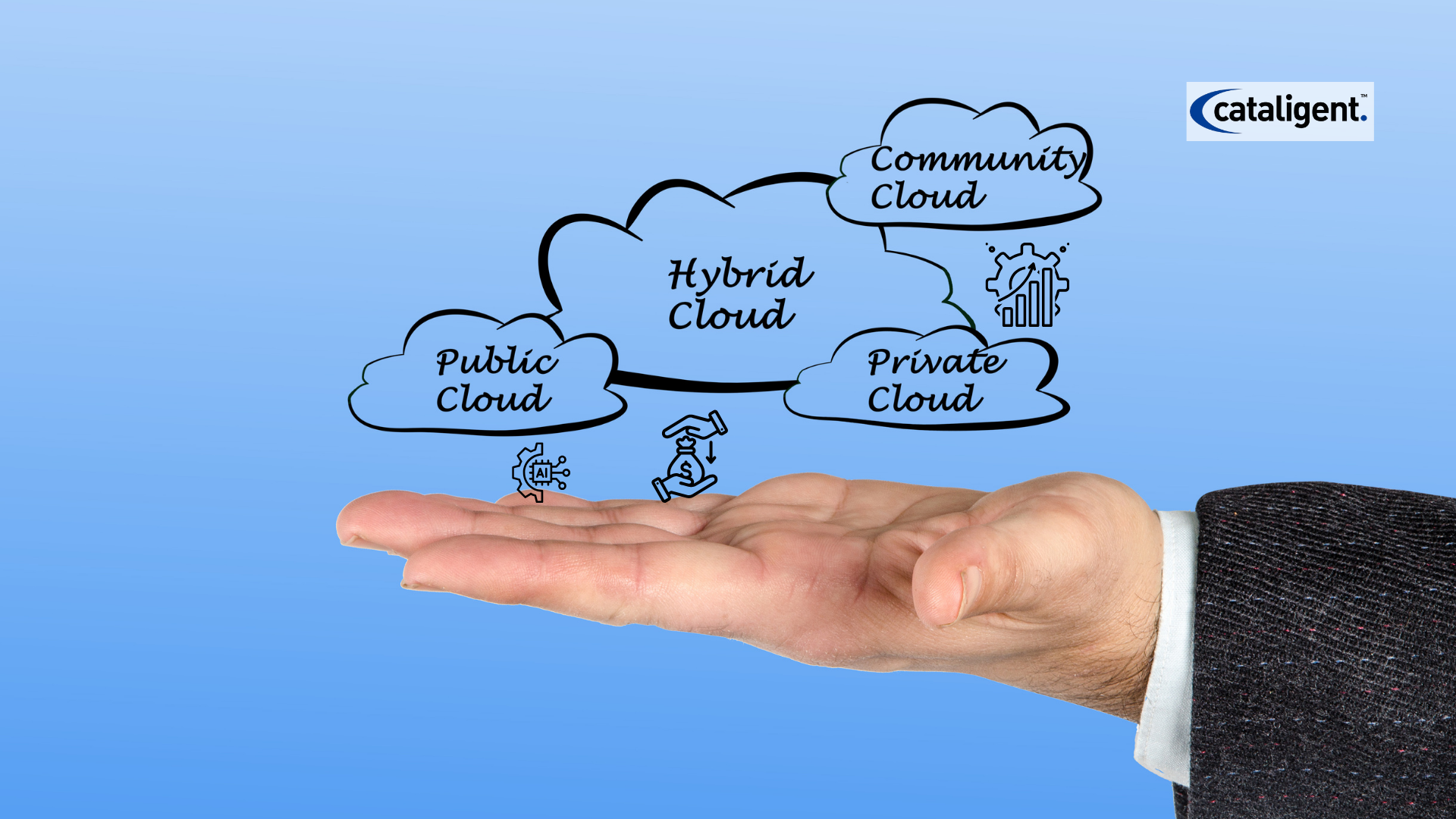
    Hybrid and multi-cloud environments have become the backbone of modern enterprises. Businesses are no longer tied to a single provider or infrastructure; instead, they leverage multiple cloud vendors alongside on-premises systems to maximize flexibility, reduce risk, and optimize costs. While this approach brings agility, it also introduces complexity—fragmented workflows, compliance risks, and rising operational expenses. Traditional ITSM frameworks, designed for simpler infrastructures, are ill-equipped to handle this new reality. That’s why organizations need Adaptive ITSM: a service management model tailored for hybrid and multi-cloud ecosystems.


    What is Adaptive ITSM?

    Adaptive ITSM is an evolved approach to service management that dynamically adjusts to the complexities of hybrid and multi-cloud infrastructures. It integrates processes, tools, and governance frameworks across diverse environments to deliver unified visibility, seamless workflows, and consistent service delivery. Instead of rigid processes, Adaptive ITSM is flexible, scalable, and designed to orchestrate services across multiple platforms.

    The essence of Adaptive ITSM lies in enabling IT services to remain reliable, cost-effective, and aligned with business goals, no matter how complex the underlying infrastructure becomes. For enterprises investing heavily in multi-cloud adoption, this model ensures service delivery does not become fragmented or inefficient.


    Why Adaptive ITSM Matters

    1. Unified Service Visibility
      In multi-cloud environments, services are distributed across AWS, Azure, Google Cloud, private data centers, and on-premises legacy systems. Without a unified view, IT leaders struggle to track service performance or identify root causes of issues. Adaptive ITSM provides a consolidated “single pane of glass” view that enables organizations to monitor service health, performance, and cost across all platforms in real time. This unified visibility is crucial for both operational efficiency and strategic decision-mking.
    2. Cost Optimization in Cloud Sprawl
      Cloud adoption often begins with enthusiasm but quickly leads to uncontrolled growth, resulting in redundant services, underutilized resources, and hidden costs. This phenomenon—known as cloud sprawl—can significantly impact budgets. Adaptive ITSM ensures financial accountability by mapping service usage to business value, helping leaders identify inefficiencies, eliminate waste, and control unnecessary spending. Cost savings achieved here can be redirected to innovation and transformation initiatives.
    3. Compliance and Security
      Each cloud vendor brings its own compliance requirements and security challenges. Managing policies separately creates vulnerabilities and increases the risk of regulatory penalties. Adaptive ITSM enforces standardized governance across all platforms, ensuring that policies are uniformly applied. This approach reduces risks, prevents data breaches, and ensures regulatory compliance in industries where security is non-negotiable.
    4. Agility for Business Transformation
      Digital transformation depends on the ability to launch, scale, and adapt services quickly. In rigid ITSM models, change processes can create bottlenecks. Adaptive ITSM, however, is designed for speed and flexibility. It enables organizations to deploy new services rapidly, integrate emerging technologies like AI or IoT, and pivot in response to market demands without compromising reliability. This agility transforms IT from a cost center into a true enabler of business innovation.

    The Role of Business Transformation in Adaptive ITSM

    Adaptive ITSM is not just an IT upgrade—it’s a fundamental enabler of business transformation. By unifying service delivery across hybrid and multi-cloud ecosystems, it ensures that technology adoption directly supports organizational goals. Here’s how it impacts transformation efforts:

    • Faster Digital Adoption: Transformation initiatives often involve introducing new platforms and tools. Adaptive ITSM ensures these integrate seamlessly into existing workflows, minimizing disruption and accelerating adoption.
    • Operational Efficiency: With visibility and governance across multiple environments, redundant processes are eliminated. IT teams focus on value-driven tasks rather than troubleshooting fragmented systems.
    • Strategic Agility: Organizations must pivot quickly to seize opportunities. Adaptive ITSM provides the flexibility needed to innovate and scale while maintaining service continuity.
    • Value Realization: Cloud investments only deliver ROI when they are efficiently managed. Adaptive ITSM ensures that every investment contributes directly to measurable business outcomes.

    In short, Adaptive ITSM bridges the gap between IT complexity and business goals, turning fragmented systems into engines of transformation.


    How Cataligent Can Help

    Cataligent enables organizations to implement Adaptive ITSM strategies that not only reduce complexity but also deliver measurable cost savings and long-term resilience. With a mix of consulting expertise and the CAT4 platform, Cataligent provides the tools and frameworks needed to make Adaptive ITSM a reality.

    1. ITSM Framework Optimization
      Cataligent begins by assessing existing service management frameworks to identify inefficiencies. These frameworks are then re-engineered to suit hybrid and multi-cloud contexts, ensuring agility, scalability, and alignment with business objectives.
    2. Integrated Service Monitoring
      The CAT4 platform consolidates service data from multiple environments—public cloud, private cloud, and on-premises—into a single dashboard. Leaders gain real-time visibility into service performance, risks, and costs, enabling proactive decisions that save time and money.
    3. Governance and Compliance Alignment
      Cataligent establishes consistent governance policies across diverse infrastructures. Whether the need is GDPR compliance, financial data protection, or industry-specific requirements, CAT4 ensures uniform enforcement, minimizing compliance risks.
    4. Financial Accountability and Cost Savings
      Cloud services often include hidden costs, such as unused instances or overlapping vendor subscriptions. Cataligent helps track cloud usage at a granular level and aligns expenses with business priorities. This accountability leads to reduced waste, optimized contracts, and sustainable savings.
    5. Transformation-Aligned ITSM Strategy
      Cataligent ensures ITSM is not isolated but directly connected to larger business transformation goals. This alignment accelerates transformation initiatives, enables smoother adoption of new technologies, and delivers measurable ROI.

    Final Thoughts

    Hybrid and multi-cloud environments are here to stay, but managing them with outdated ITSM approaches leads to inefficiencies, security gaps, and unnecessary costs. Adaptive ITSM offers a smarter alternative, transforming fragmented ecosystems into unified, agile, and cost-efficient platforms for growth.

    By adopting Adaptive ITSM, organizations gain more than operational efficiency—they gain a strategic foundation for business transformation. Unified visibility ensures informed decisions, financial accountability eliminates waste, and agility supports rapid innovation.

    With Cataligent’s consulting expertise and the CAT4 platform, businesses can transform multi-cloud complexity into competitive advantage. The result is not just streamlined IT services, but a more resilient, innovative, and future-ready enterprise that saves costs while accelerating transformation.