
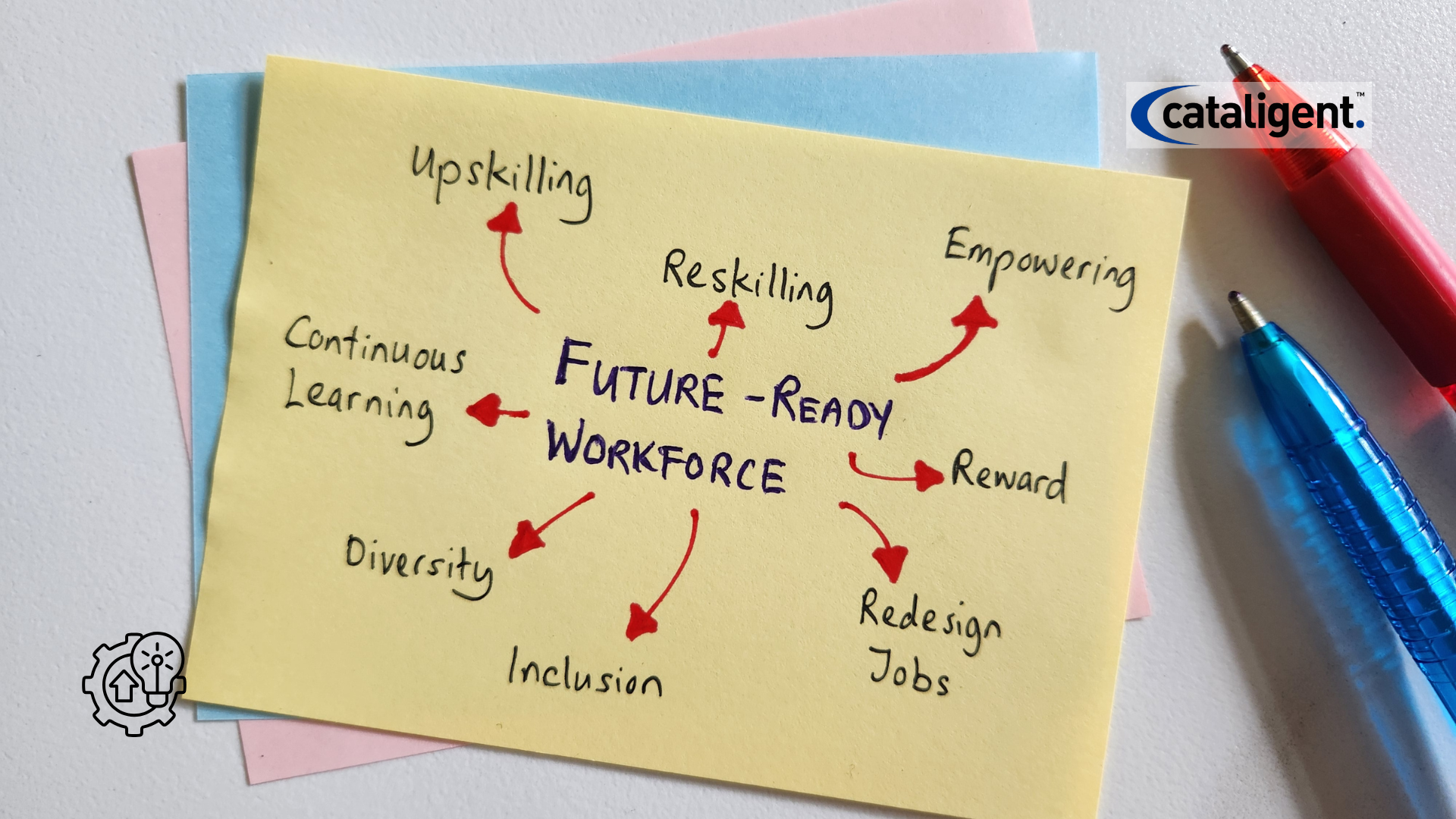
Workforce Transformation and Future Skills Advisory: Preparing Organizations for Tomorrow
Workforce transformation and future skills advisory often becomes too abstract when it stays at the level of capability frameworks and training recommendations. A consulting team may identify skill gaps, propose new roles, define learning paths, and recommend operating model changes, but the client still needs accountable owners, workstream governance, adoption milestones, decision rights, budget control, evidence of capability building, and leadership reporting. Future skills advice creates direction. Governed execution turns the workforce plan into measurable progress.
This matters for consulting firm partners, HR transformation advisors, operating model consultants, enterprise executives, CHRO teams, CFO leaders, PMO heads, business unit sponsors, and transformation offices. Workforce change affects roles, processes, systems, cost, capacity, productivity, governance, and culture. It cannot be managed only as a training calendar.
What Is Workforce Transformation and Future Skills Advisory in Execution Terms?
Workforce transformation and future skills advisory helps organizations define the capabilities, roles, governance, learning priorities, and operating model changes needed to support strategy execution. It may include workforce planning, role redesign, skills assessment, capability academies, reskilling plans, leadership routines, productivity measures, organization design, and change adoption.
In execution terms, the advisory work must become a governed transformation program. A recommendation to build future data skills may require capability baseline assessment, role mapping, learning pathway design, manager accountability, training delivery, workforce adoption evidence, performance metric changes, and budget tracking. A recommendation to redesign roles may require decision rights, approval workflows, communication, process change, and closure evidence.
Consultants help define the workforce direction and delivery model. Enterprise leaders must approve decisions, fund initiatives, hold owners accountable, and confirm whether the workforce change has been adopted.
Why Workforce Transformation and Future Skills Advisory Matters for Consulting Engagements
Workforce transformation matters because most strategic change depends on people being able and willing to work differently. A technology program may fail if users do not adopt new workflows. A cost improvement program may stall if role changes are unclear. A product growth strategy may underperform if sales, operations, and service teams do not build the right capabilities. A new operating model may exist on paper while old decision paths continue in practice.
Consulting firms need a way to connect workforce advice to initiatives and evidence. Enterprise leaders need to see whether role changes are approved, whether capability gaps are closing, whether adoption is happening, whether risks are escalating, and whether the future skills program is on track against baseline and target measures.
| Workforce advisory element | Where delivery breaks down | Governance requirement | What to track |
|---|---|---|---|
| Skills assessment | Capability gaps are documented but not linked to owned actions | Initiative owner, sponsor, baseline, and target capability | Gap closure, learning progress, evidence of adoption |
| Role redesign | Role maps are approved but not implemented consistently | Decision rights, approval workflow, business unit accountability | Role sign off, manager adoption, open decisions |
| Learning program | Training completion is treated as capability change | Outcome evidence and manager confirmation | Completion, application evidence, performance indicator movement |
| Operating model change | Process and workforce changes are managed separately | Cross functional workstream governance | Dependencies, risks, milestones, closure evidence |
How to Convert Skills Recommendations into Owned Initiatives
A skills recommendation should be broken into initiatives that can be governed. For example, building future analytics capability may include defining skill baselines, mapping roles, selecting priority teams, creating learning paths, assigning managers, setting adoption evidence, and reporting capability movement. Each initiative needs an owner, sponsor, milestone plan, dependency list, approval path, and closure condition.
This prevents workforce advisory from becoming a catalogue of training suggestions. The goal is to connect capability building with the work the organization must execute. If a business unit needs stronger forecasting, better procurement analytics, or improved service workflow management, the skills initiative should connect to those operational outcomes.
How to Link Workforce Change with Operating Model Governance
Future skills work often sits inside a broader operating model change. New skills may require new decision rights, reporting lines, service responsibilities, PMO routines, performance measures, or workforce capacity planning. Consulting teams should map workforce initiatives to the operating model rather than managing them as independent HR activities.
For example, a shared services transformation may require role redesign, process standardization, timecard discipline, service ownership, quality review, and cost tracking. These workstreams need a shared governance model so that training, process change, technology change, and leadership decisions move together.
How to Measure Adoption Beyond Training Completion
Training completion is not the same as workforce transformation. A team can complete courses without changing how work is performed. Better evidence includes manager confirmation, use of new workflows, reduction in rework, improved service response, stronger planning accuracy, role adoption, improved decision speed, or consistent use of new reporting routines.
Consulting firms should help clients define adoption evidence before delivery begins. This helps prevent a future skills program from reporting success based only on attendance. Enterprise leaders need to see whether the capability is visible in work, not only in learning records.
How to Keep Workforce Transformation Visible to Leadership
Workforce programs can become fragmented across HR, business units, PMO teams, finance, IT, and external advisors. Leadership reporting should connect workstreams, owners, risks, dependencies, budget versus actual, milestones, capability movement, adoption evidence, and decisions needed. This is especially important when workforce change supports a wider transformation or cost program.
A strong steering committee report should show which initiatives are defined, approved, implemented, delayed, blocked, or closed. It should also separate activity progress from outcome progress through Implementation Status and Potential Status where value, savings, productivity, or capability outcomes are being tracked.
Metrics That Matter
Workforce transformation and future skills advisory should be measured by adoption, capability movement, governance quality, and execution progress. Useful metrics include baseline skill level, target capability, learning completion, application evidence, role adoption, workstream progress, milestone completion, decision ageing, approval ageing, dependency blockage, risk escalation, Implementation Status, Potential Status where value is involved, budget versus actual, resource allocation, closure evidence, and steering committee reporting cadence.
Where financial value is claimed, such as productivity improvement, cost reduction, or capacity release, the engagement should distinguish forecast value from actual value and use controller validation where financial impact is reported. Where the value is non financial, evidence should still be agreed, such as adoption, quality, service level, or capability indicators.
| Metric | Why it matters in workforce advisory | How to validate it |
|---|---|---|
| Baseline skill level | Shows the starting point for capability change | Use agreed assessment criteria by role, team, or function |
| Application evidence | Shows whether training changed work behavior | Review manager confirmation, workflow usage, output quality, or performance movement |
| Decision ageing | Shows whether role and operating model decisions are delayed | Track open decisions by sponsor, business unit, and due date |
| Implementation Status | Shows whether workforce initiatives are progressing against plan | Compare milestones, stage gates, owners, and evidence |
| Potential Status | Shows whether expected capability or value outcomes remain credible | Compare target capability, forecast value, actual value, and adoption evidence |
Common Mistakes to Avoid
Treating skills work as training administration. Training delivery is only one part of workforce transformation because roles, decision rights, adoption, and evidence must also be governed.
Skipping the capability baseline. Without a baseline, the client cannot credibly show whether future skills have improved or whether reported progress is only activity.
Separating role redesign from execution governance. Role maps need owners, approvals, communication, adoption milestones, and closure evidence to change how work is actually performed.
Reporting attendance as adoption. Attendance shows participation, but adoption requires evidence that people are applying new skills in real work.
Ignoring dependencies with technology and process change. Workforce initiatives often depend on systems, workflows, policies, managers, finance decisions, and business unit capacity.
How Cataligent Helps Through CAT4
Cataligent helps consulting firms and enterprise clients govern workforce transformation and future skills programs through CAT4, its no code strategy execution platform. For consulting led business transformation, CAT4 connects workforce objectives, initiatives, owners, sponsors, milestones, dependencies, risks, approval workflows, evidence, and executive reporting.
Through CAT4, consulting teams can translate advisory recommendations into measures with Degree of Implementation stage gates. A skills initiative can move from defined to identified, detailed, decided, implemented, and closed with evidence. This helps clients distinguish learning activity from actual capability movement and adoption.
For workforce programs linked to operating model changes, Cataligent can support accountability through internal organization, portfolio visibility through multi project management, and related governance patterns such as time card management where capacity, responsibilities, and effort tracking are relevant. If workforce changes are part of a cost or productivity program, CAT4 can support value tracking for cost saving programs without claiming guaranteed savings.
The next step is to map the workforce advisory roadmap into governed initiatives. Define the baseline, target capability, initiative owners, sponsors, adoption evidence, risk escalation, approval workflow, and reporting cadence. Cataligent can help configure CAT4 around that delivery model.
What Cataligent Does Not Claim
Cataligent does not claim that CAT4 creates consulting recommendations automatically. Workforce diagnosis, skills strategy, organization design, culture judgment, and leadership decisions remain the responsibility of consulting firms and enterprise leaders.
CAT4 does not replace consulting expertise, leadership judgment, finance systems, ERP systems, BI platforms, project management tools, learning systems, HR systems, or every planning tool. CAT4 supports governed execution, value tracking, approvals, reporting, and controller backed closure where financial value is involved.
CAT4 does not guarantee ROI, compliance, transformation success, savings, EBITDA improvement, workforce adoption, employee acceptance, or business outcomes. Outcomes should be confirmed only when progress, adoption, value, or financial impact is measured against a baseline and supported by evidence.
Conclusion
Workforce transformation and future skills advisory prepares organizations for strategic change only when capability recommendations become governed execution. Consulting firms and enterprise leaders need to connect skill gaps, role changes, learning programs, operating model decisions, adoption evidence, and leadership reporting.
Talk to Cataligent about using CAT4 to move workforce transformation and future skills advisory from recommendations to measurable execution, with clear accountability and evidence based progress tracking.
FAQs
How can consulting firms make future skills advisory more measurable?
They should define a capability baseline, target capability, initiative owners, adoption evidence, milestones, and reporting cadence. This helps the client show progress beyond training completion.
Why is training completion not enough for workforce transformation?
Training completion shows participation, but it does not prove that people are applying new skills in daily work. Adoption evidence should show changed behavior, improved outputs, manager confirmation, or movement in agreed performance indicators.
How does CAT4 support workforce transformation governance?
CAT4 helps teams track workforce initiatives, owners, sponsors, milestones, dependencies, approvals, risks, stage gates, adoption evidence, and reporting. It supports the execution layer that connects workforce recommendations to accountable delivery.