
Strategies for Reducing Resource Bottlenecks in Multiple Projects
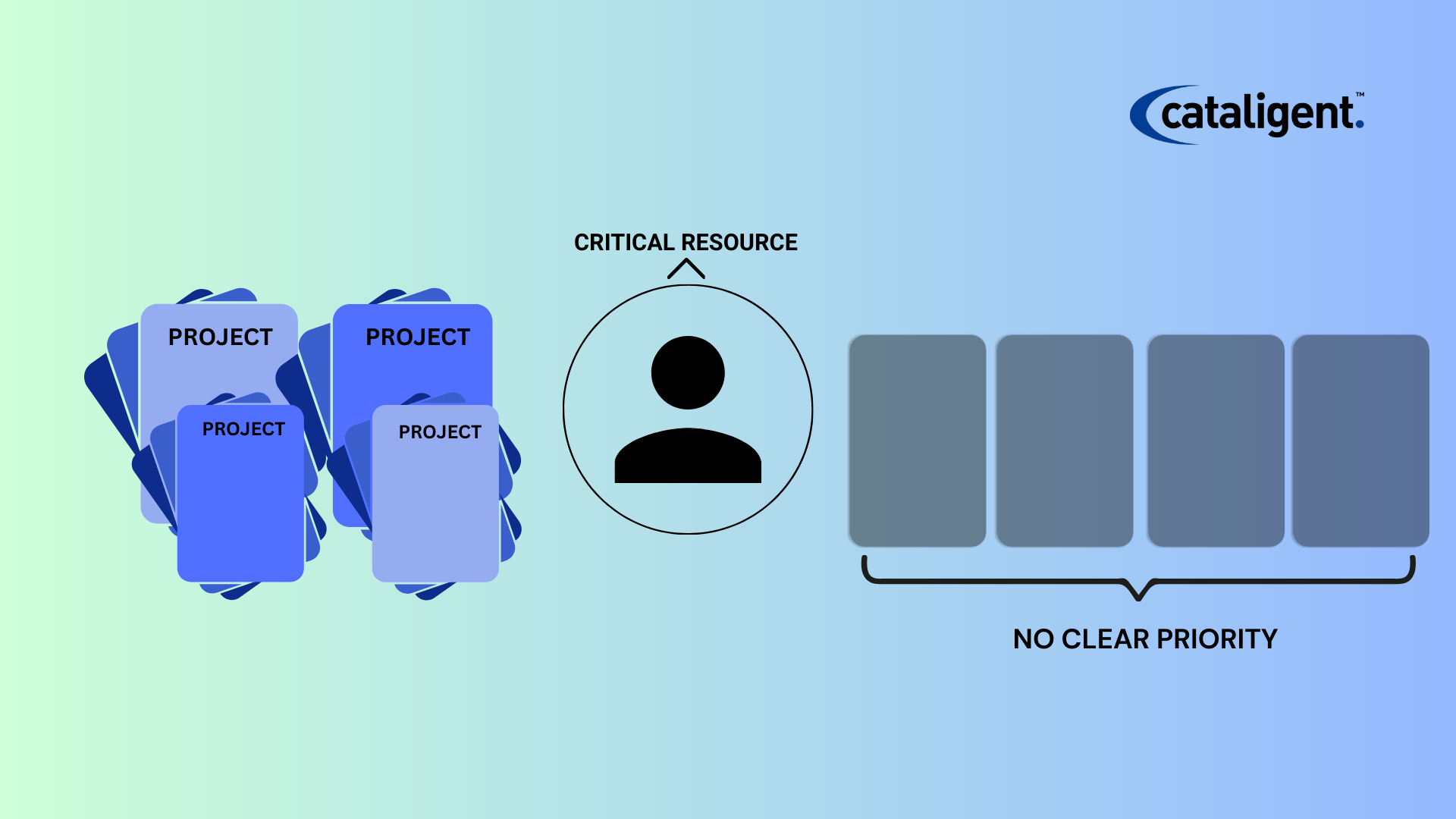
Resource bottlenecks in multiple projects are not only capacity problems. They are visibility, priority, and decision problems. When the same experts, sponsors, finance reviewers, analysts, and workstream leads are pulled across competing projects, leaders need a governed way to see demand, decide tradeoffs, and protect the work that matters most.
Why resource control breaks down
The first breakdown is usually ownership. A resource bottlenecks effort needs an accountable sponsor, responsible owners, consulted functions, and informed stakeholders. When those roles are unclear, teams escalate too late or wait for decisions that never arrive.
The second breakdown is the gap between plans and evidence. Teams may report progress through meetings and documents, but leaders need to know whether milestones, financial effects, risks, dependencies, and approvals are moving together. Without that view, a green update can hide a red business outcome.
- Unclear decision rights across sponsors, owners, PMO, and finance.
- Separate trackers for milestones, risks, budgets, and benefits.
- Manual consolidation before leadership meetings.
- No formal hold, cancel, or close route for weak initiatives.
- Late discovery of resource, dependency, or value gaps.
What leaders should control first
Leaders should begin by stabilizing the facts. For resource bottlenecks, that means confirming the current baseline, target, forecast, actual progress, open decisions, and constraints. It also means agreeing which work should continue, which work should pause, and which work should be cancelled before it consumes more capacity.
The next step is to connect reporting to decisions. A status update should not simply say that work is delayed. It should state the owner, cause, financial impact, dependency, options, decision needed, and date by which the decision matters. This is where multi project management and portfolio governance become practical rather than theoretical.
The role of value tracking and closure
Every serious resource bottlenecks model needs a way to prove whether value is still realistic. Plans change, assumptions age, market conditions shift, and teams discover new constraints. If value tracking is separate from execution tracking, leaders may keep funding initiatives that no longer support the original business case.
Closure is equally important. A project or initiative should not disappear because reporting becomes inconvenient. It should move through a formal close, on hold, or cancel decision with evidence and ownership. For cost related work, time card management thinking helps connect activity to resource use, financial effect, and leadership accountability.
How Cataligent Helps Through CAT4
Cataligent helps consulting firms and enterprise teams turn execution control into a governed operating model through CAT4, its no code strategy execution platform. CAT4 connects strategy, measures, approvals, financial tracking, reporting, and closure inside one platform rather than leaving each element in a separate file or meeting rhythm.
The platform supports the Organization, Portfolio, Program, Project, Measure Package, and Measure hierarchy. It also supports DoI stage gates, Implementation Status, Potential Status, approval workflows, audit trails, role based access, and scheduled reports. This gives leaders a clearer view of whether work is progressing, whether value is holding, and whether decisions are stuck.
Cataligent brings the business guidance around programme setup, configuration, consulting methodology, and enterprise adoption. For teams dealing with resource bottlenecks, the next practical step is to review where execution data, approval data, and value data currently split apart, then discuss how Cataligent can support a governed CAT4 model.
FAQs
Q. What is the biggest risk in resource bottlenecks?
The biggest risk is acting on incomplete or disconnected information. Leaders may make fast decisions, but those decisions can be wrong if ownership, value, approvals, and dependencies are not visible together.
Q. Why are spreadsheets and slide reports not enough?
They can describe progress, but they usually do not govern decisions, evidence, value tracking, and closure in one place. As the number of initiatives grows, manual consolidation creates delay and weakens accountability.
Q. How does Cataligent support this through CAT4?
Cataligent helps clients configure the governance model, reporting cadence, approval rules, and value tracking approach inside CAT4. CAT4 then provides the platform layer for execution control from strategy to closure.