
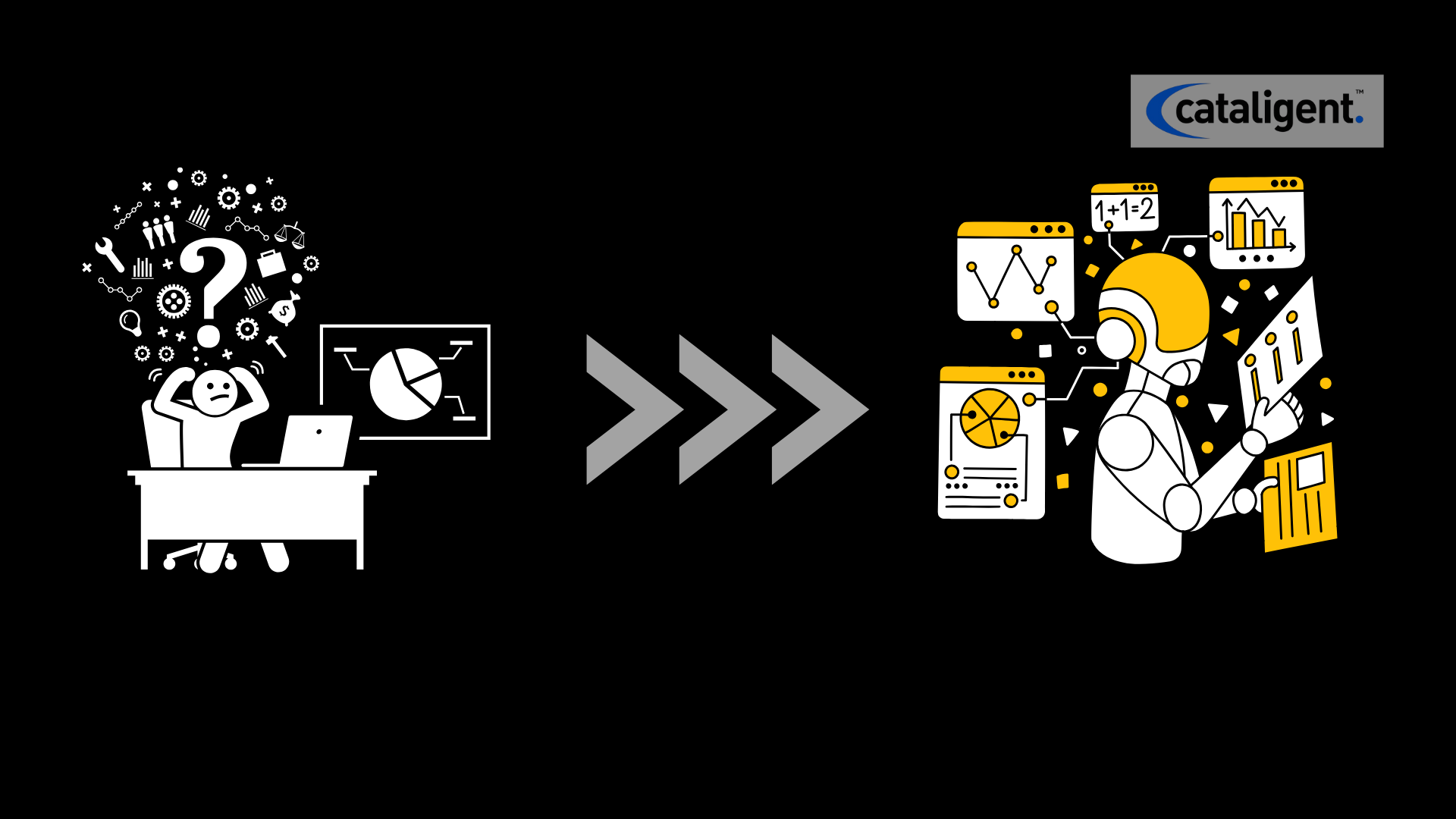
From Data Overload to Strategic Insight: Driving Business Transformation with AI-Driven Decision Platforms
Enterprises often have more data than decision capacity. Dashboards show sales, finance, operations, service, supply chain, and customer signals, but leaders still ask the same questions: who owns the next action, which decision is overdue, what risk is blocking execution, which value assumption has changed, and what evidence proves progress? Data overload becomes a business transformation problem when information is visible but execution is not governed.
AI driven decision platforms can help teams detect patterns and prioritize signals, but they do not remove the need for transformation governance. CEOs, CFOs, COOs, strategy leaders, PMO leaders, consulting firms, finance teams, and business unit heads still need one controlled path from insight to initiative, from initiative to approval, and from approval to measurable execution.
What Are AI Driven Decision Platforms in Business Transformation?
AI driven decision platforms are systems or capabilities that help enterprises interpret data, identify patterns, recommend priorities, or support decision making. They may help detect customer churn risk, forecast demand, rank supplier risks, flag cost anomalies, classify service requests, or identify process bottlenecks. In business transformation, their value depends on how well the insight is connected to owned initiatives and leadership reporting.
A useful decision platform does not only show a signal. It should help leaders understand the business problem, the affected workstream, the accountable owner, the decision needed, the dependency, the expected value, and the evidence required for closure. Strategic insight is not the end of transformation. It is the starting point for governed execution.
Why Data to Decision Governance Matters for Business Transformation
Data to decision governance matters because many transformation programs already have analytics but still fail to act fast enough. A dashboard may show margin pressure, a model may identify procurement savings, and a report may highlight service delays. Yet the business impact remains unclear if no owner is assigned, no sponsor approves the measure, no milestone is tracked, no dependency is escalated, and no closure evidence is required.
The core logic is practical. Data identifies a problem. A decision creates a path. An initiative creates potential. Governed execution turns potential into confirmed progress. When financial value is involved, the path should also connect baseline, target value, forecast value, actual value, and controller validation.
| Decision area | Where data overload creates risk | Governance requirement | What to track |
|---|---|---|---|
| Customer growth | Signals are reviewed but no campaign owner acts | Assign owner, sponsor, decision date, and adoption measure | Decision ageing, KPI progress, business adoption |
| Cost reduction | Savings ideas are listed without finance validation | Define baseline, target value, forecast value, and controller review | Potential Status, actual value, closure evidence |
| Operations performance | Process bottlenecks are visible but dependencies remain unresolved | Track dependency owner, risk escalation, and stage gate movement | Dependency blockage, Implementation Status, milestone evidence |
| Service management | High ticket volume is known but process change is not governed | Define service owner, workflow change, approval path, and reporting cadence | Resolution KPI, escalation ageing, adoption evidence |
| Portfolio governance | Many insights compete for leadership attention | Prioritize initiatives by strategic objective, value, urgency, and capacity | Portfolio view, resource allocation, steering committee decision |
How to Move from Insight to Owned Transformation Initiatives
The first step is to convert data signals into transformation initiatives. An insight should answer four questions before it enters the portfolio: what problem does it show, which business outcome is affected, who owns the response, and what evidence will confirm progress? Without these answers, insight becomes another reporting layer.
For example, a margin dashboard may show product profitability decline. A decision platform may recommend price action or SKU simplification. Governance should then define the initiative owner, commercial sponsor, finance controller, customer impact risk, approval workflow, implementation milestones, forecast value, and actual value tracking. The same discipline applies to workforce planning, procurement savings, service redesign, operating model change, and quality improvement.
How to Prioritize Decisions Across the Transformation Portfolio
Data overload often creates too many possible actions. The transformation office should not send every signal to the steering committee. Instead, it should group decisions by strategic objective, business impact, urgency, dependency load, and readiness. This gives leaders a controlled portfolio of decisions, not a queue of disconnected alerts.
Prioritization also protects consulting firms during client transformation engagements. A consulting team may help a client see many opportunities, but the engagement gains credibility when those opportunities are converted into governed measures with owners, sponsors, stage gates, and reporting cadence. Better decision flow reduces manual consolidation and improves steering committee focus.
How to Connect AI Supported Decisions with Stage Gates
AI supported decisions should move through stage gates like any other transformation measure. A signal can be defined, the opportunity can be identified, the business case can be detailed, the action can be decided, the implementation can be tracked, and the outcome can be closed with evidence. This is where Degree of Implementation can be useful for transformation governance.
Stage gates protect leaders from acting on weak assumptions. They also prevent slow decisions from hiding in email chains. A decision needed for pricing, procurement, service routing, or operating model change should have an owner, ageing status, supporting data, approval route, risk note, and next review date. This turns decision platforms into execution support rather than static reporting tools.
How to Keep Strategic Insight Connected to Adoption
A decision is only useful if the business acts on it. Data may show the right direction, but adoption requires changed routines. Sales teams must use the new account priority. Procurement teams must apply the new supplier rule. Service teams must follow the new escalation process. Finance teams must validate the value logic. Business unit sponsors must own the change.
Adoption should be tracked as part of business transformation, not as a late communication task. Useful adoption evidence includes process usage, exception trends, training completion, workflow approvals, owner sign off, customer or supplier response, and KPI movement. This helps leaders distinguish insight from impact.
Metrics That Matter
Metrics for AI driven decision platforms should show whether data is improving transformation execution. It is not enough to count dashboards, alerts, or model outputs. Leaders need metrics that show insight conversion, decision ageing, approval ageing, dependency blockage, Implementation Status, Potential Status, forecast value, actual value, budget versus actual, resource allocation, steering committee reporting cadence, status accuracy, and closure evidence.
| Metric | Why it matters for data to decision transformation | How to validate it |
|---|---|---|
| Insight conversion rate | Shows whether signals become owned initiatives | Count insights with owner, sponsor, scope, and closure condition |
| Decision ageing | Shows where business judgment is blocking execution | Track open decisions by age, owner, and financial or operational impact |
| Implementation Status | Shows whether approved decisions are being executed | Review milestone evidence, DoI movement, and blocker status |
| Potential Status | Shows whether expected value remains credible | Compare target value, forecast value, actual value, and risk notes |
| Adoption evidence | Shows whether teams changed behavior based on the decision | Use workflow data, process compliance, training records, and owner sign off |
| Manual reporting effort | Shows whether decision governance is reducing status preparation work | Measure time spent preparing reports, reconciling spreadsheets, and updating decks |
Common Mistakes to Avoid
Assuming more dashboards create better decisions. Dashboards help visibility, but transformation progress needs owners, approvals, milestones, dependencies, and closure evidence.
Treating AI recommendations as automatic business decisions. AI output should support decision making, but leaders still need sponsor accountability and approval workflows.
Skipping the initiative layer. Insight must be converted into a governed initiative before it can be tracked, escalated, implemented, and closed.
Reporting value before execution evidence exists. A forecast generated from data does not become actual value until implementation, adoption, and validation are confirmed.
Letting decision logs live outside the transformation system. Decisions hidden in email or spreadsheets weaken steering committee reporting and slow execution.
How Cataligent Helps Through CAT4
Cataligent helps enterprises and consulting firms move from data overload to governed transformation execution through CAT4, its no code strategy execution platform. The business problem Cataligent helps solve is the gap between insight and accountable action. Data may identify opportunities, but CAT4 helps structure the initiatives, owners, sponsors, approvals, risks, dependencies, milestones, Degree of Implementation, Implementation Status, Potential Status, value tracking, and closure evidence needed to manage transformation.
Through CAT4, Cataligent supports business transformation programs where decision platforms, analytics, and leadership reporting must connect to execution control. PMO and strategy teams can connect insights to multi project management and portfolio governance. When decisions affect roles, responsibilities, escalation routes, or approval rights, Cataligent can support internal organization governance. Where data identifies savings or margin improvement, CAT4 can support cost saving programs with baseline, target value, forecast value, actual value, and controller backed closure.
Cataligent does not position CAT4 as a replacement for BI platforms or AI models. CAT4 supports the execution layer that helps leaders act on insight, track progress, and report evidence to the steering committee.
What Cataligent Does Not Claim
Cataligent does not claim that CAT4 creates transformation strategy automatically. CAT4 does not replace consulting expertise, leadership judgment, finance systems, ERP systems, BI platforms, AI platforms, project management tools, or every planning tool. CAT4 does not guarantee ROI, compliance, transformation success, savings, EBITDA improvement, user adoption, or business outcomes. CAT4 supports governed execution, value tracking, approvals, reporting, and controller backed closure where financial value is involved.
Conclusion
Data overload becomes strategic insight only when the enterprise can decide, assign, execute, adopt, and validate. AI driven decision platforms may help leaders see what matters, but business transformation requires a governed path from signal to initiative and from initiative to evidence. Without that path, information grows while progress remains unclear.
Talk to Cataligent about connecting decision platforms, transformation governance, and execution reporting through CAT4, so strategic insight becomes owned work, current reporting, and measurable progress.
FAQs
How can enterprises turn data overload into business transformation progress?
They should convert important data signals into initiatives with owners, sponsors, approvals, milestones, risks, dependencies, and closure evidence. This creates a governed path from insight to execution.
Do AI driven decision platforms replace leadership judgment?
No, AI driven decision platforms can support analysis and prioritization, but leaders remain accountable for decisions. Transformation governance should define who approves, who owns, and how evidence is confirmed.
How does CAT4 support data to decision transformation?
CAT4 helps Cataligent connect insights to initiatives, DoI stage gates, Implementation Status, Potential Status, approvals, value tracking, and executive reporting. It supports governed execution without replacing BI platforms or AI models.