
What Is DevOps Lifecycle?
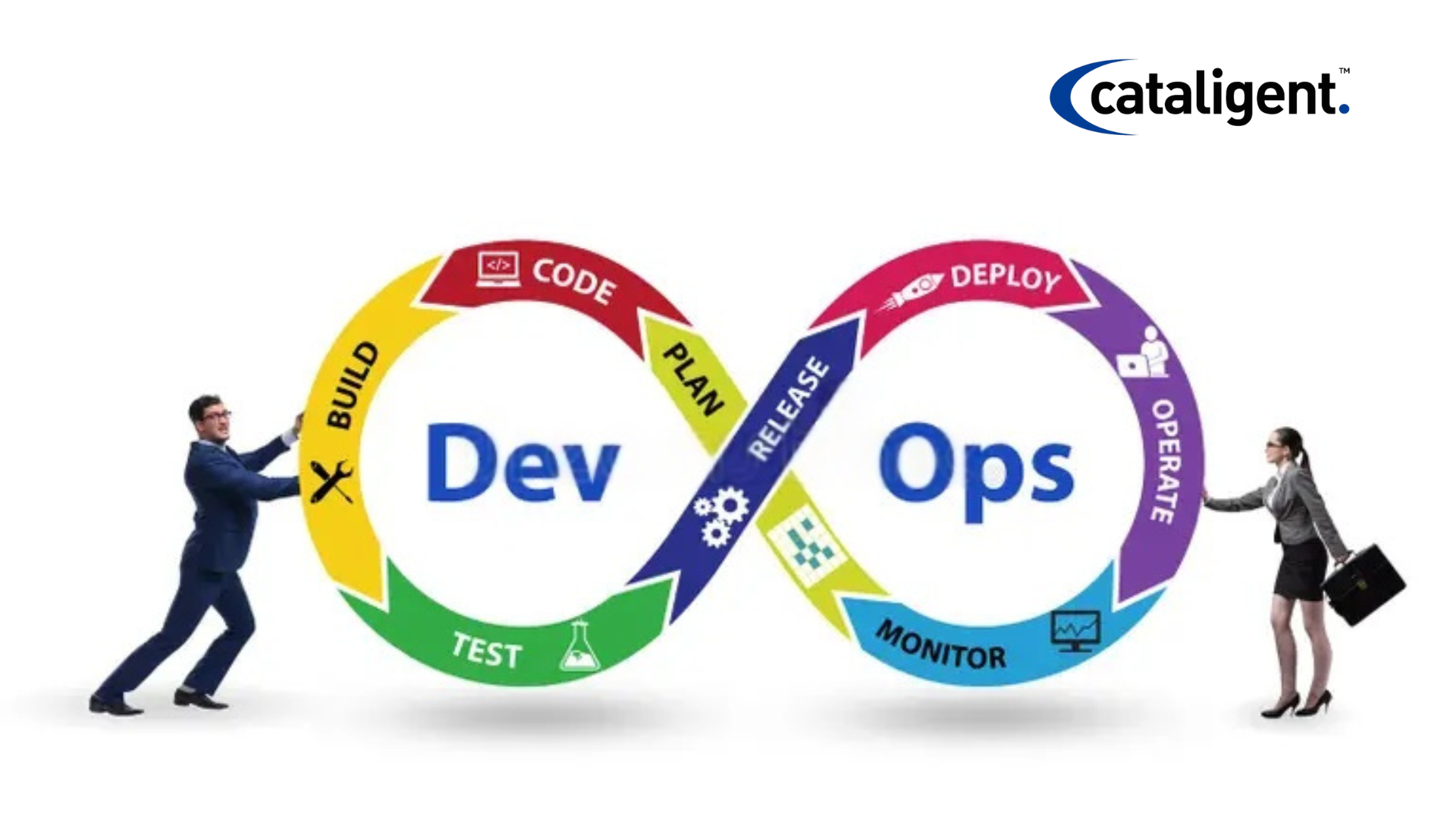
The DevOps lifecycle is a structured way to plan, build, test, release, deploy, operate, monitor, and improve software. It brings development, operations, quality, security, product, and business teams into one continuous operating model so software delivery becomes more controlled, measurable, and responsive to business needs.
For business leaders, engineering leaders, PMO teams, finance teams, product owners, and service owners, the DevOps lifecycle is not only a technical delivery model. It is also a governance issue because software delivery delays, failed releases, weak testing, unclear ownership, poor monitoring, and repeated incidents create cost.
The practical logic is simple. A problem creates cost. An improvement creates potential. Governed execution turns potential into confirmed value when effort, delay, rework, release disruption, manual reporting, escalation, failed deployment effort, or cost reduces against a clear baseline.
What Is the DevOps Lifecycle?
The DevOps lifecycle is the repeatable flow that moves software from business idea to production operation and then back into future improvement. It usually includes planning, development, build, test, release, deployment, operation, monitoring, and feedback.
The lifecycle is called continuous because each phase informs the next. Monitoring shows what is happening in production. Feedback creates new priorities. Planning converts those priorities into work. Development, testing, release, and deployment move improvements back into live service.
A strong DevOps lifecycle is not only about speed. It should also support quality, security, service reliability, risk control, clear ownership, approval discipline, evidence based reporting, and measurable business outcomes.
Why the DevOps Lifecycle Matters for Cost Saving
The DevOps lifecycle matters for cost saving because many software delivery costs come from avoidable friction. Requirements are unclear. Code defects are found late. Builds fail repeatedly. Testing depends too much on manual effort. Release approval is slow. Deployment creates incidents. Production issues are discovered after users are affected.
A well governed DevOps lifecycle can support cost saving by reducing late rework, failed deployments, rollback effort, repeated testing, release delay, support escalation, incident recurrence, and manual reporting. It can also help leaders see which software delivery improvements are progressing and which still have value potential.
Cost saving should not be claimed automatically because a DevOps process or toolset exists. Savings should be confirmed only when effort, delay, rework, release disruption, manual reporting, escalation, failed deployment effort, or cost reduces against a defined baseline.
| Topic area | Common problem | Cost saving logic |
|---|---|---|
| Planning | Work is started without clear business priority or success measures | Better planning can reduce low value work, rework, and delayed decisions |
| Development | Code changes create integration problems late in the cycle | Earlier integration can reduce defect correction effort and release delay |
| Testing | Testing depends heavily on manual effort and late defect discovery | Better test governance can reduce repeated effort and production defects |
| Release and deployment | Approvals, evidence, rollback rules, and handoffs are unclear | Clear deployment governance can reduce failed releases and escalation |
| Monitoring and feedback | Production issues are found late or are not converted into improvement work | Closed feedback loops can reduce incident recurrence and support pressure |
Phase 1: Plan
The planning phase defines what the team should build, why it matters, who owns the outcome, and how success will be measured. This phase should connect software work with business goals, user needs, service priorities, risk conditions, and cost expectations.
Good planning reduces waste by preventing teams from starting work without enough clarity. It should define scope, priorities, acceptance criteria, risks, dependencies, milestones, approval needs, and expected value.
For governance, planning should also define baselines. If a DevOps improvement is expected to reduce release delay, manual testing effort, or production defects, the current state should be measured before target savings are set.
Phase 2: Develop
The development phase is where teams write, review, and manage code. Version control, branching discipline, code review, coding standards, and early quality checks help reduce integration issues and improve delivery control.
Development should not be isolated from operations, security, testing, or service ownership. Teams should understand deployment expectations, support needs, data handling rules, security requirements, and monitoring expectations while code is being created.
Strong development governance helps reduce rework. It also helps leaders see whether delivery problems are caused by unclear requirements, poor handoffs, weak code review, missing test coverage, or repeated technical issues.
Phase 3: Build
The build phase converts source code and related components into deployable artifacts. These artifacts may include application packages, containers, configuration packages, infrastructure definitions, or other release assets.
Build automation helps reduce manual error and inconsistency, but automation should still be governed. Build ownership, dependency handling, artifact versioning, failure rules, test triggers, evidence capture, and approval conditions should be clear.
Build metrics should show more than whether builds are running. Leaders should review build failures, failure ageing, repeated dependency issues, rework effort, and whether build stability is improving against the baseline.
Phase 4: Test
The testing phase verifies whether the software works as expected and whether it is ready for release. Testing may include unit tests, integration tests, functional tests, regression tests, performance tests, security checks, user acceptance testing, and compliance related checks where relevant.
Testing is one of the strongest cost control points in the DevOps lifecycle. Defects found early are usually easier and cheaper to fix than defects found in production or near a major release date.
Testing should be governed through clear test ownership, coverage expectations, failure rules, defect handling, evidence requirements, approval conditions, and reporting. The goal is not only to run tests, but to reduce late rework and production risk.
Phase 5: Release
The release phase prepares tested software for deployment. It includes release versioning, approval decisions, release notes, deployment planning, rollback preparation, risk review, communication planning, and readiness confirmation.
Release governance is important because faster release cycles can still create cost if approvals, evidence, ownership, and risk decisions are unclear. Teams need to know who approves the release, what evidence is required, what risks remain, and what happens if the release fails.
Release improvement should be measured through baselines such as release coordination effort, approval delay, release defects, rollback count, manual reporting effort, and production disruption.
Phase 6: Deploy
The deployment phase moves software into production or another target environment. Deployment may be manual, partially automated, or fully automated depending on the organization, service criticality, risk appetite, compliance needs, and operating model.
Continuous Deployment can reduce manual intervention, but it must operate within clear governance. Some services may require controlled approvals, release windows, business communication, change review, or rollback planning before production deployment.
Deployment governance should define deployment owners, approval gates, environment controls, rollback rules, evidence requirements, communication responsibilities, and post deployment validation. This helps reduce disruption while still improving delivery speed.
Phase 7: Operate
The operate phase focuses on keeping the live application stable, secure, available, and supportable. It includes infrastructure management, service ownership, incident response, access control, configuration management, capacity review, and operational support.
Operations should be connected to development and product planning. If recurring incidents, performance problems, user complaints, support issues, or security findings appear in production, they should feed back into improvement work.
A strong operating model reduces cost by lowering incident recurrence, improving service reliability, reducing escalation, and making support responsibilities clear.
Phase 8: Monitor and Feedback
Monitoring and feedback close the DevOps lifecycle. Monitoring helps teams understand application health, performance, availability, user impact, security signals, incident patterns, and service level performance.
Feedback turns production learning into future planning. This may include user feedback, incident reviews, defect trends, performance data, release findings, support observations, and business outcome reviews.
The most important governance point is follow through. Feedback should not stay in reports. Recurring problems should become owned improvement measures with baselines, target savings, forecast savings, actual savings, risks, dependencies, milestones, approvals, and closure evidence.
| Problem | Cost problem | What to measure |
|---|---|---|
| Weak planning discipline | Teams work on unclear or low value priorities | Business goal linkage, scope changes, rework hours, approval delay |
| Late testing failures | Defects create release delay and repeated correction effort | Defect escape rate, test failure ageing, rework effort, release delay |
| Manual release management | Teams spend effort on handoffs, meetings, and status updates | Release coordination hours, approval ageing, reporting effort, release readiness |
| Production instability | Incidents create disruption, support pressure, and emergency fixes | Incident volume, rollback count, mean time to recovery, support effort |
| No value validation | DevOps lifecycle improvements are reported without proof against a baseline | Baseline cost, target saving, forecast saving, actual saving, controller validation |
Metrics That Matter
DevOps lifecycle metrics should show whether software delivery is becoming faster, safer, more reliable, and less costly to manage. They should not only show that teams are using DevOps tools or running more pipeline jobs.
Baseline cost should define the current cost, effort, delay, rework, release disruption, manual reporting, failed deployment effort, rollback effort, support pressure, or risk exposure before a DevOps lifecycle improvement begins. This gives leaders a starting point for value tracking.
Target saving should define the intended reduction in cost, effort, delay, rework, release disruption, manual reporting, failed deployment effort, rollback effort, or support burden. The target should be specific enough for owners, sponsors, and controllers to review.
Forecast saving should show the expected value as lifecycle improvement progresses. Forecasts may change when scope, adoption, testing quality, release governance, deployment risk, service criticality, dependencies, or tooling readiness changes.
Actual saving should be recorded only when evidence shows that cost, effort, delay, rework, release disruption, manual reporting, failed deployment effort, rollback effort, or support pressure has reduced against the baseline.
Finance or controller validation should be included where financial value is reported. This helps leaders separate planned value, forecast value, and confirmed value.
Other useful metrics include lead time for changes, deployment frequency, change failure rate, rollback count, build success rate, test pass rate, defect escape rate, mean time to recovery, incident recurrence, release approval ageing, manual release effort, security finding ageing, evidence completeness, dependency blockage rate, milestone delay, and closure evidence completion.
Common Mistakes to Avoid
Treating DevOps as a toolset only. Tools can support DevOps, but they do not create delivery discipline by themselves. Teams still need ownership, planning discipline, test governance, release controls, monitoring, evidence, and feedback routines.
Automating unclear handoffs. If responsibilities, approvals, rollback rules, service ownership, and test evidence are unclear, automation can move confusion faster. The lifecycle should be designed around clear accountability before automation is expanded.
Ignoring security and compliance until release. Late security review can create rework, delay, exceptions, and evidence gaps. Security and compliance expectations should be built into planning, development, testing, release, deployment, and operations.
Measuring activity without measuring value. More builds, releases, or deployments do not automatically prove business value. Leaders should measure whether lifecycle improvements reduce delay, defects, manual effort, failed deployments, rollback effort, support pressure, risk exposure, or cost against a baseline.
Reporting forecast value as actual value too early. A DevOps lifecycle improvement may be expected to reduce cost or improve delivery performance, but expected value should not be reported as confirmed value until evidence shows reduction against the baseline. Finance or controller validation should be included where financial value is reported.
How Cataligent Supports DevOps Lifecycle Governance Through CAT4
Cataligent supports enterprises and consulting firms that need stronger governance over DevOps lifecycle improvement, software delivery improvement, cost saving programs, internal organization work, business transformation, and project portfolio governance. Through CAT4, Cataligent helps teams manage the execution layer around DevOps improvement without positioning CAT4 as a DevOps platform, CI/CD tool, source control tool, build tool, testing framework, deployment pipeline, monitoring platform, cloud platform, or software engineering environment.
CAT4 is Cataligent’s no code strategy execution and enterprise governance platform. It supports governed execution, value tracking, approvals, reporting, and controller backed closure for Cost Saving Programs, Business Transformation, Internal Organization, and Multi Project Management.
For DevOps lifecycle governance, CAT4 can help teams manage Measures with owners, sponsors, controllers, baselines, target savings, forecast savings, actual savings, milestones, approvals, risks, dependencies, documents, dashboards, reporting status, and closure evidence. This helps leaders see which DevOps improvement measures are progressing, which are blocked, which still have value potential, and which have evidence for closure.
CAT4 uses Degree of Implementation to help measures move through governed stages from definition to closure. These DoI stage gates help DevOps lifecycle improvement measures move from problem definition and approval through implementation, validation, and closure in a controlled way.
CAT4 also supports a dual status view. Implementation Status shows whether the work is progressing. Potential Status shows whether the expected saving, value, or risk reduction is still likely to be delivered.
This distinction matters for DevOps improvement. A lifecycle improvement may be on schedule while expected value weakens because adoption is low, test coverage is incomplete, release approvals remain slow, or production incidents continue. CAT4 helps leaders see both work progress and value potential before executive reporting becomes misleading.
Where financial value is reported, CAT4 supports controller backed closure so actual savings can be reviewed against baselines and supporting evidence. This helps teams separate planned DevOps lifecycle improvement, forecast value, and confirmed value in a governed way.
What Cataligent Does Not Claim
Cataligent does not claim that CAT4 replaces DevOps platforms, CI/CD tools, source control tools, build tools, testing frameworks, deployment pipelines, monitoring systems, cloud platforms, service desks, ticketing systems, ITSM tools, GRC platforms, security tools, or software engineering environments.
CAT4 does not automatically build code, run tests, deploy software, monitor applications, detect incidents, route tickets, scan code, manage repositories, replace Jenkins, replace GitLab CI, replace GitHub Actions, replace Azure DevOps, replace AWS CodePipeline, replace Jira, replace ServiceNow, replace SAP, replace Oracle, replace Power BI, guarantee release success, or guarantee cost reduction.
CAT4 supports the governed execution layer around DevOps lifecycle improvement. It helps teams manage improvement measures, ownership, baselines, targets, forecasts, actuals, risks, dependencies, approvals, reporting, and closure evidence so leaders can track whether DevOps improvement work is moving toward measurable outcomes.
Conclusion
The DevOps lifecycle gives organizations a continuous model for planning, developing, building, testing, releasing, deploying, operating, monitoring, and improving software. Its value depends on whether the organization governs the lifecycle with clear ownership, evidence, risk control, approval discipline, reporting, and outcome measurement.
The strongest DevOps lifecycle improvement approach defines baselines, owners, sponsors, controllers, target savings, forecast savings, actual savings, risks, dependencies, approvals, milestones, reporting status, and closure evidence. It connects software delivery improvement to cost saving, service reliability, quality, risk reduction, and business transformation goals.
When the DevOps lifecycle is managed this way, leaders can see not only whether teams are delivering software, but whether release delay, manual effort, rework, failed deployments, escalation, support pressure, risk exposure, or cost is reducing against a baseline. That is how DevOps becomes a practical driver of software delivery performance and measurable business value.
Improve DevOps Lifecycle Governance with Cataligent
FAQs
What is the DevOps lifecycle?
The DevOps lifecycle is the continuous flow of planning, development, build, test, release, deployment, operation, monitoring, and feedback. It helps development, operations, testing, security, product, and business teams work through a shared software delivery model.
How can the DevOps lifecycle support cost saving?
It can support cost saving by reducing rework, late defects, failed deployments, rollback effort, manual release coordination, production incidents, support pressure, and manual reporting. Savings should be confirmed only when those reductions are measured against a baseline and validated where financial value is reported.
Does CAT4 replace DevOps or CI/CD tools?
No, CAT4 does not replace DevOps platforms, CI/CD tools, source control tools, build tools, testing frameworks, deployment pipelines, cloud platforms, or monitoring systems. CAT4 supports governed execution, value tracking, approvals, reporting, and controller backed closure for DevOps lifecycle improvement measures around those operating environments.