
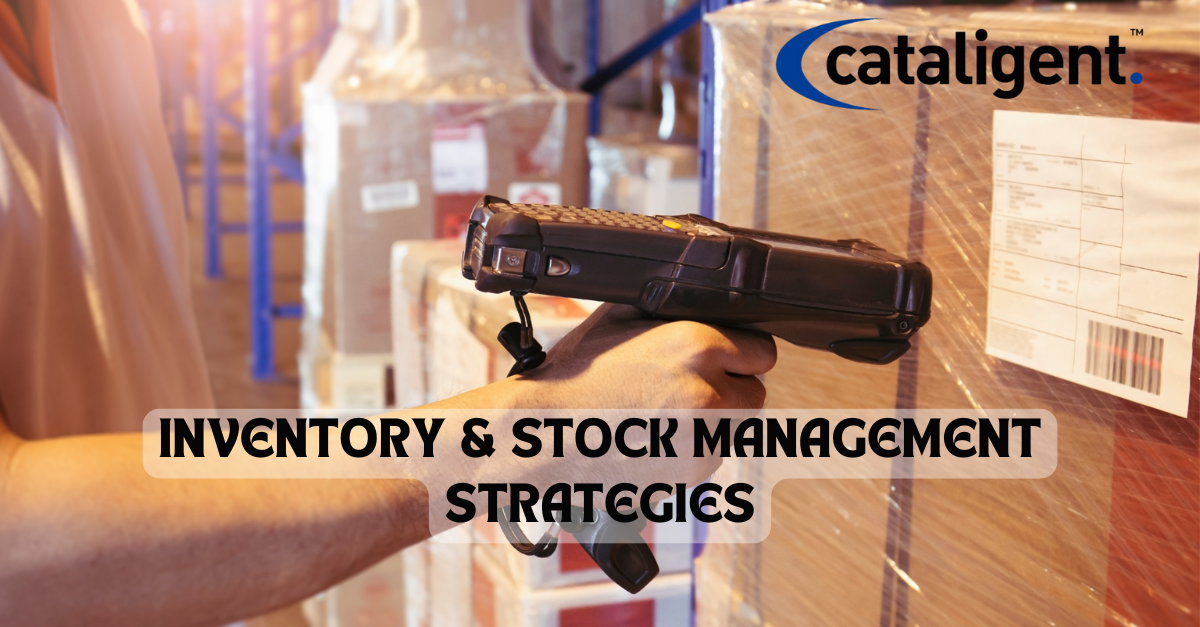
Inventory and Stock Management Strategies
Inventory problems create cost long before they appear as a warehouse issue. Excess stock ties up working capital, obsolete material creates write offs, stockouts trigger expedited freight, poor cycle counts distort planning, and safety stock rules often survive long after demand patterns change. Inventory and stock management strategies become cost saving strategies only when they connect operational decisions with baseline inventory cost, target savings, forecast savings, actual savings, cash flow impact, and finance validation.
For CFOs, COOs, procurement leaders, supply chain teams, PMOs, and consulting firms, the challenge is to reduce avoidable inventory cost without harming service levels. A problem creates cost. An improvement creates potential. Governed execution turns potential into confirmed value.
What Are Inventory and Stock Management Strategies?
Inventory and stock management strategies are the methods used to control how much stock an organization holds, where it is held, when it is replenished, and how quickly it turns into revenue or operational use. Practical levers include ABC analysis, cycle counting, safety stock review, supplier lead time reduction, demand planning discipline, obsolete stock reduction, vendor managed inventory, slow moving stock clearance, working capital release, and service level segmentation.
In cost saving strategy, inventory improvement is not only about lowering stock levels. It is about choosing the right stock for the right service promise at the right financial cost. Reducing inventory too aggressively can damage revenue and service. Holding excess inventory can hide poor forecasting, weak procurement discipline, inefficient product ranges, supplier risk, and slow decision making.
Why Inventory and Stock Management Matters for Cost Saving
Inventory is a major cost saving area because it affects cash, profit, risk, and service at the same time. Excess inventory creates carrying cost, storage cost, insurance cost, handling cost, obsolescence, shrinkage, and working capital pressure. Low inventory discipline creates stockouts, urgent purchasing, premium freight, customer dissatisfaction, and lost sales.
Many inventory initiatives fail because teams treat stock reduction as a one time clean up. A warehouse clears obsolete stock, procurement negotiates lower minimum order quantities, or planning adjusts safety stock, but the operating model that created the problem remains unchanged. Sustainable improvement requires governance, ownership, approval workflows, dependency tracking, and current reporting within wider cost saving programs.
| Inventory lever | Where cost appears | Savings risk | Evidence needed |
|---|---|---|---|
| Safety stock reduction | Working capital, storage, insurance, handling | Stockouts increase if lead time risk is ignored | Baseline stock value, demand variability, service level data |
| Obsolete stock clearance | Write offs, blocked cash, storage space | One time clean up is counted as recurring savings | Ageing report, disposal value, write off treatment, finance review |
| ABC analysis | Excess effort on low value items | Classification is not updated as demand changes | SKU value ranking, movement data, owner review cadence |
| Vendor managed inventory | Procurement effort, stock holding, service risk | Supplier terms shift cost without reducing total cost | Contract terms, stock levels, service measures, total cost view |
| Cycle counting | Planning errors, stockouts, rework, urgent buying | Accuracy improves locally but planning does not change | Count accuracy, variance trend, root cause actions |
Define Baseline Inventory Cost and Cash Impact
Inventory savings need a baseline that goes beyond units on hand. A proper baseline should include average stock value, days inventory outstanding, carrying cost, storage cost, write offs, premium freight, obsolescence, service levels, and stockout incidents. It should also define whether the target is EBIT impact, EBITDA impact, cash flow impact, or working capital release.
This distinction matters. Reducing inventory may improve cash flow without creating the same P and L effect as a supplier cost reduction. Obsolete stock disposal may create a one time effect. Lower carrying cost may create recurring savings. A governed strategy should prevent these value types from being mixed in executive reporting.
Prioritize Inventory Initiatives by Value and Risk
Not every inventory initiative deserves the same attention. High value, high risk categories require stronger governance than low value consumables. A practical prioritization model should consider stock value, demand volatility, supplier lead time, margin sensitivity, customer impact, obsolescence risk, and implementation difficulty.
For example, reducing safety stock for a critical spare may release cash but increase downtime risk. Rationalizing slow moving finished goods may reduce storage cost and complexity but require sales and product management approval. A portfolio view helps leaders compare working capital release, recurring cost reduction, and service risk across initiatives.
Connect Procurement, Operations, Sales, and Finance
Inventory and stock management strategies fail when functions optimize locally. Procurement may seek larger order quantities for unit price reduction. Sales may ask for broad availability across all SKUs. Operations may increase buffers to avoid disruption. Finance may push for working capital release. These goals can conflict unless the governance model assigns decision rights and escalation paths.
Inventory improvement often requires internal organization clarity: who owns safety stock policy, who approves service level changes, who controls obsolete stock decisions, and who validates savings. Without clear owners, inventory reductions are delayed or reversed.
Track Dependencies Before Reporting Savings
Inventory savings are dependency heavy. A forecast accuracy measure may depend on sales discipline. Safety stock reduction may depend on supplier lead time improvement. Working capital release may depend on system master data, warehouse process changes, and approval of new replenishment rules. Reporting forecast savings without dependency status creates false confidence.
In broader business transformation programs, inventory measures should be linked to supply chain, procurement, finance, and operations workstreams. This helps the steering committee see whether value is blocked by system data, supplier performance, policy approvals, or adoption gaps.
Validate Savings Without Damaging Service
Inventory cost reduction must be balanced with service quality. A lower stock value is not a success if stockouts increase, premium freight rises, customer fill rates fall, or production stoppages grow. Each initiative should have guardrail metrics and closure evidence that show the cost reduction did not create hidden cost elsewhere.
The best inventory programs track both implementation status and potential status. Implementation status shows whether stock policies, supplier agreements, counts, and system changes are progressing. Potential status shows whether the expected value is still credible after demand changes, supplier issues, or service risks are reviewed.
Metrics That Matter
Inventory and stock management metrics should connect operational control with financial value. Key metrics include baseline stock value, target savings, forecast savings, actual savings, days inventory outstanding, inventory turnover, carrying cost, obsolete stock value, write off exposure, stockout rate, service level, premium freight, working capital release, budget variance, implementation status, potential status, dependency blockage, approval ageing, closure evidence, and controller validation.
For PMOs managing many supply chain measures, multi project management discipline helps compare initiative value, risk, timing, and dependency status across business units, plants, warehouses, and suppliers.
| Metric | Why it matters | How to validate it |
|---|---|---|
| Baseline stock value | Sets the reference point for working capital release | Use inventory ledger, ageing data, and finance agreed valuation rules |
| Carrying cost | Shows recurring cost of holding stock | Validate storage, handling, insurance, financing, and shrinkage assumptions |
| Obsolete stock value | Identifies trapped cash and write off exposure | Review ageing reports, demand history, and finance treatment |
| Stockout rate | Protects service while stock is reduced | Track incidents, backorders, lost sales, and premium freight |
| Working capital release | Shows cash impact from lower inventory | Compare actual inventory value against baseline after policy changes |
| Controller validation | Prevents overstated savings claims | Require finance review of actual savings, cash impact, and closure evidence |
Common Mistakes to Avoid
Treating inventory reduction as a one time stock clean up. Clearing excess stock helps, but savings will not last if demand planning, replenishment rules, and ownership remain unchanged.
Counting working capital release as recurring EBIT savings. Cash impact and P and L impact are different value types. They should be reported separately and validated by finance.
Reducing safety stock without service guardrails. Lower inventory can increase stockouts, production disruption, and premium freight. Each initiative needs service level evidence before closure.
Ignoring supplier and data dependencies. Inventory savings may depend on lead time, minimum order quantities, master data, and forecast accuracy. Missing dependencies should reduce confidence in forecast savings.
Managing inventory initiatives in disconnected trackers. Spreadsheet based tracking makes it hard to compare baseline, actual savings, risk, dependency status, and closure evidence across locations. Executive reporting needs one controlled view.
How Cataligent Helps Through CAT4
Cataligent helps enterprises and consulting firms govern inventory and stock management strategies through CAT4, its no code strategy execution platform. Through CAT4, leaders can track inventory measures, baseline stock value, target savings, forecast savings, actual savings, working capital release, owners, sponsors, controllers, approval workflows, risks, dependencies, implementation evidence, and closure evidence.
CAT4 supports Degree of Implementation, or DoI, stage gates so inventory measures can progress from defined to identified, detailed, decided, implemented, and closed with governance at each stage. The platform also separates Implementation Status from Potential Status, so leaders can see whether the stock reduction actions are progressing and whether the expected financial value remains credible.
For consulting firms, Cataligent supports repeatable inventory reduction delivery across client sites and reduces manual reporting effort. For enterprise leaders, Cataligent connects procurement, operations, supply chain, finance, and PMO governance in one reporting structure. The next step is to explore how Cataligent can help govern inventory savings through CAT4 from baseline to controller backed closure.
What Cataligent Does Not Claim
Cataligent does not claim that CAT4 automatically creates savings. CAT4 does not replace finance systems, ERP systems, accounting systems, procurement systems, BI platforms, or every project management tool.
CAT4 does not guarantee ROI, compliance, savings, EBITDA improvement, or business outcomes. CAT4 supports governed execution, value tracking, approvals, reporting, and controller backed closure around cost saving programs.
Conclusion
Inventory and stock management strategies create value when they reduce avoidable cost without weakening service. That requires baseline discipline, owner accountability, dependency control, value classification, and finance validated closure.
Talk to Cataligent about using CAT4 to govern inventory and stock management strategies, connect working capital release with execution control, and move inventory savings from target to confirmed value.
FAQs
How should inventory savings be validated?
Inventory savings should be measured against a finance agreed baseline and classified as cash impact, one time savings, recurring savings, or P and L impact. Controller validation should confirm the reported value before closure.
Why can stock reduction increase cost?
Stock reduction can increase cost if it causes stockouts, premium freight, lost sales, production stoppages, or lower service levels. A good inventory strategy tracks service guardrails along with working capital release.
How does CAT4 support inventory cost saving governance?
CAT4 helps track inventory initiatives, baselines, owners, approvals, risks, dependencies, implementation status, potential status, and closure evidence. Cataligent uses CAT4 to connect inventory improvements with governed cost saving programs and executive reporting.