
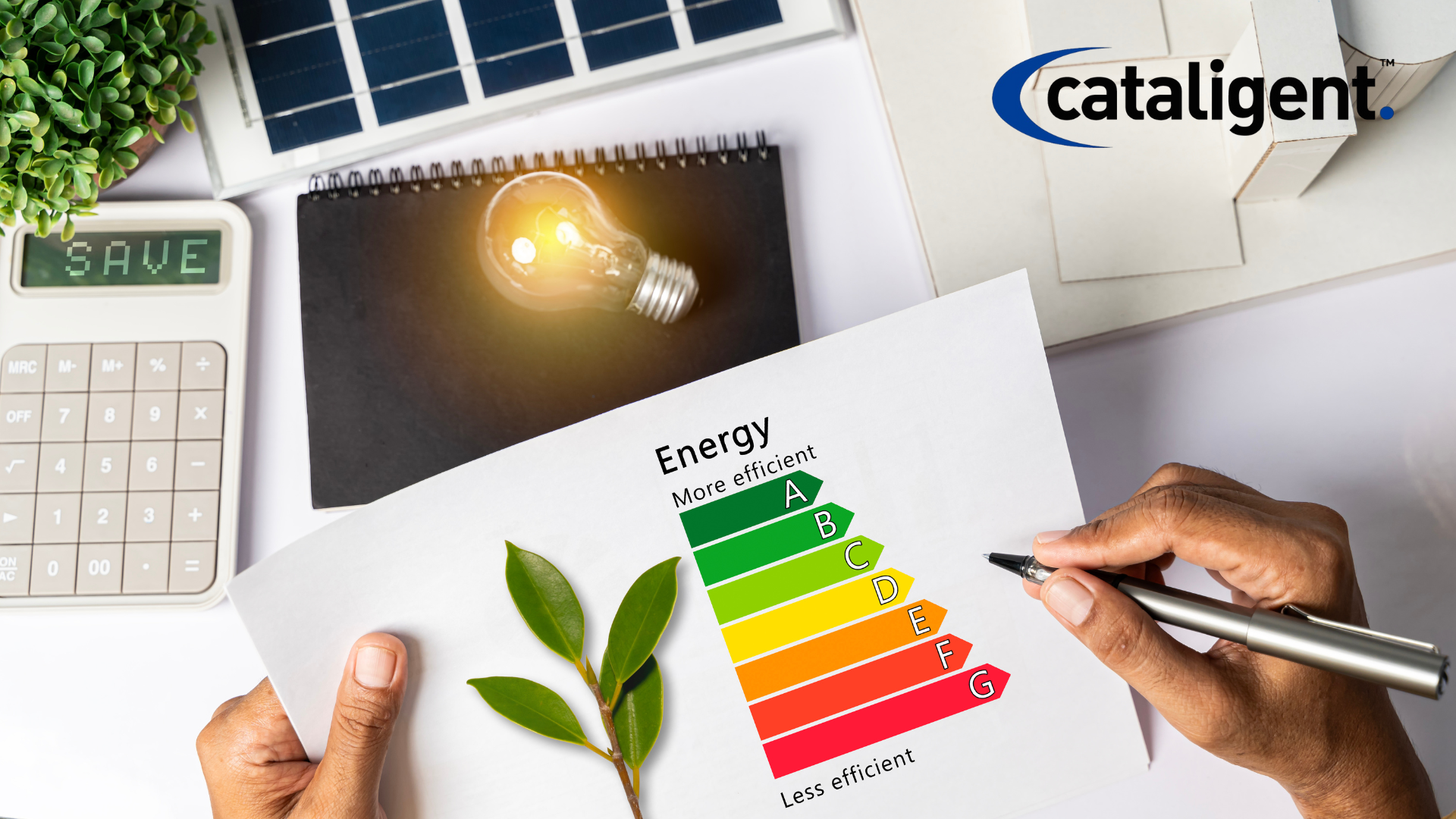
Implementing Energy Efficiency Measures: Reducing Consumption and Costs
Energy efficiency programs often start with a sensible idea, such as changing lighting, adjusting HVAC, reducing idle equipment, improving compressed air systems, or upgrading controls. They fail when the organization cannot prove whether consumption actually fell, whether savings came from price changes or operational improvements, and whether the benefit is recurring. Implementing energy efficiency measures is a cost saving strategy only when consumption baseline, investment cost, operating behavior, measurement, and finance validation are governed together.
For CFOs, COOs, facilities leaders, plant heads, procurement teams, sustainability teams, PMOs, transformation leaders, and consulting firms, the value is not only lower utility bills. Energy efficiency can reduce operating cost, maintenance burden, peak load charges, production waste, cooling cost, and avoidable capacity pressure. The challenge is turning technical improvements into confirmed financial impact without overstating savings or ignoring service quality.
What Implementing Energy Efficiency Measures Means
Energy efficiency measures are actions that reduce the energy needed to operate buildings, equipment, production lines, data rooms, warehouses, service centers, or support functions. They can include LED conversion, HVAC scheduling, equipment shutdown rules, motor upgrades, variable speed drives, compressed air leak reduction, building management controls, insulation, chiller optimization, power factor correction, occupancy based lighting, and energy aware maintenance.
As a cost reduction strategy, each measure should be treated as a governed initiative. It needs baseline consumption, baseline cost, target savings, forecast savings, actual savings, capex or opex cost, measure owner, sponsor, controller, technical owner, approval workflow, implementation evidence, maintenance evidence, and closure evidence. Without those controls, the organization may report savings that are actually caused by weather, volume decline, tariff change, or temporary shutdown.
Why Energy Efficiency Matters for Cost Saving
Energy cost is often treated as a utility bill rather than a managed performance area. That creates missed savings in buildings, production sites, service centers, data rooms, and warehouses. Poor controls, outdated equipment, idle loads, air leaks, excess lighting, overcooling, and peak demand charges can create avoidable cost every month.
The logic is direct. A problem creates cost, such as wasted consumption or inefficient equipment. An improvement creates potential, such as reduced kilowatt hours, lower demand charges, or lower fuel use. Governed execution turns potential into confirmed value when the reduction is measured against a normalized baseline and validated by finance. This makes energy efficiency a natural part of cost saving programs and operating cost reduction.
| Energy efficiency measure | Cost saving source | Savings risk | Evidence needed |
|---|---|---|---|
| LED and lighting controls | Lower electricity consumption and maintenance cost | Operating hours are assumed but not measured | Lighting inventory, installation proof, meter data, invoice comparison |
| HVAC scheduling | Lower cooling and heating cost | Comfort issues cause manual overrides | Control settings, occupancy data, complaint logs, energy data |
| Compressed air leak reduction | Lower compressor load and maintenance cost | Leaks return without maintenance ownership | Leak audit, repair record, pressure data, consumption trend |
| Motor and drive upgrades | Lower energy consumption for equipment | Production volume changes hide the true impact | Capex approval, operating data, normalized baseline, controller review |
| Peak demand management | Lower demand charges and capacity cost | Production teams override schedules during busy periods | Demand profile, scheduling rules, utility bills, owner sign off |
How to Build an Energy Baseline That Finance Can Trust
The baseline should include consumption, cost, tariff, demand charges, operating hours, production volume, occupancy, weather, facility area, equipment load, and maintenance condition where relevant. A simple comparison of last month and this month is rarely enough because volume, temperature, occupancy, and tariff changes can distort the result.
Finance and technical teams should agree how savings will be normalized. For example, a plant may report lower electricity cost because production volume fell, not because efficiency improved. A building may show higher cost after an efficient upgrade because occupancy increased. The controller should define which savings are reportable as EBIT impact, EBITDA impact, cash flow impact, or budget release.
How to Prioritize Energy Efficiency Initiatives
Energy measures should be ranked by value potential, investment need, payback risk, operational impact, technical complexity, maintenance dependency, and measurement quality. A no cost shutdown rule may move quickly. A chiller upgrade may require capex approval, procurement, downtime planning, and longer validation.
Practical examples include weekend shutdown rules, HVAC schedules by occupancy, lighting zone redesign, compressor leak repair, boiler tuning, preventive maintenance, equipment idle time reduction, server room cooling review, production shift energy planning, and supplier renegotiation for energy services. These should be managed as a portfolio through multi project management when multiple locations or plants are involved.
How to Govern Capex, Opex, and Recurring Benefits
Energy efficiency often mixes one time investment with recurring benefit. A lighting upgrade may need capex. A maintenance change may need internal labor. A tariff renegotiation may need procurement support. A control system change may need IT or facilities approval. Leaders must separate one time cost, recurring savings, avoided cost, and actual energy bill reduction.
Approval workflows should require a clear business case. What is the baseline? What is the target saving? What evidence will confirm implementation? Which account will show the saving? Who owns maintenance after installation? Who validates consumption? This connects energy efficiency to business transformation because the saving depends on changed behavior and operating routines, not only equipment.
How to Keep Savings Alive After Implementation
Many energy measures lose value over time. Controls are overridden, settings drift, sensors fail, maintenance is skipped, new equipment is added, or teams return to old operating habits. Savings governance must continue after technical implementation.
Use periodic measurement, variance review, maintenance ownership, exception approval, and executive reporting. Where energy processes require audit trails, document control, review steps, and corrective actions, governance can also connect to quality management system practices. The aim is to keep the savings visible after approval and prevent benefit erosion.
Metrics That Matter
The metrics that matter include baseline consumption, baseline cost, target savings, forecast savings, actual savings, one time investment, recurring savings, energy cost per unit, kilowatt hours per unit, peak demand charge, maintenance cost change, implementation status, potential status, approval ageing, dependency blockage, budget variance, adoption rate, savings risk, benefit realization, closure evidence, and controller validation.
| Metric | Why it matters | How to validate it |
|---|---|---|
| Normalized energy consumption | Separates efficiency improvement from weather or volume changes | Adjust usage for production, occupancy, operating hours, or temperature |
| Actual utility cost reduction | Shows whether the financial cost base changed | Compare utility bills with baseline after tariff and volume adjustments |
| Recurring savings | Shows the lasting benefit of the measure | Review repeated billing periods and maintenance records |
| Implementation evidence | Confirms the technical change was completed | Attach installation records, settings, photos where appropriate, and handover notes |
| Controller validation | Confirms whether savings can be reported as value delivered | Match measured reduction to baseline and finance approval |
Common Mistakes to Avoid
Using utility bill reduction as the only proof. Bills can fall because of lower production volume, weather, tariffs, or shutdowns, so savings need a normalized baseline and finance validation.
Ignoring maintenance ownership. Energy measures such as HVAC schedules, compressed air repairs, and controls can lose value if nobody owns ongoing performance.
Counting avoided cost as actual savings. Avoided future spend can be useful, but it should not be mixed with actual savings unless finance agrees how it will be reported.
Approving capex without closure criteria. Energy investments should define the evidence required for implementation, measurement, recurring savings, and controller backed closure.
Managing measures outside the transformation portfolio. Energy projects can depend on procurement, production, facilities, IT, and finance, so disconnected trackers weaken governance and reporting.
How Cataligent Helps Through CAT4
Cataligent helps enterprises and consulting firms govern energy efficiency measures as part of measurable cost saving programs through CAT4, its no code strategy execution platform. CAT4 supports the controlled tracking of consumption baselines, cost baselines, target savings, forecast savings, actual savings, one time cost, recurring savings, owners, sponsors, controllers, approvals, risks, dependencies, reporting, Degree of Implementation, Implementation Status, Potential Status, and closure evidence.
For energy efficiency, CAT4 can structure measures such as lighting conversion, HVAC scheduling, compressor leak reduction, peak demand management, motor upgrades, shutdown rules, and maintenance controls. DoI stage gates help each measure move from defined idea to identified scope, detailed plan, decided approval, implemented change, and closed value. This is useful because a technical change may be complete while the financial potential remains unconfirmed.
Cataligent helps leaders connect facilities, operations, procurement, finance, sustainability, and PMO teams in one governed execution view. Consulting firms can use CAT4 to embed their energy cost reduction methodology, reduce spreadsheet based reporting effort, and give clients management ready reporting that connects action, evidence, and value. With 40,000 plus users and 250 plus large enterprise installations, CAT4 has been used in complex enterprise execution settings where governance and reporting discipline matter.
What Cataligent Does Not Claim
Cataligent does not claim that CAT4 automatically creates savings. CAT4 does not replace finance systems, ERP systems, accounting systems, procurement systems, BI platforms, energy meters, building control systems, engineering judgment, or every project management tool.
CAT4 does not guarantee ROI, compliance, savings, EBITDA improvement, energy reduction, payback, tariff benefits, or business outcomes. CAT4 supports governed execution, value tracking, approvals, reporting, and controller backed closure around cost saving programs.
Conclusion
Implementing energy efficiency measures can reduce consumption and cost when each measure has a trusted baseline, clear owner, technical evidence, financial validation, and recurring performance review. It becomes weak when teams report lower bills without proving the reason for the reduction or protecting the saving after implementation.
Talk to Cataligent about governing energy efficiency cost saving initiatives through CAT4, from baseline and target savings to implementation evidence, executive reporting, and controller backed closure.
FAQs
How should energy efficiency savings be confirmed?
Energy efficiency savings should be confirmed by comparing normalized post implementation consumption and cost against the approved baseline. Finance should validate which part of the reduction can be reported as actual savings.
Why are lower utility bills not always proof of savings?
Utility bills may fall because production volume, occupancy, weather, tariff, or operating hours changed. A governed program should separate these factors from true efficiency improvement before reporting financial impact.
How can CAT4 help manage energy efficiency measures?
CAT4 can track energy initiatives with owners, sponsors, controllers, baselines, target savings, forecast savings, actual savings, approvals, risks, dependencies, implementation status, potential status, and closure evidence. Cataligent helps configure that structure so energy measures are managed as part of a controlled cost saving program.