
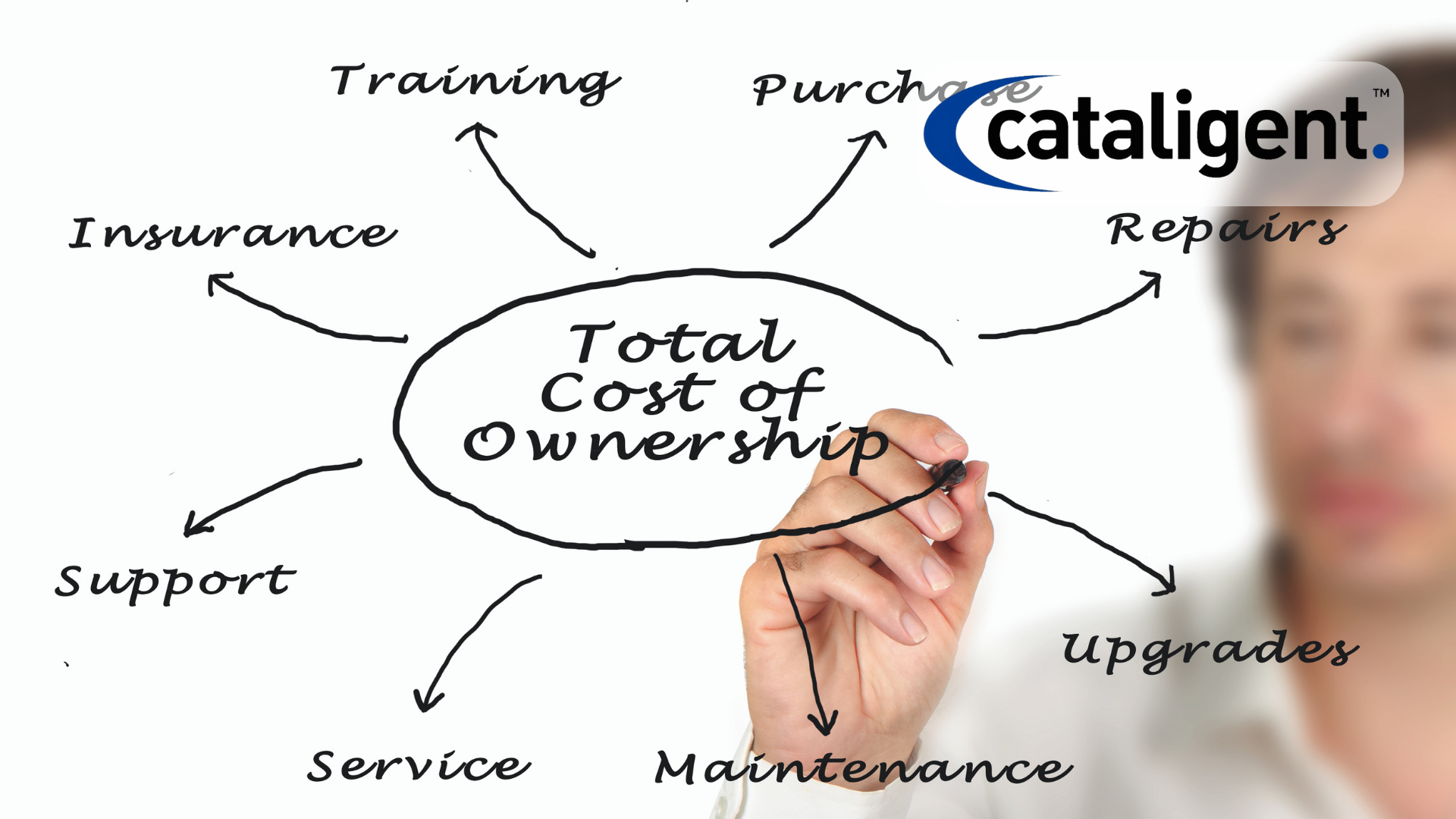
Focus on Total Cost of Ownership (TCO)
Outsourcing decisions often look attractive when leaders compare only provider rates, transition fees, or the first year contract value. The real cost can sit elsewhere: retained team effort, process exceptions, change requests, tool duplication, quality failure, service credits that are not enforced, and reporting effort. To focus on Total Cost of Ownership (TCO) as part of cost saving strategies, leaders need a governed view of all cost drivers from decision to closure, not a narrow view of purchase price.
For CFOs, procurement teams, operations leaders, consulting firms, transformation offices, and PMOs, TCO is not only a sourcing concept. It is a cost saving governance discipline that helps prevent false savings and supports better EBIT or EBITDA impact reporting.
What Is TCO in Cost Saving Strategy?
Total Cost of Ownership is the full cost of owning, operating, managing, changing, and exiting a service, vendor model, process, platform, or outsourcing arrangement. In a business outsourcing context, TCO includes contract price, transition cost, retained management cost, training, system access, quality rework, service downtime, escalation effort, governance meetings, reporting, compliance reviews, change requests, and exit cost where relevant.
As a cost reduction strategy, TCO helps leaders separate visible price reductions from real financial impact. A lower vendor rate can be useful, but it is not enough. The business must show baseline cost, target savings, forecast savings, actual savings, one time cost, recurring benefit, budget variance, finance validation, and closure evidence.
Why TCO Matters for Cost Saving
Many cost saving programs fail because they approve savings based on the narrowest cost view. A procurement team may negotiate a lower monthly fee, but operations may absorb more exception handling. A shared service model may reduce headcount in one function, but increase transition cost and quality rework in another. A new outsourcing contract may lower unit rates while creating tool duplication and manual reporting cycles.
TCO forces the organization to ask whether the saving improves the business financially after all relevant costs are included. This is critical for consulting firms advising clients, enterprise finance teams validating savings, and transformation leaders reporting value to a steering committee.
| TCO cost area | Where the cost appears | Savings risk | Evidence needed |
|---|---|---|---|
| Contract price | Vendor fees, rate cards, service charges | Price falls but volume increases | Baseline spend, volume trend, invoice evidence |
| Transition cost | Knowledge transfer, training, migration, parallel running | One time cost absorbs early savings | Approved budget, actual spend, closure evidence |
| Retained organization | Vendor management, controls, approvals, escalations | Internal cost remains after outsourcing | Role mapping, time data, organization baseline |
| Quality and rework | Error correction, service failure, customer impact | Lower rate creates higher failure cost | Defect trend, SLA evidence, rework cost |
Build a Baseline That Includes Hidden Cost
A TCO baseline should capture more than spend. It should include activity volume, internal effort, one time cost, recurring cost, vendor charges, retained roles, change request frequency, service errors, dispute value, reporting hours, and budget variance. This baseline gives leaders a credible starting point for savings calculation.
For example, if an outsourced finance process costs less per transaction but requires more internal issue resolution, the TCO view may show that the apparent saving is smaller than expected. If those issues can be removed through process redesign, service automation, or tighter SLA governance, the initiative may still deliver value. The key is to track the full cost path.
Separate Price Reduction from Value Realization
Price reduction is one component of cost saving. Value realization requires the reduction to appear in the financial view without being offset by other costs. This means leaders should separate target savings from forecast savings and actual savings. Target savings represent the ambition. Forecast savings show what is expected based on current progress and risk. Actual savings are confirmed only when measured against the baseline and validated where financial value is reported.
That distinction matters for EBIT and EBITDA impact. A sourcing initiative may have strong commercial progress but weak financial potential if volumes change, retained costs remain, or transition overruns occur. Tracking Implementation Status and Potential Status separately helps leaders see this difference.
Use TCO to Prioritize Cost Saving Initiatives
TCO can improve initiative prioritization. Instead of choosing the lowest visible price, leaders can compare net financial value, execution risk, dependency risk, quality risk, and implementation effort. Strong cost saving candidates include supplier renegotiation, license rationalization, service cost reduction, working capital release, process waste removal, demand management, and operating model simplification.
A TCO based prioritization model should also identify which initiatives need controller review before approval. High value, high risk, or cross functional initiatives should not move forward without clear owner accountability, sponsor approval, and closure evidence requirements.
Make TCO Visible in Executive Reporting
Executives need a concise view of how TCO affects the cost saving program. Reporting should show current baseline, target savings, forecast savings, actual savings, one time implementation cost, recurring benefit, budget variance, risks, dependencies, approval ageing, and finance validation status. This reduces the chance that a program looks green on procurement activity while financial impact is red.
Consulting firms can use TCO reporting to strengthen client credibility. Enterprise teams can use it to keep procurement, finance, operations, legal, and PMO stakeholders aligned around a single view of value.
Metrics That Matter
TCO focused cost saving governance should measure baseline cost, total contract cost, transition cost, retained management cost, change request cost, one time savings, recurring savings, target savings, forecast savings, actual savings, EBIT impact, EBITDA impact, implementation status, potential status, budget variance, dependency blockage, savings risk, benefit realization, closure evidence, and controller validation.
| Savings measure | Owner | Evidence needed | Closure condition |
|---|---|---|---|
| Reduced vendor fee | Procurement owner | Signed commercial terms and invoice comparison | Actual cost reduction appears against baseline |
| Lower retained effort | Operations owner | Role mapping, time data, process retirement | Internal effort reduction accepted by finance |
| Reduced rework cost | Service owner | Error trend, SLA evidence, rework hours | Quality improvement creates measurable cost reduction |
| Lower reporting effort | PMO owner | Reporting cycle baseline and new cycle effort | Manual consolidation effort is removed or reduced |
Common Mistakes to Avoid
Using contract price as the full cost view. Contract price is important, but TCO also includes transition, retained effort, change requests, quality failures, and governance cost.
Ignoring one time cost when reporting early savings. A program can show lower recurring spend while transition cost delays financial benefit.
Missing retained organization cost. Outsourcing does not reduce cost if the same management effort remains inside the business without a clear purpose.
Closing savings without volume analysis. A lower unit rate may not reduce total cost if transaction volume increases or demand is not controlled.
Reporting forecast savings as actual savings. Forecast savings should remain separate from actual savings until finance validates the reduction against the baseline.
How Cataligent Helps Through CAT4
Cataligent helps enterprises and consulting firms turn TCO analysis into governed execution through CAT4. In cost saving programs, CAT4 can track the full savings measure, including baseline cost, target savings, forecast savings, actual savings, one time cost, recurring saving, owners, sponsors, controllers, approvals, risks, dependencies, and closure evidence.
CAT4 supports Degree of Implementation and DoI stage gates so a TCO based measure is not closed just because a contract is signed. It can be tracked through definition, detailing, decision, implementation, and closure. Implementation Status shows whether the sourcing, transition, process, or service change is progressing. Potential Status shows whether the financial value is still credible after transition cost, retained effort, dependency risk, and controller review.
Cataligent can support consulting firms that need repeatable client cost reduction governance and enterprise teams managing business transformation, multi project management, and internal organization decisions. The result is a clearer route from TCO based idea to finance validated value.
What Cataligent Does Not Claim
Cataligent does not claim that CAT4 automatically creates savings. CAT4 does not replace finance systems, ERP systems, accounting systems, procurement systems, BI platforms, or every project management tool. CAT4 does not guarantee ROI, compliance, savings, EBITDA improvement, or business outcomes. CAT4 supports governed execution, value tracking, approvals, reporting, and controller backed closure around cost saving programs.
Conclusion
To focus on Total Cost of Ownership (TCO) is to protect cost saving strategies from false precision. Leaders must compare price, transition cost, retained effort, quality cost, change cost, and actual financial impact before claiming value. Talk to Cataligent about governing TCO based cost saving strategies through CAT4, from baseline to controller backed closure.
FAQs
Why is TCO important in outsourcing cost saving?
TCO shows whether a lower contract price actually reduces total business cost. It includes transition, retained effort, quality, reporting, and change costs that can offset savings.
How should actual savings be confirmed in a TCO model?
Actual savings should be measured against an approved baseline and supported by financial evidence. A controller or finance owner should validate the reduction before closure.
How does CAT4 help manage TCO based savings?
CAT4 helps track TCO measures with baseline cost, target savings, forecast savings, actual savings, risks, dependencies, approvals, and closure evidence. Cataligent helps configure the governance model so TCO remains connected to execution and value realization.