Month: January 2026

  • Why Corporate Strategy Fails Without a Structured Execution Platform

    Why Corporate Strategy Fails Without a Structured Execution Platform

    Corporate strategy almost never fails because it’s poorly written.

    It fails because it never survives contact with reality.

    Organizations invest months defining vision, priorities, and transformation goals. The decks look sharp. Leadership alignment seems strong. Yet six to twelve months later, progress is unclear, initiatives drift, and results fall short of what was promised.

    The uncomfortable truth is this: strategy without a structured execution platform is just intention.

    Bridging the gap between corporate strategy and project execution is not a communication problem. It’s a system problem.


    Strategy Is Abstract. Execution Is Concrete.

    Strategy operates at a high level:

    • Market positioning
    • Growth priorities
    • Cost optimization
    • Digital transformation

    Execution lives in the details:

    • Projects
    • Timelines
    • Resources
    • Trade-offs

    Most organizations assume these two will naturally connect. They don’t.

    When strategy is handed off to delivery teams without a clear execution framework, it becomes:

    • Interpreted differently by each department
    • Diluted into disconnected initiatives
    • Measured inconsistently
    • Lost in operational noise

    This is where even strong strategies quietly fail.


    The Illusion of Alignment

    Leadership teams often believe alignment exists because:

    • Everyone agreed in a meeting
    • Strategic goals were communicated
    • KPIs were defined at a high level

    But alignment on intent is not alignment on execution.

    Without a structured execution platform:

    • Projects are launched without clear strategic relevance
    • Teams optimize locally, not strategically
    • Priorities conflict across departments
    • Progress reporting becomes superficial

    The result is movement without direction.


    Where the Breakdown Actually Happens

    The gap between corporate strategy and project execution typically appears in three places:

    1. Strategy Isn’t Translated into Executable Work

    Strategic objectives remain abstract:

    • “Improve customer experience”
    • “Increase operational efficiency”
    • “Enable digital scale”

    But projects need clarity:

    • What changes?
    • Who owns it?
    • What success looks like?
    • What gets deprioritized?

    Without translation, teams guess. Guessing creates misalignment.


    2. Too Many Initiatives, Not Enough Focus

    Organizations rarely suffer from a lack of ideas. They suffer from too many active initiatives.

    Without a centralized execution platform:

    • Every function launches projects independently
    • Strategic priorities compete instead of reinforce each other
    • Resources are spread thin across low-impact work

    This creates the illusion of progress while slowing real outcomes.


    3. No Feedback Loop Between Strategy and Delivery

    Execution surfaces reality:

    • Capacity constraints
    • Dependency conflicts
    • Market shifts
    • Feasibility issues

    But in many organizations, this information never flows back to strategy owners.

    Without a feedback loop:

    • Strategy remains static while conditions change
    • Leaders are surprised by delays that were predictable
    • Execution teams absorb the pressure without authority

    This disconnect erodes trust and performance over time.


    What a Structured Execution Platform Actually Does

    A structured execution platform is not just a tool or dashboard. It’s a governance and operating model that connects strategy to delivery.

    At its core, it enables:

    • Clear translation of strategic goals into initiatives
    • Explicit prioritization across the portfolio
    • Visibility into execution progress and constraints
    • Continuous alignment between leadership and delivery teams

    Most importantly, it forces decisions instead of deferring them.


    Bridging the Gap Between Corporate Strategy and Project Execution

    Organizations that successfully bridge the gap between corporate strategy and project execution do a few things consistently:

    Strategy Is Broken Down into Strategic Themes and Initiatives

    Instead of vague objectives, strategy is structured into:

    • Strategic themes
    • Measurable outcomes
    • Owned initiatives

    Each initiative has:

    • A clear sponsor
    • Defined success metrics
    • Direct linkage to strategic goals

    This creates traceability from vision to action.


    Execution Is Managed at a Portfolio Level

    Projects are not evaluated in isolation.

    A structured execution platform enables:

    • Portfolio-level prioritization
    • Resource allocation aligned to strategy
    • Visibility into cross-project dependencies

    This allows leaders to make informed trade-offs instead of reacting to issues late.


    Progress Is Measured by Outcomes, Not Activity

    Without structure, progress reports focus on:

    • Percent complete
    • Tasks finished
    • Milestones hit

    With structure, progress is tied to:

    • Strategic outcomes
    • Value delivered
    • Risks and constraints

    This shifts conversations from “Are we busy?” to “Are we winning?”


    Governance Enables Fast, Informed Decisions

    Execution platforms establish clear decision rights:

    • Who can reprioritize work
    • Who resolves conflicts
    • How changes are escalated

    This reduces delays caused by ambiguity and political negotiation.


    Why Tools Alone Don’t Fix This

    Many organizations attempt to solve execution gaps by adopting new tools. Tools help—but only when supported by discipline.

    Without structure:

    • Tools become reporting systems, not decision systems
    • Data exists, but action doesn’t follow
    • Teams update dashboards without changing behavior

    Execution failure is rarely about technology. It’s about operating models and accountability.


    How Cataligent Can Turn Strategy Into Measurable Execution

    If strategy fails because it never gets translated, prioritized, governed, and measured consistently, Cataligent helps by putting a structured execution system underneath the strategy.

    Cataligent is a transformation and project execution firm, and its platform CAT4 is built to connect strategic intent to day to day delivery with a 360 degree view of execution, actionable insights, and control over implementation.

    Here’s how CAT4 maps directly to the breakdown points described:

    • Translate strategy into executable work
      CAT4 supports breaking down strategic goals into initiatives and portfolios, with clear structure for projects, measures, milestones, and degree of implementation tracking, so delivery teams are not left guessing what “success” means.
    • Create traceability from goals to initiatives
      CAT4 supports KPI and OKR style target tracking and initiative to organization aggregation, making it easier to see how execution ladders up to strategic outcomes and where it does not.
    • Run execution at a portfolio level, not in silos
      CAT4 is designed for portfolio and multi project management, enabling portfolio visibility, cross initiative coordination, and prioritization discipline across competing work.
    • Make constraints visible early (capacity, dependencies, risk)
      CAT4 includes resource planning and tracking, risk management, and planned vs actual progress and financial tracking, helping leaders see what will break before it breaks.
    • Turn reporting into decisions, not status theater
      CAT4 supports workflow and approval processes, notifications, and structured reporting views so escalation, governance, and trade offs happen faster and with clearer accountability.
    • Keep strategy and delivery connected through feedback loops
      With real time analytics, dashboards, and configurable reporting, CAT4 helps keep leadership conversations anchored in execution reality, not slideware assumptions.

    Final Thoughts

    Corporate strategy fails when it’s treated as a separate phase from execution.

    Bridging the gap between corporate strategy and project execution requires:

    • Clear translation from goals to initiatives
    • Portfolio-level prioritization
    • Structured governance
    • Continuous feedback between strategy and delivery

    Organizations that invest in structured execution don’t just execute better, they learn faster and adapt sooner.

    Those that don’t continue writing strong strategies that quietly die in delivery.

    Stop letting strategy die in delivery. Request a CAT4 demo with Cataligent

  • Strategies for Reducing Resource Bottlenecks in Multiple Projects

    Strategies for Reducing Resource Bottlenecks in Multiple Projects

    Resource bottlenecks are not a planning failure.
    They are a leadership failure.

    When multiple projects compete for the same people, skills, and decision-makers, bottlenecks are inevitable. What’s avoidable is pretending they don’t exist—or worse, reacting to them only after deadlines slip.

    Most organizations don’t suffer from a lack of resources. They suffer from poor visibility, weak prioritization, and unrealistic expectations.

    If you’re managing several projects at once and constantly firefighting resource conflicts, the system, not the team, is broken.


    Why Resource Bottlenecks Happen in the First Place

    Before jumping into strategies for reducing resource bottlenecks in multiple projects, let’s be clear about the root causes.

    Common contributors include:

    • Too many active projects at the same time
    • Shared specialists assigned everywhere
    • No clear project priority hierarchy
    • Overconfidence in team capacity
    • Last-minute decision-making

    None of these are surprises. Yet they repeat because organizations confuse “busy” with “productive.”


    Stop Treating All Projects as Equal

    This is the biggest lie in multi-project environments.

    Not all projects matter equally, but they’re often resourced as if they do. When every initiative is labeled “high priority,” resource bottlenecks are guaranteed.

    A realistic approach requires:

    • Explicit project prioritization
    • Leadership-backed trade-offs
    • Willingness to slow or pause lower-value work

    Without this, teams are forced to multitask across competing demands, reducing focus and increasing delays across the board.


    Shift from Resource Allocation to Capacity Planning

    Assigning people to projects is easy. Planning capacity is harder, and more important.

    Most teams allocate resources based on availability in theory, not in reality. They assume:

    • Full-time availability
    • No interruptions
    • Perfect efficiency

    Actual capacity is always lower.

    Effective capacity planning considers:

    • Context switching costs
    • Meetings and support work
    • Skill mismatches
    • Planned and unplanned absences

    Until capacity is treated as a constraint, resource bottlenecks in project management will continue to surface unexpectedly.


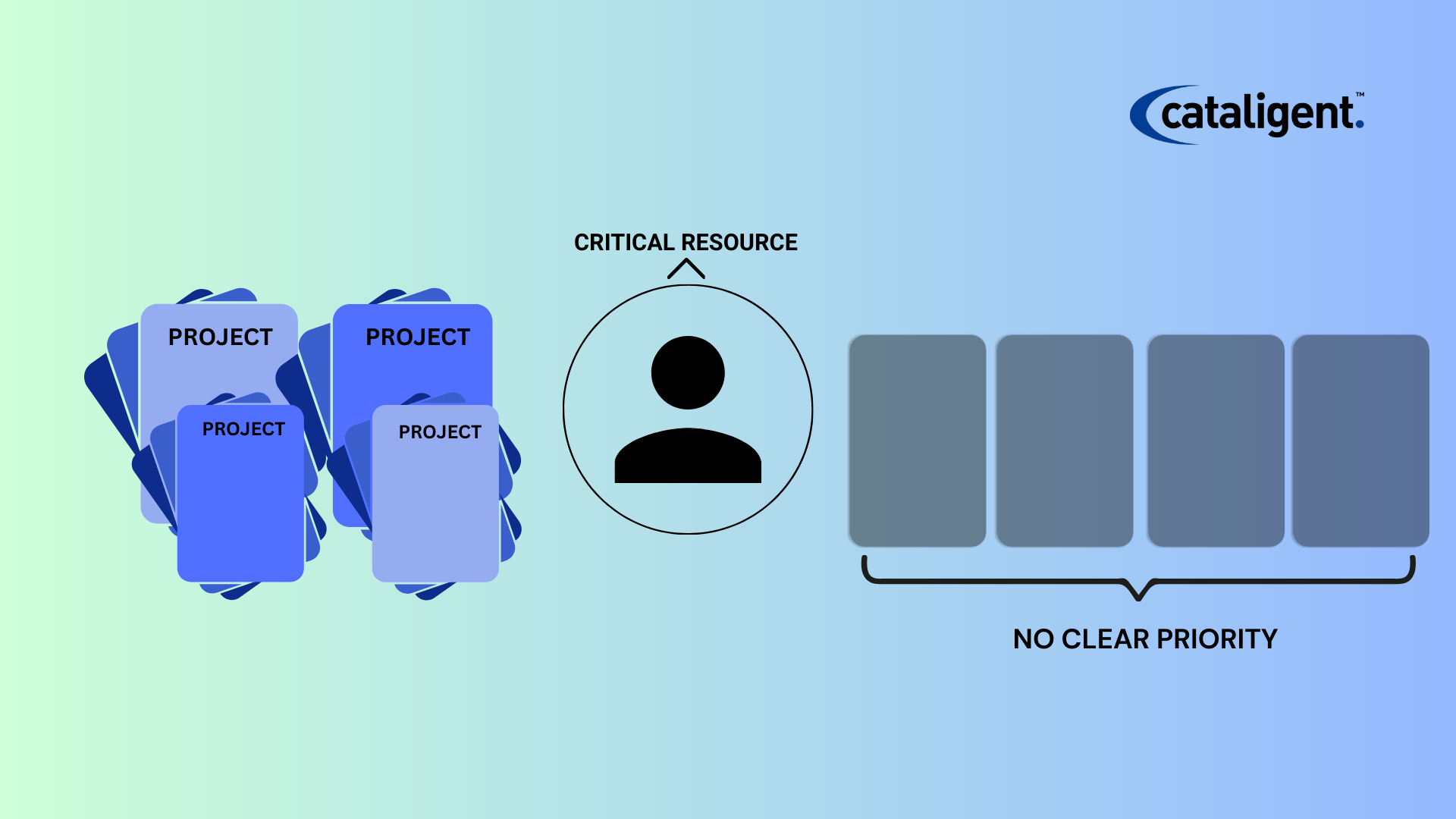
    Identify and Protect Critical Resources

    Every portfolio has bottleneck roles:

    • Architects
    • Senior engineers
    • Subject matter experts
    • Decision-makers

    These people are often assigned to too many projects simultaneously because “they’re needed everywhere.”

    That’s the problem.

    Reducing bottlenecks requires:

    • Limiting concurrent assignments for critical roles
    • Scheduling their work intentionally
    • Protecting their time from low-impact tasks

    If your most constrained resources are constantly overloaded, project delays are not an accident—they’re a certainty.


    Reduce Multitasking Across Projects

    Multitasking is one of the most expensive hidden costs in multi-project environments.

    Switching between projects slows progress, increases errors, and stretches timelines. Yet it’s often encouraged as a sign of flexibility.

    The reality:

    • Fewer active projects finish faster
    • Focus beats utilization
    • Throughput matters more than busyness

    One effective strategy is limiting work-in-progress across the portfolio. Fewer parallel tasks mean fewer bottlenecks and faster completion overall.


    Use Resource Leveling, But Don’t Blindly Trust the Tool

    Resource leveling tools can help smooth workloads, but they’re not a solution on their own.

    Automated adjustments often ignore:

    • Skill-specific constraints
    • Priority differences
    • External dependencies

    Resource leveling should support decision-making, not replace it. Human judgment is still required to decide which projects slow down and which move forward.

    If every conflict is “leveled” without questioning priorities, you’re just spreading the pain evenly—not reducing it.


    Make Cross-Project Dependencies Visible

    Many resource bottlenecks are created by invisible dependencies.

    A team member delayed on one project blocks progress on another. A late decision cascades across multiple timelines. But these connections are often discovered too late.

    To reduce this:

    • Map cross-project dependencies explicitly
    • Highlight shared resources and decision points
    • Review them regularly at a portfolio level

    Visibility doesn’t eliminate bottlenecks—but it gives leaders a chance to act before damage spreads.


    Strengthen Portfolio-Level Governance

    Managing multiple projects without portfolio governance is like running traffic without signals.

    Individual project managers can optimize locally, but resource conflicts require centralized decisions. Without governance, teams compete instead of coordinate.

    Strong portfolio management:

    • Sets clear priorities
    • Resolves conflicts quickly
    • Aligns resources to strategy, not politics

    This isn’t bureaucracy, it’s control. And without it, bottlenecks multiply.


    Say No More Often (Yes, Really)

    One of the most effective strategies for reducing resource bottlenecks in multiple projects is also the most uncomfortable: saying no.

    Not now.
    Not with this team.
    Not without trade-offs.

    Every new project consumes capacity, even if it looks small. Leaders who refuse to acknowledge this push bottlenecks downstream, onto delivery teams.

    Saying no early prevents chaos later.


    How Cataligent Can Help (Without Adding More Chaos)

    Resource bottlenecks don’t get solved by pushing harder. They get solved when leaders have the visibility and controls to make real portfolio decisions. That’s where Cataligent and CAT4 fit: CAT4 is built to support multi project management and execution control, so capacity, priorities, and conflicts are managed intentionally instead of discovered too late.

    Here’s how CAT4 maps directly to the bottleneck patterns described:

    • Stop treating all projects as equal
      CAT4 helps you run portfolio level visibility with configurable dashboards and structured execution views, so priorities become operational, not just a slide.
    • Shift from allocation to capacity planning
      CAT4 includes resource planning and tracking to make capacity constraints visible across multiple initiatives, reducing overcommitment and chronic firefighting.
    • Identify and protect critical resources
      With role based access and structured assignment views, CAT4 supports tighter control over who is assigned where, and helps protect constrained specialists from being spread everywhere at once.
    • Reduce multitasking and limit work in progress
      CAT4 supports execution discipline through task visibility and status reporting, helping teams focus on throughput and completion instead of being “busy” across too many parallel efforts.
    • Make cross project dependencies visible
      CAT4 is designed to handle complex multi project environments with centralized reporting and coordination features, so shared dependencies and decision points don’t stay hidden until they explode.
    • Strengthen portfolio level governance
      CAT4 supports structured workflows and approvals with notifications, plus reporting views, enabling faster decisions and clearer accountability across the portfolio.

    Final Thoughts

    Resource bottlenecks are not a temporary inconvenience. They are a signal that the system is overloaded or misaligned.

    Reducing them doesn’t require heroics. It requires:

    • Honest capacity planning
    • Clear prioritization
    • Fewer active projects
    • Strong portfolio-level decisions

    Organizations that manage resources well don’t eliminate constraints, they manage them intentionally.

    Those that don’t spend their time reacting, firefighting, and wondering why everything feels harder than it should.

    And the answer is almost always the same: too much work, not enough focus, and no one willing to make the hard calls.

    Stop guessing where capacity went. Start managing it. Request a CAT4 demo with Cataligent

  • Common Causes of Project Failure (And Why They Keep Catching Teams Off Guard)

    Common Causes of Project Failure (And Why They Keep Catching Teams Off Guard)

    Project failure is rarely mysterious.

    When a project collapses, missed deadlines, blown budgets, disappointed stakeholders, the post-mortem often sounds the same: unexpected delays, changing requirements, external issues, or “unforeseen complexity.”

    But none of these are new. In fact, the common causes of project failure are so well known that it’s almost embarrassing how often they still occur.

    Projects don’t fail because people don’t understand project management. They fail because known risks are tolerated, ignored, or rationalized until recovery becomes the only option.


    Poor Planning That Looks Complete—but Isn’t

    Most failed projects start with a plan.

    The problem is not the absence of planning; it’s the quality of it. Poor project planning often hides behind polished schedules and confident assumptions.

    Typical planning gaps include:

    • Overestimating team capacity
    • Underestimating dependencies
    • Ignoring historical delivery data
    • Treating uncertainty as a detail instead of a constraint

    Plans are created to secure approval rather than to guide execution. Once reality diverges from assumptions, the plan quietly loses relevance—but no one admits it.


    Unclear Objectives and Shifting Definitions of Success

    Many projects begin without true alignment on what success actually means.

    Stakeholders may agree at a high level, but expectations differ beneath the surface. As the project progresses, those differences emerge through scope changes, conflicting priorities, and late-stage dissatisfaction.

    This leads to:

    • Constant rework
    • Conflicting decisions
    • Frustrated delivery teams

    When success is not clearly defined and protected, projects drift until everyone is disappointed for different reasons.


    Decision-Making Delays That Stall Momentum

    One of the most underestimated project delivery challenges is slow decision-making.

    Projects rely on timely approvals, trade-offs, and direction. When decisions are delayed—or ownership is unclear—progress slows without anyone explicitly stopping work.

    This creates a dangerous illusion:
    Teams stay busy, but nothing moves forward.

    Over time, decision delays compound into schedule slippage, cost overruns, and growing frustration. By the time clarity arrives, recovery options are limited.


    Scope Creep Treated as Normal Behavior

    Scope creep is not a surprise; it’s a pattern.

    Small changes are approved informally. “Just one more requirement” becomes a habit. Each change feels manageable, so its impact is underestimated.

    What’s missing is discipline:

    • Impact assessments are skipped
    • Trade-offs are avoided
    • Timelines and budgets remain unchanged

    The project doesn’t fail because it changed. It fails because the cost of change was never acknowledged.


    Weak Project Governance and Late Escalation

    Projects need governance—not to slow them down, but to protect them.

    When governance is weak, problems stay local for too long. Teams try to solve structural issues within their limited authority. Escalation is avoided to prevent conflict or scrutiny.

    This leads to:

    • Problems surfacing too late
    • Leadership reacting instead of guiding
    • Loss of trust in reporting

    Strong project governance ensures issues are raised early, decisions are made quickly, and accountability is clear.


    Risk Management That Exists Only on Paper

    Most projects have risk registers. Few actively manage risk.

    Risks are identified at the start, documented, and then quietly ignored unless they materialize. Ownership is unclear. Mitigation plans are vague.

    Effective project risk management requires:

    • Continuous review
    • Active ownership
    • Clear mitigation actions
    • Willingness to adjust plans

    When risk management becomes a formality, projects are left exposed to predictable surprises.


    Overloaded Teams and Unrealistic Capacity Assumptions

    Projects don’t operate in isolation.

    Teams are often spread across multiple initiatives, expected to deliver everything at once. Capacity is assumed, not measured.

    This results in:

    • Burnout
    • Context switching
    • Declining quality
    • Missed deadlines

    No project plan survives unrealistic resource assumptions. Ignoring capacity constraints guarantees delivery problems, regardless of intent.


    Optimism Replacing Evidence

    Optimism is useful. Blind optimism is dangerous.

    Many projects rely on future improvement to justify current delays:
    “We’ll make it up later.”
    “Things will stabilize soon.”
    “The team just needs to push harder.”

    These assumptions are rarely supported by data.

    Without evidence-based forecasting—actual velocity, remaining effort, dependency resolution—projects drift deeper into trouble while leadership waits for improvement that never arrives.


    Projects That Should Have Stopped—but Didn’t

    Some projects fail because they continue long after their justification has disappeared.

    Sunk cost bias keeps them alive. Too much has been invested to stop now. Too many reputations are involved.

    These projects consume resources, block better initiatives, and damage credibility.

    Ending a project is often framed as failure. In reality, refusing to stop is frequently the bigger one.


    Why These Failures Keep Repeating

    The common causes of project failure are not secrets. They repeat because addressing them requires:

    • Honest reporting
    • Willingness to escalate early
    • Strong leadership decisions
    • Acceptance of uncomfortable trade-offs

    Projects fail quietly long before they fail publicly.


    How Cataligent Can Help (Without “More Process”)

    Most of the failure patterns you outlined come from the same root problem: teams can’t see reality early enough (capacity, dependencies, decisions, risk, scope impact) and even when they can, they can’t operationalize action fast enough.

    That’s exactly where Cataligent helps: as a transformation + execution partner, with CAT4, a comprehensive platform built to give leadership and delivery teams a 360° view of execution, plus the controls to act before drift becomes damage.

    Here’s how CAT4 maps directly to the failure modes:

    Planning that looks complete (but isn’t)
    CAT4 supports structured planning across portfolios and projects with dependencies, milestones/gates, degree-of-implementation tracking, and planned vs actual progress/financials, so the plan is tied to execution signals, not just approval optics.

    Unclear objectives and shifting success criteria
    CAT4 enables initiative-to-organization aggregation, KPI/OKR and target tracking, and configurable dashboards so “success” is defined, tracked, and visible, reducing late-stage “that’s not what I meant” misalignment.

    Decision delays and unclear ownership
    CAT4 supports workflow and approval processes with automatic notifications, plus To-Do and My Tasks to make pending decisions and next steps explicit (instead of buried in meetings and inboxes).

    Scope creep treated as normal
    With configurable workflows, governance touchpoints, and documentation trails, CAT4 helps teams introduce a “change discipline” rhythm: changes get captured, routed, and reviewed, so trade-offs are made deliberately, not accidentally.

    Weak governance and late escalation
    CAT4’s role-based access model, reporting views (including status and traffic-light reporting), and centralized visibility make it easier to escalate early with evidence, before “local fixes” become systemic failure.

    Risk management that exists only on paper
    CAT4 supports active risk management by keeping risks visible, assignable, and trackable alongside execution, so mitigation becomes part of delivery, not a kickoff artifact.

    Overloaded teams and fantasy capacity
    CAT4 includes resource planning and tracking so capacity is measured and managed across initiatives, reducing overcommitment, context switching, and downstream quality issues.

    Optimism replacing evidence
    CAT4’s real-time dashboards and analytics give leadership an evidence-based view of delivery health, so forecasts and recovery plans are grounded in actuals, not hope.


    Final Thoughts

    Project failure is rarely about effort or intent. It’s about patterns that are tolerated until they become unavoidable outcomes.

    Better project management isn’t about more tools or tighter plans. It’s about recognizing failure patterns early and having the discipline to interrupt them.

    Most projects don’t collapse suddenly.
    They erode—slowly, predictably, and in ways we’ve seen before.

    The difference between success and failure is whether those signals are ignored or acted on.

    Ready to stop “surprises” that aren’t surprising? Book a CAT4 demo with Cataligent

  • How to Recover a Project That Is Behind Schedule and Over Budget (Without Making It Worse)

    How to Recover a Project That Is Behind Schedule and Over Budget (Without Making It Worse)

    Few moments in project management are more uncomfortable than realizing the project is late, over budget, and quietly heading toward executive attention. The original plan no longer reflects reality, stakeholders are growing restless, and the team is working harder without seeing real progress.

    At this point, many leaders ask the same question: How to recover a project that is behind schedule and over budget without triggering panic, blame, or complete loss of control?

    The answer is not more meetings, more pressure, or a revised plan that pretends nothing went wrong. Project recovery requires clarity, discipline, and the willingness to confront reality early and honestly.

    A delayed and over-budget project does not need more pressure. It needs a recovery system. Cataligent helps create that system.

    Project behind schedule and over budget?
    Recovery requires more than a revised timeline. You need clear ownership, realistic baselines, risk visibility, financial tracking, decision governance, and executive reporting.

    Cataligent helps organizations regain control of troubled projects through structured recovery governance, portfolio visibility, planned vs. actual tracking, risk management, and management dashboards.

    Explore Cataligent MultiProject Management →


    Step One: Stop Pretending the Original Plan Still Matters

    The fastest way to kill a struggling project is to keep managing it as if the original plan is still valid.

    When a project is behind schedule and over budget, the baseline is already broken. Continuing to measure progress against outdated assumptions creates false confidence and delays real intervention.

    The first step in any project recovery plan is to accept that the project has entered a different phase. This is no longer standard execution—it is recovery mode.

    That shift alone changes how decisions should be made, how risks are treated, and how progress is measured.


    Diagnose Before You Prescribe

    One of the most common mistakes in project recovery is jumping straight to solutions. Add resources. Compress timelines. Cut scope. Push harder.

    Sometimes these actions help. Often, they make things worse.

    Before acting, you need a clear diagnosis:

    • Is the delay caused by decision bottlenecks?
    • Are dependencies unresolved?
    • Has scope quietly expanded?
    • Is resource capacity misaligned?
    • Are risks being surfaced too late?

    Without understanding the real drivers of schedule delays and cost overruns, recovery actions become guesswork.


    Project Recovery Diagnostic Checklist

    Before changing the schedule or adding more resources, assess the project against these recovery questions:

    • Is the original baseline still valid?
    • What is the actual schedule variance?
    • What is the actual cost variance?
    • Which dependencies are blocking progress?
    • Which decisions are delayed or unclear?
    • Has scope changed without formal approval?
    • Are resources overloaded or misallocated?
    • Are risks being escalated early enough?
    • Is the remaining effort verified or only estimated?
    • Does the business case still justify continuation?

    Cataligent helps organizations structure this diagnostic view through planned vs. actual tracking, risk visibility, dependency management, role ownership, and management reporting.


    Reset Expectations—Not Just Timelines

    Project recovery is as much about stakeholder management as it is about execution.

    Leaders often focus on producing a new schedule without addressing expectations. This creates a dangerous gap between what the plan says and what stakeholders believe.

    A proper reset includes:

    • Clear explanation of what went wrong (without blame)
    • Transparent view of remaining risks
    • Realistic delivery scenarios, not optimistic promises
    • Agreement on what success now looks like

    This is where strong project governance matters most. Avoiding difficult conversations at this stage guarantees more pain later.


    Ruthlessly Re-evaluate Scope

    When projects fall behind, scope is often the silent culprit.

    Not because scope changed—but because it changed without acknowledgment.

    Recovery requires asking uncomfortable questions:

    • What is truly essential to deliver business value?
    • What can be deferred without undermining outcomes?
    • What was added “temporarily” and never revisited?

    Reducing scope is not failure. Delivering a smaller, usable outcome is almost always better than delivering nothing on time.


    Fix Decision-Making, Not Just Execution

    Many projects don’t fail due to lack of effort. They fail because decisions are slow, unclear, or constantly revisited.

    In recovery mode:

    • Decision ownership must be explicit
    • Approval timelines must be shortened
    • Escalation paths must be clear
    • Trade-offs must be accepted, not endlessly debated

    Speed of decision-making often matters more than perfection at this stage. Delayed clarity is one of the biggest threats to project recovery.


    Build a Project Recovery Governance Model

    When a project enters recovery mode, normal governance is often too slow. Leaders need a tighter decision model with clear ownership, escalation paths, and review cadence.

    A project recovery governance model should define:

    • Who owns the recovery plan
    • Who approves scope changes
    • Who validates revised costs and timelines
    • Who decides on trade-offs
    • Which risks require executive escalation
    • How often recovery progress is reviewed
    • What evidence is required before declaring the project back on track

    Cataligent supports this through configurable workflows, approval processes, role-based access, escalation visibility, and structured reporting across projects and portfolios.


    Stabilize the Team Before Accelerating

    Pushing a stressed team harder rarely improves outcomes.

    When projects are behind schedule and over budget, teams are often already working at capacity. Burnout reduces quality, increases errors, and accelerates attrition.

    Stabilization comes first:

    • Remove unnecessary reporting
    • Clarify priorities
    • Reduce context switching
    • Focus effort on the highest-impact activities

    Once the team is aligned and focused, acceleration becomes possible.


    Use Data to Guide Recovery, Not Optimism

    In enterprise project management, recovery efforts often fail because optimism replaces evidence.

    Recovery plans should be driven by:

    • Actual delivery velocity
    • Verified remaining effort
    • Real dependency resolution
    • Historical performance data

    If forecasts rely on “things going better from now on,” they are not forecasts—they are hope.

    Project risk management becomes critical here. Remaining risks should be actively tracked, discussed, and mitigated, not simply documented.


    Decide Whether Recovery Is Even the Right Choice

    This is the hardest part—and the most ignored.

    Not every project should be recovered.

    Some projects no longer justify their cost. Some were built on assumptions that no longer hold. Continuing them drains time, money, and credibility.

    A mature project turnaround strategy includes the option to pause, pivot, or stop entirely. Ending a failing project early is often a stronger leadership decision than forcing a weak recovery.


    What Successful Project Recovery Actually Looks Like

    Successful recovery doesn’t mean restoring the original plan. It means:

    • Delivering reduced but real value
    • Regaining stakeholder trust through transparency
    • Restoring predictability
    • Creating clear ownership and governance
    • Preventing the same failure patterns from repeating

    Projects don’t recover through heroics. They recover through clarity and discipline.


    Recovery areaWhat to checkHow Cataligent helps
    Baseline resetIs the original plan still usable?Tracks revised baselines, planned vs. actual progress, cost, and timeline changes
    Schedule recoveryWhat is delayed and why?Provides visibility into milestones, dependencies, bottlenecks, and overdue activities
    Budget controlWhere is the cost overrun coming from?Tracks planned, forecast, and actual financial impact
    Scope controlWhat must stay, change, or be deferred?Supports structured scope decisions, ownership, approvals, and change visibility
    Risk managementWhich risks could still derail recovery?Tracks risks, issues, mitigation actions, escalation status, and ownership
    Resource capacityIs the team overloaded or misallocated?Supports resource planning and portfolio-level capacity visibility
    Decision speedAre approvals slowing recovery?Enables workflow approvals, responsibility mapping, and escalation paths
    Executive visibilityCan leadership see the real status?Provides dashboards, reports, and portfolio-level transparency

    How Cataligent Helps You Recover a Project Without Making It Worse

    When a project is behind schedule and over budget, most recoveries fail for one reason: teams try to “fix execution” without fixing visibility, decision speed, and control. That is exactly where Cataligent fits.

    Troubled projects usually do not fail because teams are lazy. They fail because leaders lose visibility into reality. Timelines drift, budgets move, risks remain unresolved, decisions slow down, and reports become disconnected from actual delivery.

    Cataligent helps organizations create a structured recovery system for troubled projects by connecting project execution, financial performance, risks, decisions, resources, and executive reporting.


    With Cataligent, project recovery teams can:

    • Reset project baselines using planned vs. actual tracking
    • Monitor schedule variance, cost variance, and implementation progress
    • Track risks, issues, dependencies, and recovery actions
    • Clarify ownership, approvals, and escalation paths
    • Reassess scope against value, budget, and delivery capacity
    • Manage resource allocation across projects and portfolios
    • Create executive dashboards for recovery status and decision-making
    • Compare recovery options: continue, pause, pivot, reduce scope, or stop

    Final Thoughts

    Learning how to recover a project that is behind schedule and over budget is less about tactics and more about mindset. Recovery requires confronting reality early, making hard trade-offs, and focusing on outcomes instead of appearances.

    Projects don’t fail because teams lack skill. They fail because problems are allowed to linger too long without decisive action.

    The earlier recovery begins, the more options remain. And the best time to face uncomfortable truths is always before they become unavoidable.

    Your project doesn’t need more pressure. It needs a recovery system.
    Cataligent‘s tool CAT4 help you reset reality, speed up decisions, regain control, and deliver real value without burning out your team.

    Build a Project Recovery System

  • Common Project Management Failure Patterns (And Why We Keep Falling for Them)

    Common Project Management Failure Patterns (And Why We Keep Falling for Them)

    If project management were as predictable as our plans suggest, most projects would finish on time, within budget, and with everyone smiling at the go-live meeting.

    But anyone who has worked on real projects knows that’s not how it usually goes.

    Projects rarely fail because teams don’t understand project management fundamentals. They fail because the same project management failure patterns quietly repeat themselves, often in organizations that believe they’ve already “fixed” these issues.

    Let’s look at the patterns that show up again and again in enterprise project management, regardless of industry, methodology, or tools.


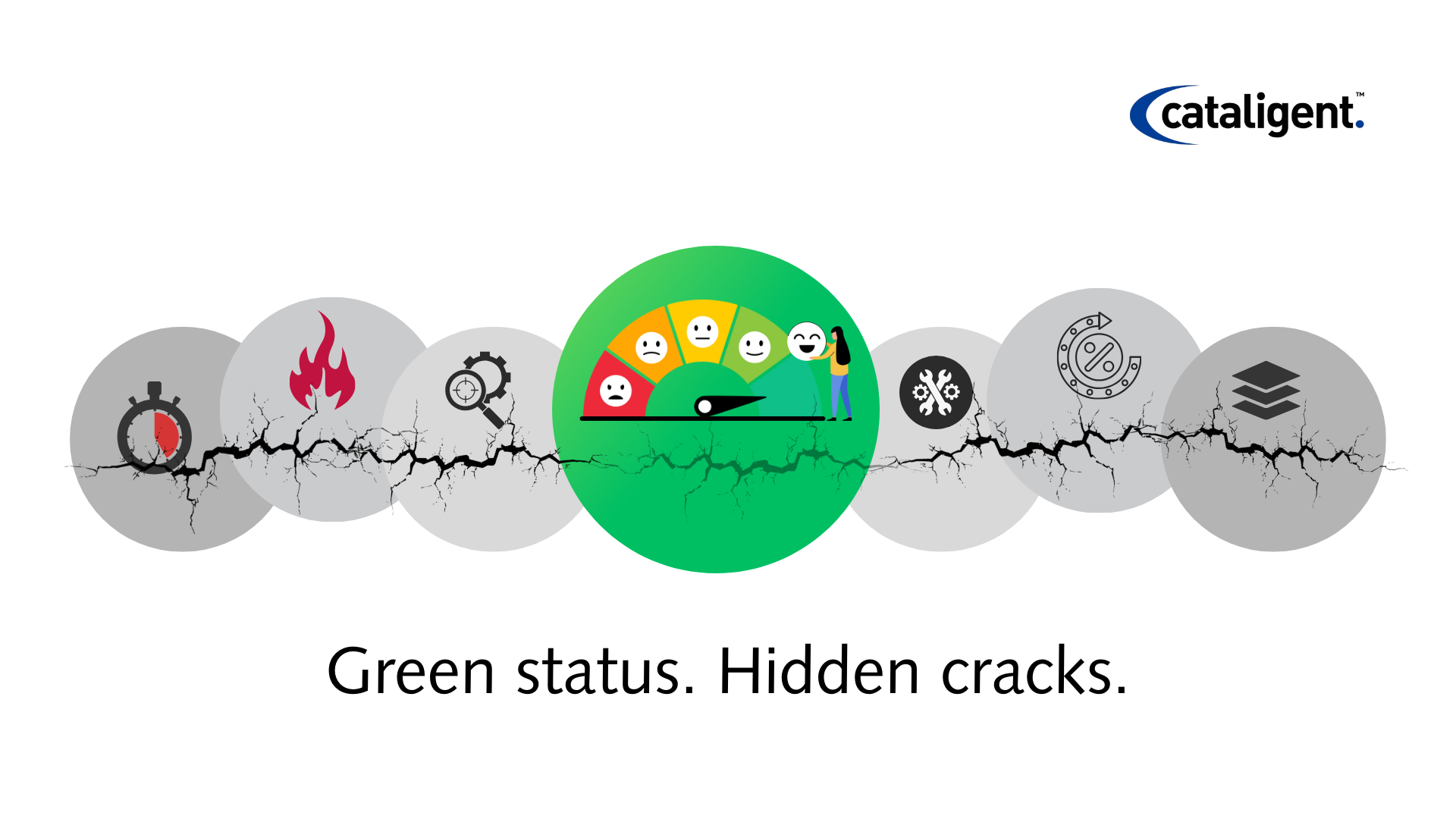
    1. The “Green Dashboard” Comfort Zone

    Every project has a dashboard, and almost every struggling project has one that looks surprisingly healthy.

    Milestones are marked complete. Risks are “under review.” Timelines appear achievable, at least on paper. This is where project reporting turns into reassurance instead of insight.

    In many PMOs, green status equals safety. Red status equals trouble. So teams learn how to keep things green.

    The result? Early warning signs of project failure are ignored or downplayed. Issues don’t disappear; they just wait until they’re expensive enough to be impossible to hide.


    2. Decision-Making Bottlenecks No One Owns

    One of the most common project management challenges isn’t poor execution, it’s delayed decisions.

    Approvals move slowly. Ownership is unclear. Trade-offs get postponed because they feel uncomfortable. Everyone agrees the decision is important, but no one wants to be the one who makes it.

    This creates decision debt. Like technical debt, it compounds over time. When decisions finally happen, they’re rushed, reactive, and often misaligned with reality.

    Projects don’t stall because teams are idle. They stall because clarity never arrives when it’s needed most.


    3. Firefighting Replaces Risk Management

    Firefighting feels productive. Risk management feels theoretical.

    When a project crisis hits, teams respond with urgency, long hours, and quick fixes. It looks impressive. It feels necessary And it often gets rewarded.

    Risk management, on the other hand, requires foresight, discipline, and uncomfortable conversations long before anything goes wrong. Which is why it’s frequently ignored.

    Over time, firefighting becomes the norm, and proactive risk management quietly disappears from the project management process.


    4. Scope Creep in Disguise

    Scope creep rarely announces itself.

    It arrives as “just a small change,” “a quick addition,” or “something the client really needs.” Each request sounds reasonable on its own. Together, they slowly reshape the project.

    This pattern thrives in environments where pushing back feels risky. Teams accept changes without recalibrating timelines, budgets, or resources.

    The project doesn’t fail because it changed. It fails because no one acknowledged what those changes actually cost.


    5. Methodology Worship

    Some organizations believe the right methodology will fix everything.

    When traditional project management feels too rigid, they move to agile. When agile feels chaotic, they introduce hybrid models. New tools, new ceremonies, new templates follow.

    But the underlying issues, unclear accountability, weak governance, poor communication—remain untouched.

    Methodologies don’t solve cultural problems. They simply expose them faster.


    6. The Dangerous “Almost Done” Phase

    Few stages in project delivery are as misleading as “almost done.”

    The main build is complete. Everyone is tired. Attention shifts to the next initiative. But documentation, training, handover, and operational readiness are still incomplete.

    This is where clean project closure often breaks down.

    Projects may technically finish, but operational teams inherit confusion, unresolved issues, and unclear ownership. The cost shows up later, in support tickets, rework, and frustration.


    7. Too Many Projects, Not Enough Capacity

    Portfolio overload is a silent project killer.

    When organizations run too many initiatives at once, even well-managed projects struggle. Shared resources become bottlenecks. Priorities shift constantly. Focus disappears.

    This isn’t a delivery problem, it’s a portfolio management problem.

    No amount of project management discipline can compensate for ignoring execution capacity.


    8. Projects That Refuse to End

    Some projects should stop, but don’t.

    Too much money has been spent. Too many people are invested. Ending the project feels like admitting failure, so it continues.

    These “zombie projects” drain budgets, talent, and leadership attention while delivering diminishing value.

    Ironically, the inability to stop a failing project often causes more damage than the original failure ever would.


    Why These Patterns Persist

    These project management failure patterns survive because they’re comfortable.

    They allow organizations to avoid hard conversations, delay difficult decisions, and maintain the appearance of control.

    Recognizing them early requires honesty, strong governance, and leadership willing to act, not just report.


    How Cataligent Helps You Break These Failure Patterns Before They Become Outcomes

    These project failure patterns persist for one reason. Most organizations manage delivery through signals that look good instead of systems that tell the truth. Dashboards turn into reassurance. Decisions drift. Risks surface late. Scope expands quietly. “Almost done” becomes a trap. The portfolio keeps growing while capacity stays the same.

    Cataligent helps teams shift from project administration to execution control. We combine transformation and execution expertise with CAT4, our enterprise transformation and project execution platform built for strategy implementation, portfolio and multi-project management, resource planning, risk management, governance workflows, and planned vs actual tracking.

    Here’s how that maps directly to the patterns listed:

    • Replace “green dashboard” theater with real visibility (dashboards, analytics, progress tracking):
      CAT4 supports configurable reporting and dashboards so leaders see what is truly on-track, what is drifting, and what needs intervention early.
    • Reduce decision bottlenecks (workflow, approvals, governance):
      Bring structure to decision-making through defined ownership, approval workflows, and clear “decision needs / next steps” tracking so projects stop waiting for clarity.
    • Turn firefighting into proactive risk management (risk management, early warning signals):
      Capture risks early, assign owners, track mitigation actions, and monitor the signals that indicate trouble before it becomes a crisis.
    • Control scope creep with traceable change impact (portfolio oversight, financial and progress impact):
      Make change visible by connecting scope shifts to timeline, resource, and financial implications so “small changes” do not silently become failure drivers.
    • Stop methodology worship with execution discipline (multi-project management, standardization):
      CAT4 supports consistent governance, reporting, and accountability across methodologies so teams focus on outcomes, not rituals.
    • Finish strong and close clean (handover readiness, documentation, ownership):
      Strengthen the “almost done” phase by keeping closure work visible, owned, and trackable so operations inherit clarity, not confusion.
    • Prevent portfolio overload (portfolio management, resource planning):
      Portfolio-level visibility helps prioritize initiatives, surface capacity constraints, and avoid spreading critical teams across too many projects at once.
    • Detect and end zombie projects faster (strategic alignment, evidence-based decisions):
      When initiatives lose alignment or value, CAT4 makes it easier to evaluate with evidence and make a clean, explicit close decision.

    Final Thought

    Project management isn’t broken. But pretending that plans, tools, and dashboards alone guarantee success definitely is.

    Successful project delivery comes from recognizing familiar failure patterns early, and choosing to interrupt them before they become the outcome.

    That’s not always easy. But it’s far easier than fixing a project after it’s already failed.

    If it’s always “green” until it’s on fire, your system is lying.
    Get real visibility, real ownership, real control with CAT4.

  • The Art of the “Clean” Close: Why most projects never actually finish and how to avoid the “Zombie Project” phase.

    The Art of the “Clean” Close: Why most projects never actually finish and how to avoid the “Zombie Project” phase.

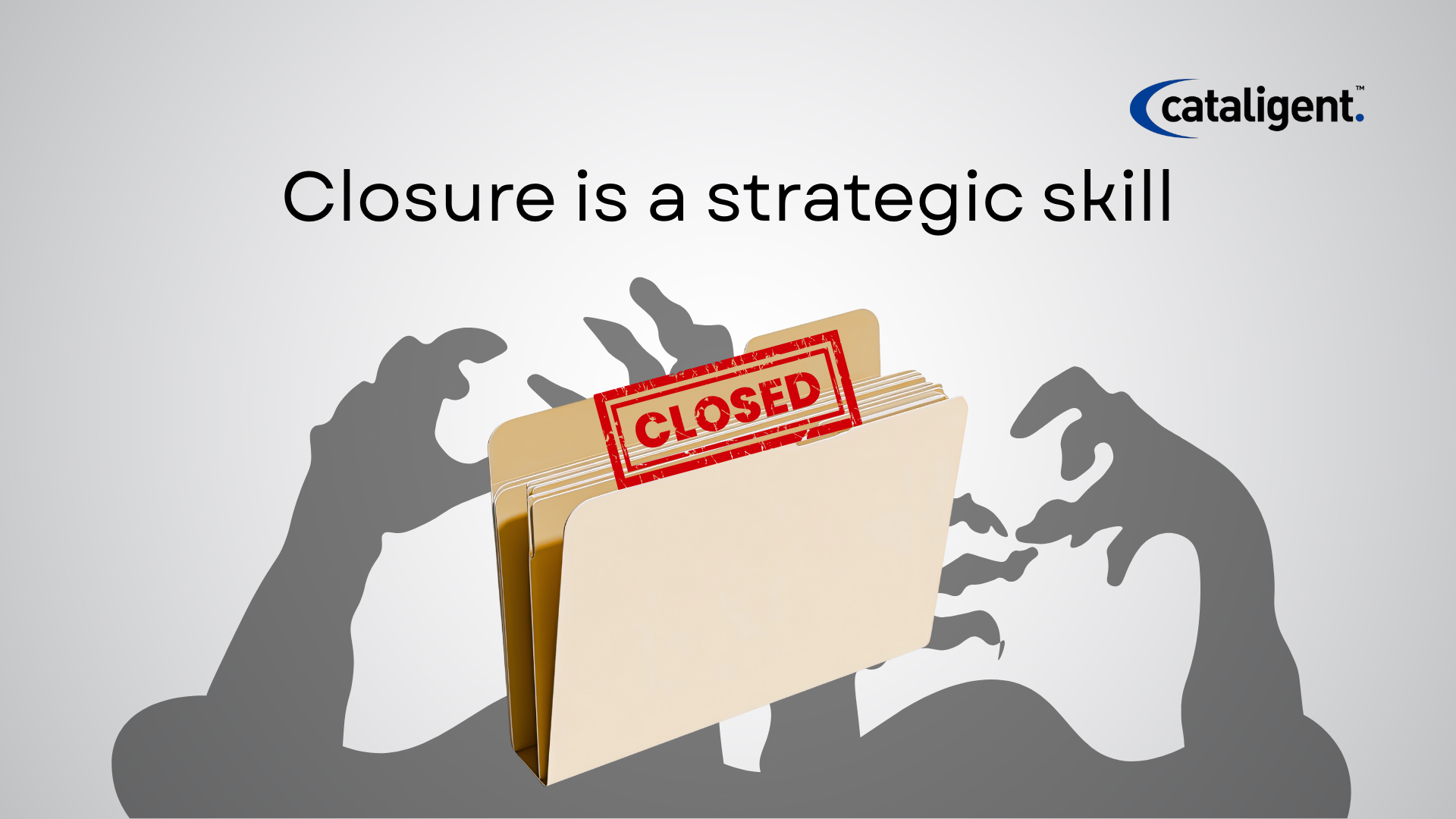
    In the world of project management, a Zombie Project is a project that is technically “undead” – not alive enough to succeed, not dead enough to stop consuming resources.

    It has no clear end date, the original goals have shifted or vanished, the budget is bleeding. It stays on the weekly status report, draining the team’s energy and resources without delivering a single ounce of value.

    A clean close isn’t failure. It’s a strategic skill.

    What Is a Zombie Project?

    A zombie project typically shows several of these signs:

    • Goals are vague, outdated, or constantly shifting
    • No clear business owner is accountable for outcomes
    • Timelines stretch indefinitely with “just one more push”
    • Teams are staffed part-time with low morale
    • The project survives mainly because “we’ve already invested so much”

    These initiatives linger because stopping them feels uncomfortable—politically, emotionally, or reputationally. But keeping them alive is often far more costly.

    Why These Projects Are Dangerous

    Zombie projects don’t just waste money. They create organizational drag.

    • Opportunity cost: Talent and attention are tied up instead of fueling high-impact work
    • Decision paralysis: Leaders avoid hard calls, reinforcing a culture of delay
    • Burnout: Teams feel stuck maintaining something no one believes in
    • False progress: Activity is mistaken for momentum

    The Myth: “Closing a Project Means Admitting Failure”, This belief keeps zombies walking.

    A Simple Test: Should This Project Live?

    Ask three questions:

    1. If we weren’t already doing this, would we start it today?
    2. Does this clearly advance our top strategic priorities?
    3. Is there credible evidence it will deliver meaningful value?

    If the answer to any of these is no, it’s time to consider a clean close.

    The Anatomy of a Clean Close

    Killing a zombie project doesn’t mean pulling the plug overnight or assigning blame. A clean close is deliberate, transparent, and respectful.

    1. Revisit the Original Intent

    Start with first principles:

    • What problem was this project meant to solve?
    • What success metrics were defined at the start?
    • Does this problem still matter?

    If the original rationale no longer holds, that’s not a flaw—it’s information.


    2. Evaluate with Evidence, Not Emotion

    A clean close relies on facts:

    • Progress against milestones
    • Actual vs. expected ROI
    • Customer or user impact
    • Strategic alignment today (not two years ago)

    Avoid sunk-cost thinking. Past investment is irrelevant to future value.


    3. Make the Decision Explicit

    Zombie projects thrive in ambiguity.

    Name the decision clearly:

    • “We are stopping this project.”
    • “We are closing this initiative as of [date].”

    Avoid soft language like pause, reassess, or deprioritize indefinitely. Those are just life support systems.


    4. Capture and Share the Learnings

    This is where many teams miss the opportunity.

    Document:

    • What assumptions proved wrong
    • What worked better than expected
    • What signals should have been noticed earlier

    Share these insights beyond the immediate team. A clean close turns a stalled effort into institutional knowledge.


    5. Redeploy People with Intention

    People are not project waste.

    Be proactive about:

    • Reassigning talent quickly
    • Recognizing effort and professionalism
    • Explaining why the project ended

    When handled well, team members feel relieved—not punished.


    How Cataligent Helps You Kill Zombie Projects Cleanly

    Most zombie projects survive because decision-making is fragmented. Goals live in decks. Ownership lives in people’s heads. Progress lives in status calls. No one has a single operational view of what is happening, what value is still realistic, and what the next decision should be.

    Cataligent is a transformation and project execution partner, and CAT4 is our enterprise execution platform for strategy implementation, portfolio and multi-project management, and performance tracking. It’s designed to help organizations and consulting teams run initiatives with clarity, control, and follow-through.

    Cataligent’s CAT4 supports structured execution across initiatives and portfolios, which makes “clean close” decisions easier to make and easier to communicate.

    Here’s how it helps in practice:

    • Make alignment visible (strategy implementation, OKRs, KPI tracking):
      Tie initiatives to strategic priorities, outcomes, and targets, then track whether that alignment still holds as conditions change.
    • Track planned vs actual reality (financial tracking, progress tracking, dashboards):
      Compare planned vs actual progress and financials so decisions are based on evidence, not hope. Use reporting views and dashboards to spot drift early.
    • Clarify ownership (governance, roles and access control, accountability):
      Make accountability explicit across programs, workstreams, and stakeholders so initiatives do not drift leaderless.
    • Standardize reporting and governance (status reporting, decision needs, next steps):
      Replace vague “we’re still working on it” updates with consistent status, clear decision points, and documented next steps that leadership can act on.
    • Turn closure into learning (risk management, documentation, knowledge capture):
      Capture assumptions, outcomes, lessons, and early signals in a repeatable way so you get institutional knowledge, not amnesia.

    Conclusion: Ending Well Is a Competitive Advantage

    Organizations that master the art of the clean close move faster, learn quicker, and build trust with their teams. They don’t cling to the past, they invest in the future.

    Zombie projects aren’t a sign of bad ideas. They’re a sign of avoided decisions.

    Kill them cleanly.

    C:\Users\akshi\Downloads\Gemini_Generated_Image_sot8q8sot8q8sot8.png

    Learn loudly.


    And move on stronger with Cataligent