Month: October 2025

  • Consulting for Culture: Why Mindset Shifts Matter More Than Frameworks

    Consulting for Culture: Why Mindset Shifts Matter More Than Frameworks


    What Does Consulting for Culture Mean?

    For decades, business consulting has centered around designing strategies, implementing frameworks, and restructuring operations. While these approaches are valuable, they often neglect the most decisive element of transformation: culture. Culture is the collective mindset, values, and daily behaviors that define how an organization operates. It influences decision-making, collaboration, adaptability, and ultimately the success of any initiative.

    Consulting for culture focuses on ensuring that strategies and frameworks are not just designed, but lived. It recognizes that transformation only works when people change how they think, behave, and work together. Without cultural buy-in, even the most advanced frameworks collapse under resistance.


    Why Culture Matters More Than Frameworks

    1. Strategy is Only as Strong as the Culture Behind It
    A strategy may look flawless on paper, but if the culture resists it, execution will fail. For instance, a strategy that prioritizes agility cannot succeed in a culture that values hierarchy and control. Consulting for culture ensures alignment, turning strategy into action.

    2. Frameworks Don’t Drive Behavior, People Do
    Agile, lean, or governance frameworks only succeed when people embrace them. Without a cultural shift toward collaboration, accountability, and openness to change, frameworks remain unused or misapplied. It is mindset, not methodology, that drives consistent behavior.

    3. Culture Defines Agility and Resilience
    True agility is not simply about adopting agile processes. It is about cultivating a mindset where adaptability is valued, experimentation is encouraged, and resilience is second nature. Culture determines whether organizations bend under disruption or bounce back stronger.

    4. Employee Engagement Fuels Transformation
    Resistance is the most common reason change initiatives fail. Consulting for culture builds employee engagement by creating understanding and ownership of transformation goals. When employees see themselves as part of the change, they become advocates instead of obstacles.

    5. Long-Term Sustainability Depends on Culture
    Frameworks and processes are temporary; they evolve and expire. Culture endures. A resilient, innovative, and collaborative culture continues to deliver transformation benefits long after a consulting project ends.


    How Consulting for Culture Works

    1. Cultural Diagnosis
    The first step is understanding the current cultural landscape. Consultants analyze organizational values, leadership behaviors, employee attitudes, and unwritten rules. This diagnosis reveals cultural barriers to transformation, such as resistance to risk or siloed mindsets.

    2. Leadership Alignment
    Leaders set the tone for culture. If they are not aligned, employees will not follow. Consulting for culture ensures leaders model desired behaviors — whether it is openness, collaboration, or innovation. Leadership alignment creates consistency and credibility in change initiatives.

    3. Embedding Change Management into Culture
    Change management should not be a temporary project. Consulting for culture embeds it into everyday operations through ongoing communication, training, and feedback systems. This makes adaptability part of the organization’s DNA rather than an external imposition.

    4. Designing Systems that Reinforce Culture
    Culture thrives when systems support it. Performance measurement, governance structures, and recognition programs must reward behaviors that reflect the desired culture. Consulting ensures these systems reinforce mindset shifts rather than contradict them.

    5. Building Cross-Organizational Collaboration
    Silos are cultural barriers. Consulting for culture creates collaboration platforms, cross-functional teams, and shared accountability models. These mechanisms break down isolation and foster unity around common goals.

    6. Sustaining Transformation Through Habits
    Culture is not built in workshops but in daily habits. Consulting for culture ensures mindset shifts translate into consistent behaviors. From leadership rituals to team practices, transformation becomes ingrained in how the organization operates every day.


    Insights: Why Mindset Shifts Outperform Frameworks

    • Culture Shapes Execution: A strategy is just a blueprint. Only a willing culture can bring it to life, turning ideas into outcomes.
    • Trust Accelerates Change: Employees embrace change faster when they trust leadership. Consulting for culture prioritizes trust-building through transparency and communication.
    • Innovation Emerges from Psychological Safety: Innovation happens when people feel safe to share ideas and experiment. A culture that tolerates calculated risk-taking produces breakthroughs.
    • Resilience is Cultural, Not Technical: Tools and processes support operations, but it is people’s adaptability and mindset that enable organizations to recover from crises and thrive.

    Real-World Examples

    • Global Manufacturer: A digital transformation effort failed due to employee resistance. Consulting shifted focus to cultural alignment through leadership communication and employee workshops, resulting in doubled adoption rates.
    • Healthcare Provider: By introducing cultural enablement programs that emphasized patient-first values, staff attitudes shifted. Engagement improved, and patient satisfaction scores rose significantly.
    • Financial Services Company: Leadership alignment workshops redefined decision-making culture, moving from risk-aversion to collaborative agility. Transformation initiatives advanced 40% faster.

    According to Venturebean, true business agility begins with people, not processes. Leadership mindset is the spark that drives scale, adaptability, and sustainable growth. When founders, promoters, and CXOs evolve how they think and lead, they unlock the ability to guide teams strategically instead of reactively.

    Leadership coaching empowers this shift by helping leaders delegate effectively, build stronger teams, and foster a culture of accountability and curiosity. It transforms reactive behavior into purposeful action, creating organizations ready to adapt, collaborate, and thrive in dynamic markets.


    How Cataligent Helps

    Cataligent recognizes that culture is the foundation of transformation. Its consulting services are designed to address cultural barriers directly and embed mindset shifts:

    • Leadership Alignment and Governance Simplification: Cataligent ensures leaders are aligned with cultural transformation and equips them to model the desired behaviors consistently.
    • Change Management Integration: Cataligent embeds structured change management into transformation programs, turning resistance into adoption and making change a daily reality.
    • Cultural Enablement Programs: Through workshops, coaching, and structured communication, Cataligent builds adaptability, collaboration, and accountability across the organization.
    • Strategy-to-Execution Integration via CAT4: Cataligent’s CAT4 framework links cultural alignment to business performance, ensuring culture is not abstract but measured and reinforced in execution.

    Frameworks and strategies alone are not enough. The true driver of transformation is culture— the collective mindsets and habits that make change real and sustainable. Organizations that consult for culture build resilience, agility, and engagement that endure beyond any single initiative.

    Cataligent helps organizations achieve transformation that lasts by embedding leadership alignment, change management, cultural enablement, and strategy-to-execution integration. With Cataligent, culture becomes the most powerful engine of business performance.

    If your organization has strong strategies but struggles with adoption, it’s time to shift the focus to culture. Partner with Cataligent to transform mindset shifts into your strongest competitive advantage.
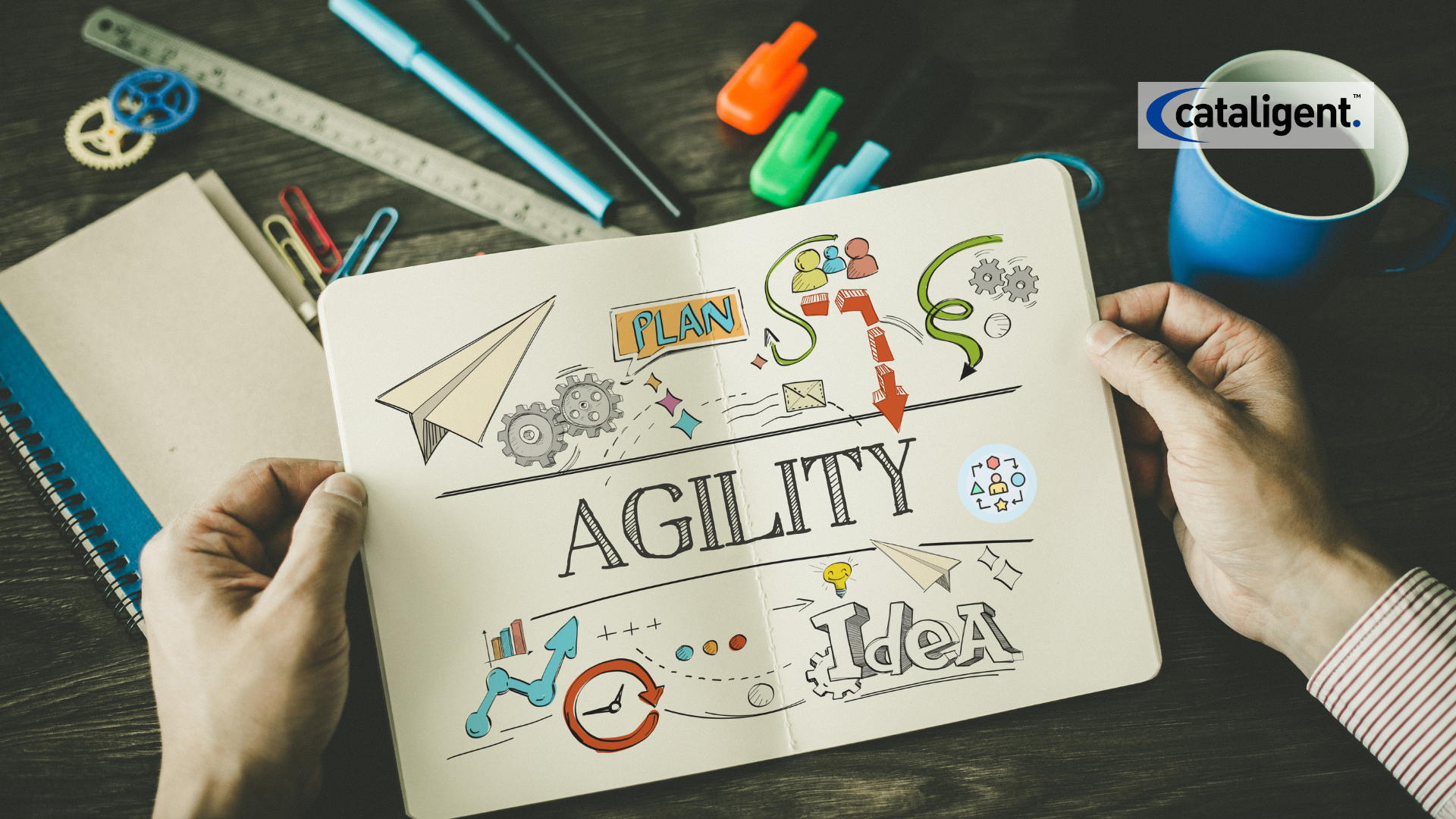
  • Adaptive Consulting: Building Agility into Business Strategy

    Adaptive Consulting: Building Agility into Business Strategy


    What is Adaptive Consulting?

    Traditional consulting has long relied on static strategies: fixed roadmaps, thick reports, and frameworks designed for stable environments. But in today’s world, stability is rare. Markets shift overnight due to technological disruptions, customer expectations evolve faster than ever, and global crises reset industries without warning. Consulting that assumes predictability no longer works.

    Adaptive consulting is the new model of business advisory. It equips organizations with strategies that flex as conditions change. Instead of rigid plans, it provides living frameworks, rapid feedback loops, and decision-making models that empower businesses to pivot with speed and precision. Adaptive consulting recognizes that agility is not a side capability but the foundation for resilience, competitiveness, and growth.


    Why Businesses Need Adaptive Consulting

    1. Static Strategies Fail in Dynamic Markets
    The old consulting model of long-term, fixed strategies often collapses in practice. By the time reports are digested, conditions have shifted. Adaptive consulting helps businesses continuously realign, ensuring that strategy is never outdated but always evolving with the market.

    2. Customer Expectations Change Constantly
    Customers expect hyper-personalization, fast response, and seamless experiences. A static plan cannot deliver this. Adaptive consulting embeds responsiveness into business strategy, ensuring customer needs drive priorities and execution at every stage.

    3. Agility Provides Competitive Advantage
    In today’s environment, the winner is not the largest but the most adaptive. Competitors who adjust faster to disruption capture opportunities first. Adaptive consulting builds the governance and portfolio management structures that allow organizations to pivot at speed.

    4. Transformation Requires Flexibility
    Transformations are complex and never linear. Whether it’s digital transformation, cost restructuring, or cultural change, adaptive consulting ensures organizations can recalibrate their journey when barriers arise, rather than being locked into failing paths.

    5. Uncertainty is Here to Stay
    From economic turbulence to regulatory shifts, uncertainty is no longer an exception but a constant. Adaptive consulting prepares businesses for multiple scenarios, equipping them with resilience to thrive amid volatility.


    How Adaptive Consulting Works

    1. Flexible Strategic Roadmaps
    Instead of binding businesses to static three- or five-year strategies, adaptive consulting creates roadmaps that evolve. These roadmaps act as dynamic guides, enabling leaders to adjust direction as market conditions, customer behavior, or internal capabilities shift.

    2. Agile Portfolio Management
    Portfolios filled with too many projects spread resources thin. Adaptive consulting embeds agile portfolio management, allowing organizations to continually reprioritize, kill low-impact initiatives, and double down on what matters most. Resources always flow where they create maximum strategic impact.

    3. Rapid Feedback Loops
    Adaptive consulting favors short cycles of action and review over long planning periods. Through rapid feedback loops, organizations test, learn, and iterate continuously. This reduces risks of large-scale failure and builds momentum through incremental wins.

    4. Scenario Planning as a Discipline
    Instead of betting on one future, adaptive consulting prepares for multiple possible futures. Scenario planning ensures leaders can quickly pivot to different strategies when external conditions change dramatically.

    5. Empowered Decision-Making
    Bureaucracy slows response. Adaptive consulting helps organizations redesign governance to decentralize authority while maintaining accountability. Empowered managers and teams can make faster decisions that align with broader strategy.

    6. Cultural Enablement
    Tools and processes are useless if culture resists change. Adaptive consulting integrates cultural alignment into its approach, creating organizations where adaptability is embraced at every level — from leadership down to front-line teams.


    Insights: The Hallmarks of Adaptive Consulting

    • Dynamic Strategy Alignment: Consulting engagements should not stop at planning. Strategies must remain dynamically linked to execution, with leaders having real-time visibility into how projects contribute to goals.
    • Resilience and Agility as Metrics: Adaptive consulting redefines success beyond growth. It measures resilience (ability to withstand shocks) and agility (ability to pivot quickly) as equally critical indicators of strength.
    • Technology as Enabler, Not Distraction: Adaptive consulting integrates digital tools and dashboards to give leaders actionable insights. Technology is positioned as a driver of agility, not an added layer of complexity.
    • Leadership as Catalyst: Adaptive consulting recognizes that leaders model adaptability. By coaching and aligning leaders, consultants foster momentum and confidence across organizations.
    • Culture of Experimentation: Adaptive consulting embeds experimentation into daily business practice. Failures are treated as lessons, successes are scaled rapidly, and organizations learn continuously.

    Examples of Adaptive Consulting in Action

    • Global Retailer: Replaced rigid annual planning cycles with quarterly adaptive reviews. This enabled faster pivots in product strategy and helped meet changing customer preferences more effectively.
    • Technology Company: Reallocated investments dynamically to emerging AI initiatives based on adaptive consulting insights, accelerating growth in high-demand segments.
    • Healthcare Provider: Implemented scenario planning frameworks that prepared them for sudden regulatory shifts, reducing compliance risks and ensuring uninterrupted patient care.
    • Financial Institution: Adopted adaptive portfolio management, reallocating resources away from stagnant projects to high-value digital initiatives, resulting in faster ROI and improved competitiveness.

    Want to explore how adaptive business models are driving sustainable growth in unpredictable markets? Read more in our blog Driving Sustainable Growth through Adaptive Business Models in a Volatile Market.

    Now let’s see how our tool helps bring adaptive consulting to life — empowering organizations to embed agility into their strategy, make faster data-driven decisions, and stay resilient no matter how volatile the market becomes.

    How Cataligent Helps

    Cataligent equips organizations with consulting that is flexible, agile, and focused on results. Its approach ensures strategies are never static but continually aligned with real-world demands:

    • CAT4 Strategy-to-Execution Integration: Cataligent’s CAT4 platform connects strategy and execution in real time, ensuring leaders can pivot strategies instantly without losing alignment.
    • Agile Portfolio Management Expertise: Cataligent enables continuous reprioritization of initiatives so resources always support high-impact outcomes.
    • Scenario Planning and Simplified Governance: Cataligent prepares organizations for multiple futures while streamlining governance to accelerate decision-making.
    • Change Management and Cultural Enablement: Cataligent builds adaptability into organizational culture, ensuring that agility is sustained by people, not just processes.
    • Operational Efficiency Programs: By embedding lean practices, Cataligent ensures organizations stay agile without compromising efficiency or productivity.

    Rigid strategies are relics of the past. In a world of constant disruption, businesses must be adaptive to survive and thrive. Adaptive consulting ensures that strategies evolve in sync with reality, enabling organizations to pivot with speed and confidence.

    Cataligent transforms consulting into an engine of agility by combining real-time strategy integration, agile portfolio management, scenario planning, governance simplification, and cultural enablement. With Cataligent, organizations can stay ahead of disruption, build resilience, and seize opportunities as they emerge.

    If your strategies are outdated before execution begins, it’s time to embrace adaptive consulting with Cataligent. Together, we can embed agility into your business strategy and secure a lasting competitive advantage.

  • The Consulting Bottleneck: How to Eliminate Analysis Paralysis and Accelerate Decisions

    The Consulting Bottleneck: How to Eliminate Analysis Paralysis and Accelerate Decisions


    What is the Consulting Bottleneck?

    Business leaders often bring in consultants expecting clarity, actionable insights, and accelerated transformation. Yet, paradoxically, consulting engagements sometimes create the opposite: more complexity, longer timelines, and endless rounds of presentations. This phenomenon, known as the consulting bottleneck, is where organizations become trapped in analysis paralysis. Instead of moving forward, they are weighed down by frameworks, reports, and data that never crystallize into decisive action.

    In today’s volatile environment, where opportunities and risks emerge in weeks rather than years, the cost of hesitation is steep. Competitors who act faster win customers, seize markets, and adapt to disruption, while those caught in consulting bottlenecks watch opportunities slip away. The future of consulting must be about eliminating bottlenecks, accelerating clarity, and enabling rapid execution.


    Why Analysis Paralysis Threatens Business Success

    1. Speed Defines Competitive Edge
    Delays in decision-making mean missed windows of opportunity. If consulting outputs take months to implement, competitors who act swiftly can dominate markets before your initiatives even begin.

    2. Complexity Overwhelms Leaders
    Consultants often deliver dozens of frameworks and hundreds of slides. While these may be intellectually robust, they can overwhelm leadership teams and stall progress. Leaders need distilled, prioritized insights — not encyclopedic reports.

    3. Prolonged Assessments Drain Resources
    Every extra month spent on extended analysis consumes financial resources, staff energy, and executive attention. Meanwhile, operational inefficiencies and strategic gaps continue to cost the business daily.

    4. Decision Fatigue Reduces Confidence
    When leaders are presented with too many options and no clear path forward, they hesitate. Decision fatigue erodes confidence and creates an organizational culture of waiting instead of acting.

    5. Transformation Loses Momentum
    Transformational programs succeed on momentum and trust. Long consulting cycles stall initiatives, reduce employee buy-in, and risk making transformation look like another expensive, failed promise.


    How to Eliminate the Consulting Bottleneck

    1. Simplify Insights into Clear Action Points
    Consulting must evolve from data-heavy presentations to actionable clarity. Instead of leaving executives to decipher insights, consultants should translate them into specific, prioritized actions with measurable timelines.

    2. Build Decision Frameworks Instead of Endless Analysis
    Consulting should guide leaders toward decisions, not drown them in possibilities. Structured frameworks — that balance speed, accuracy, and accountability — provide the confidence to act without delay.

    3. Shift Focus from Deliverables to Outcomes
    The value of consulting isn’t in the report delivered; it’s in the change achieved. Every engagement should be measured by tangible business outcomes: cost savings, efficiency gains, revenue acceleration, or risk reduction.

    4. Provide Real-Time Visibility Instead of Static Reports
    Executives need dynamic visibility. Consulting that leverages digital dashboards and real-time data allows leaders to track progress, monitor KPIs, and make decisions without waiting for quarterly updates.

    5. Prioritize and Sequence for Maximum Impact
    Organizations don’t need 100 recommendations. They need the 5 that will move the needle most. Consulting must help businesses prioritize initiatives, sequence them logically, and sustain momentum.

    6. Embrace Agile Consulting Practices
    Consulting itself must be agile. Instead of linear, months-long analysis phases, consulting should operate in iterative cycles — providing rapid feedback, adjusting quickly, and guiding execution alongside strategy.


    Insights for Leaders:

    • The 80/20 Principle in Action: Most organizations achieve significant results from a small number of focused initiatives. Consultants must identify these high-leverage actions and strip away the noise.
    • Visualization for Faster Understanding: Charts, heat maps, and real-time dashboards provide clarity far faster than hundreds of static slides. Visual simplicity accelerates comprehension and decisions.
    • Decision Confidence as a Deliverable: Consulting should not only recommend actions but actively help leadership teams make choices and feel confident in those choices. Confidence accelerates execution.
    • Creating Cultures of Action Bias: Consultants should help organizations build cultures that prioritize action. Perfect certainty rarely exists; forward momentum creates learning and results faster than over-analysis.

    Real-World Illustrations

    • Technology Firm: A digital transformation stalled after 12 months of consulting analysis. A pivot to prioritized action steps focused on three core initiatives. Within six months, execution accelerated, yielding a 25% efficiency gain.
    • Consumer Goods Company: Shifted from static quarterly consulting reports to live performance dashboards. Leadership moved from waiting on consultants to making weekly operational decisions that improved supply chain resilience.
    • Financial Institution: By adopting structured decision frameworks designed with consultants, project cycles were reduced from 12 months to 4 months. Transformation programs began delivering measurable results in less than half the expected time.

    According to Asana, analysis paralysis happens when overthinking replaces action — a state where too many choices, fear of failure, or the pursuit of perfection freeze decision-making. It’s a common challenge in fast-paced work environments, where uncertainty fuels hesitation.

    To overcome it, Asana suggests applying practical strategies: set clear deadlines for decisions, narrow options early, and use structured frameworks to guide choices. Even small, quick decisions can build confidence and momentum. By turning reflection into action, professionals can cut through doubt, make smarter moves, and keep projects advancing.


    Want to see how agile consulting helps organizations move from indecision to action? Read more in our blog Agile & Adaptive Consulting: Real-Time Advisory for Transformation in Volatile Markets.

    Now let’s see how our tool helps eliminate the consulting bottleneck — turning analysis paralysis into confident, data-backed decisions that accelerate transformation and keep your business moving forward.


    How Cataligent Helps

    Cataligent dismantles consulting bottlenecks by turning complexity into clarity and clarity into action. Its consulting model is designed to accelerate decisions, ensure accountability, and deliver impact:

    • Decision-Oriented Frameworks: Cataligent delivers structured frameworks that simplify complexity into actionable pathways, enabling leaders to act decisively.
    • CAT4 Real-Time Visibility: The CAT4 platform connects strategy with execution, replacing static reports with live dashboards that track alignment, progress, and performance in real time.
    • Portfolio Prioritization and Program Management: Cataligent ensures resources are directed to the most impactful initiatives, sequencing actions for maximum effect and sustained results.
    • Process Simplification and Change Management: By embedding lean processes and structured change management, Cataligent ensures decisions move smoothly into execution with workforce adoption.

    Analysis paralysis is one of the greatest hidden costs in business today. It delays execution, drains resources, frustrates employees, and cedes opportunities to competitors who move faster.

    Cataligent helps organizations cut through the bottleneck with decision frameworks, real-time governance, portfolio prioritization, and change management expertise. By partnering with Cataligent, businesses don’t just gain advice — they gain the ability to act with speed, confidence, and clarity.

    If your organization is struggling with slow consulting cycles and missed opportunities, it’s time to break free from the bottleneck. With Cataligent, your consulting engagements become engines of rapid decision-making and sustained business impact.

  • From Advice to Impact: Redefining the Role of Business Consulting in a Results-Driven World

    From Advice to Impact: Redefining the Role of Business Consulting in a Results-Driven World


    What Does Business Consulting Mean Today?

    Business consulting has traditionally been seen as providing expert advice — delivering frameworks, recommendations, and reports that outline what an organization should do. While valuable, this model often stops short of implementation. Companies are left with impressive presentations but little sustained impact. In today’s results-driven world, this is no longer enough.

    Modern business consulting is not about advice alone; it is about embedding solutions that deliver measurable outcomes. Organizations expect consultants to guide them from strategy through execution, helping them transform operations, optimize performance, and sustain change long after the engagement ends.


    Why the Old Model of Consulting Falls Short

    1. Advice Without Execution Creates Frustration
    Leaders invest heavily in consulting, but too often the results remain theoretical. Without execution support, strategies fail to translate into real business impact.

    2. The Pace of Change Demands Agility
    Traditional consulting often delivers long-cycle projects, but disruption today moves too fast. Businesses need consulting models that adapt in real time.

    3. Clients Demand Tangible ROI
    Executives are under pressure to justify every investment. Consulting must demonstrate direct links to growth, efficiency, or competitiveness — not just recommendations.

    4. One-Size-Fits-All Approaches Fail
    Generic frameworks rarely address the specific context of an organization. Tailored, actionable solutions create real value.

    5. Change Requires Culture, Not Just Strategy
    Consulting that ignores culture misses the human factor. Success depends on embedding solutions into leadership, teams, and everyday processes.


    How Consulting Must Evolve

    1. From Deliverables to Outcomes
    Consulting engagements must move beyond producing reports. Success should be defined by measurable improvements in performance, efficiency, and customer value.

    2. From Static Plans to Adaptive Models
    Instead of rigid strategies, consulting must provide flexible roadmaps that evolve with market conditions and organizational needs.

    3. From External Expertise to Embedded Partnership
    Consultants should not remain external observers. They must work alongside internal teams, transferring skills, building capacity, and embedding change.

    4. From Cost-Cutting to Value Creation
    Consulting should identify opportunities to unlock new revenue streams, redesign processes, and improve resource allocation — not just reduce expenses.

    5. From Advisory to Transformation Enablement
    The role of consulting must expand into transformation management, governance design, and cultural alignment, ensuring results stick long after consultants depart.


    Insights: What Impact-Driven Consulting Looks Like

    • Integrated Strategy and Execution: Strategies must connect seamlessly to operations. Consulting engagements should provide platforms and governance that ensure execution stays aligned with intent.
    • Capability Building: True consulting impact comes from leaving behind stronger teams and leaders, not dependency. Skills transfer and cultural enablement must be embedded.
    • Agility as a Service: Consulting should provide tools for rapid reprioritization, resource allocation, and governance adjustments as conditions change.
    • Outcome-Based Metrics: Engagements should measure progress in terms of cost savings, growth acceleration, productivity gains, or risk reduction.

    Real-World Examples of Consulting Impact

    • Manufacturing Enterprise: Instead of a static efficiency report, consultants worked with teams to implement lean process redesign, achieving 20% cost savings sustained over three years.
    • Financial Services Firm: Consultants created governance frameworks that aligned transformation projects with strategy, cutting wasted initiatives and doubling portfolio ROI.
    • Retail Organization: Through embedded consulting, leadership teams adopted cultural transformation programs that boosted workforce adaptability, reducing resistance to change initiatives.

    According to Masterly Consulting Group, effective business consulting goes far beyond offering advice — it’s about delivering transformation. The best consulting firms empower organizations to streamline operations, embrace innovation, and drive measurable growth. Whether guiding start-ups through market entry or helping family-owned enterprises strengthen governance, consultants act as catalysts for progress. By blending strategic insight, operational expertise, and digital fluency, business consulting transforms challenges into opportunities, helping companies stay agile, competitive, and ready for the future of business.


    How Cataligent Helps

    Cataligent redefines consulting by focusing not just on advice, but on execution, cultural alignment, and measurable outcomes. Its consulting services combine strategic expertise with transformation management capabilities that ensure long-term success.

    Cataligent’s business consulting services focus on:

    • Strategic Roadmaps with Execution Integration: Cataligent creates tailored strategies and ensures they are executed through structured governance, digital tools, and portfolio prioritization.
    • Business Process Redesign and Cost Optimization: Going beyond surface-level efficiency, Cataligent redesigns core processes, eliminates redundancies, and optimizes costs to deliver sustainable performance gains.
    • Change Management and Cultural Enablement: Recognizing that people drive success, Cataligent builds leadership alignment, workforce adaptability, and cultural buy-in to make transformation stick.
    • Program and Portfolio Management: By aligning projects with business priorities, Cataligent ensures that resources are invested in initiatives with the greatest strategic and financial impact.
    • Performance Measurement and Governance: Cataligent embeds metrics, dashboards, and accountability systems so organizations can track progress and sustain improvements.

    Consulting without execution no longer delivers value. Businesses today need consulting partners who can deliver impact — not just advice.

    Cataligent transforms consulting engagements into engines of measurable results by combining strategic expertise, execution frameworks, cultural enablement, and governance design. Partner with Cataligent to ensure your consulting investment leads not just to recommendations, but to real, sustainable transformation.

  • Resilience Over Growth: Why the Future Belongs to Adaptive Businesses

    Resilience Over Growth: Why the Future Belongs to Adaptive Businesses


    What Does Business Resilience Mean?

    For decades, growth has been celebrated as the ultimate goal of business strategy. Companies measured success in terms of revenue expansion, market share, and scaling operations. But in a world defined by volatility — global disruptions, shifting customer expectations, supply chain shocks, regulatory changes, and technological upheaval — growth without resilience is fragile.

    Business resilience is the capacity of an organization to absorb shocks, adapt to disruption, and continue delivering value under pressure. It is not the opposite of growth; rather, it is the foundation upon which sustainable growth can exist. Adaptive businesses recognize that thriving tomorrow requires more than chasing numbers today — it demands agility, flexibility, and strength to withstand uncertainty.


    Why Resilience Matters More Than Ever

    1. Global Disruption Has Become the Norm
    Supply chain crises, pandemics, inflation, and geopolitical tensions have shown that disruption is constant. Organizations that build resilience can pivot quickly and sustain operations when others falter.

    2. Customer Loyalty Depends on Reliability
    Customers don’t just want innovation; they want consistency. Businesses that can maintain quality and service even in turbulent times earn trust that competitors struggle to match.

    3. Growth Without Stability is Risky
    A company that expands rapidly without resilient systems risks collapse under pressure. Sustainable success requires balancing ambition with adaptability.

    4. Regulation and Compliance are Evolving
    Regulatory landscapes shift quickly across industries. Resilient organizations embed compliance flexibility into processes, avoiding costly disruptions when laws change.

    5. Innovation Thrives in Stable Foundations
    Teams innovate more effectively in organizations that can withstand risk. Resilience provides the confidence to experiment and explore without fear of collapse.


    How Businesses Build Resilience

    1. Diversifying Business Models
    Relying on a single market or product increases vulnerability. Resilient organizations diversify revenue streams and build flexibility into their models.

    2. Embedding Agility into Operations
    Agility is the ability to adjust quickly. Businesses that streamline governance, reduce bureaucracy, and empower teams are better equipped to pivot when conditions change.

    3. Building Financial Flexibility
    Resilient organizations manage cash flow, reduce unnecessary costs, and create buffers that allow them to weather downturns without drastic cuts.

    4. Strengthening Supply Chains
    From nearshoring to multi-sourcing, businesses that invest in resilient supply chains reduce exposure to disruptions and maintain continuity.

    5. Prioritizing Workforce Adaptability
    Employees who are trained, engaged, and empowered respond better to change. Resilient businesses invest in learning, leadership development, and a culture of adaptability.

    6. Leveraging Data and Real-Time Insights
    Resilience requires foresight. Data-driven decision-making enables companies to anticipate risks, model scenarios, and adjust strategies proactively.

    7. Embedding Governance for Stability and Speed
    Resilient organizations balance risk management with agility by building governance frameworks that enable fast yet responsible decision-making.


    Insights on Adaptive Businesses

    • Scenario Planning as a Core Discipline: Adaptive businesses do not plan for one future; they prepare for multiple. This discipline creates readiness for both opportunities and threats.
    • Customer-Centric Resilience: By listening continuously to customers, organizations ensure offerings remain relevant even when external factors shift.
    • Resilient Culture: A culture that values learning, transparency, and collaboration ensures people can adapt collectively. Culture becomes the strongest anchor during times of uncertainty.
    • Technology as an Enabler of Adaptability: From digital platforms to AI-driven insights, adaptive use of technology enhances flexibility without creating unnecessary complexity.

    Examples of Resilient Businesses in Practice

    • Global Logistics Firm: Created diversified supply chain networks across regions, reducing exposure to geopolitical risk while maintaining continuity during disruptions.
    • Retail Enterprise: Built real-time analytics dashboards that tracked inventory and customer demand, allowing the company to adapt product flows during sudden demand spikes.
    • Financial Institution: Balanced aggressive digital expansion with strong governance and risk management systems, ensuring compliance while accelerating transformation.
    • Healthcare Provider: Implemented workforce adaptability programs, equipping teams to handle crises such as sudden surges in patient demand.

    According to Datentreiber, real transformation begins with resilience, not technology. Many organizations rush to adopt Data and AI, expecting instant growth, but without a strong foundation of adaptability and culture, these tools can reveal weaknesses instead of fixing them. Resilience allows companies to interpret data wisely, stay agile, and act confidently amid uncertainty. When built on resilient systems and empowered teams, technology becomes a catalyst for continuous learning and innovation. In this rapidly changing world, resilience is not the opposite of growth but the driving force behind it.


    💡 Want to see resilience in action? Check Business Resilience Through Scenario Gaming — where organizations learn to think faster, smarter, and stronger.

    Now let’s see how our tool turns Resilience Over Growth by helping companies stay agile, embrace change, and lead with confidence.


    How Cataligent Helps

    Cataligent specializes in enabling organizations to build resilience as a core capability while ensuring growth remains sustainable:

    • CAT4 Framework: Links strategy to execution with real-time governance and visibility, ensuring organizations can pivot quickly without losing alignment.
    • Portfolio and Program Management: Helps businesses prioritize initiatives that strengthen adaptability while eliminating resource drain on fragile projects.
    • Cost Optimization and Efficiency Programs: Provide financial flexibility by streamlining processes and reducing waste without compromising performance.
    • Change Management and Cultural Enablement: Supports workforce adaptability by embedding change management and resilience-building practices across teams.
    • Governance Simplification: Creates structures that combine speed with accountability, empowering leaders to act decisively in uncertain conditions.

    The future does not belong to the largest or fastest-growing businesses — it belongs to the most adaptive. Growth without resilience creates fragility, but resilience ensures that growth is both achievable and sustainable.

    Cataligent helps organizations embed resilience at the heart of transformation by combining strategy-to-execution integration, agile portfolio management, cost optimization, governance simplification, and workforce adaptability programs. With Cataligent as your partner, resilience becomes a competitive advantage, enabling you to thrive in uncertainty while seizing opportunities for growth.

    If your business is focused only on expansion but struggling with adaptability, it’s time to rebalance. Cataligent can help you shift from fragile growth to resilient transformation, ensuring your business not only survives disruption but leads in shaping the future.

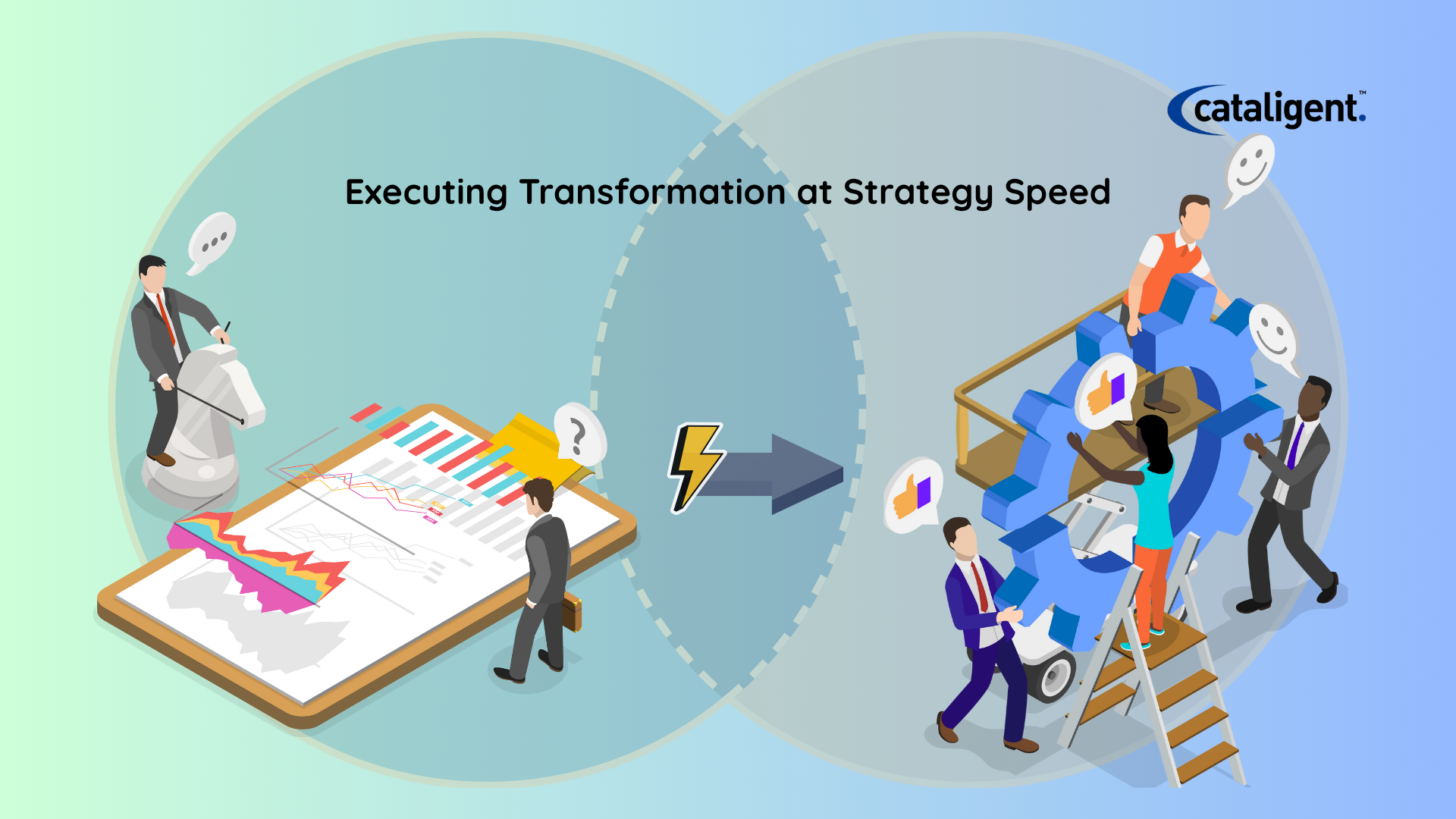
  • Execution at the Speed of Strategy: Redefining Agility in Transformation

    Execution at the Speed of Strategy: Redefining Agility in Transformation


    What Does Execution at the Speed of Strategy Mean?

    Many organizations create bold strategies, but those strategies often stall at execution. Projects are launched without alignment, resources are spread too thin, and initiatives lose momentum before delivering results. Execution at the speed of strategy is about building the capability to translate vision into action seamlessly, quickly, and with measurable outcomes.

    This principle emphasizes the removal of lag between planning and doing. It demands that organizations create systems where strategic intent directly fuels execution in real time. Agility becomes more than a buzzword — it is the ability to shift priorities, reallocate resources, and adapt execution without losing sight of the strategic destination.


    Why Agility in Execution is Critical

    1. Strategies Without Execution Create Fragility
    A strategy on paper is worthless if it cannot be acted upon. Execution provides resilience, enabling organizations to move beyond aspiration into measurable progress.

    2. Markets Move Faster Than Annual Planning Cycles
    By the time annual strategies are cascaded into projects, markets may have already shifted. Execution aligned to real-time strategy keeps organizations relevant.

    3. Resources Must Follow Priorities, Not Politics
    In many organizations, resources flow toward the loudest voice rather than the greatest value. Agile execution ensures that time, capital, and talent are continually reallocated to initiatives that matter most.

    4. Customer Expectations Require Responsiveness
    Customers no longer wait months for businesses to adapt. They expect improvements and innovations quickly. Agility in execution ensures companies respond with speed.

    5. Transformation Success Relies on Speed of Implementation
    Digital, operational, or cultural transformation initiatives fail when implementation is slow. Momentum fuels adoption and engagement; without it, transformation loses credibility.


    How to Redefine Agility in Transformation

    1. Integrate Strategy with Execution in Real Time
    The first step is creating visibility across the organization. Leaders need platforms that link strategic goals with the projects and teams delivering them, ensuring every initiative is aligned with business priorities.

    2. Establish Agile Portfolio Management
    Instead of rigid long-term project lists, organizations should continuously evaluate and reprioritize portfolios. Agile portfolio management ensures focus remains on initiatives that deliver maximum impact.

    3. Build Rapid Feedback Loops
    Execution should never be set-and-forget. Feedback loops that measure progress against strategic goals in real time allow for quick pivots when conditions change.

    4. Empower Decision-Makers at All Levels
    Agility requires decentralization. Empowering teams and middle managers with data and authority allows faster responses while keeping strategy intact.

    5. Foster a Culture of Accountability and Transparency
    Execution moves faster when accountability is clear. Transparent metrics and dashboards create shared ownership and keep momentum high.

    6. Balance Speed with Governance
    Agility is not chaos. Simplified governance structures ensure that speed does not compromise accountability, risk management, or compliance.


    Insights into Agile Execution Practices

    • Dynamic Resource Allocation: Moving resources from underperforming initiatives to high-value ones keeps execution focused on outcomes.
    • Scenario-Based Planning: Instead of fixed strategies, organizations prepare multiple scenarios and can switch between them quickly.
    • Digital Dashboards for Visibility: Real-time data on project health, costs, and strategic alignment help leaders make decisions without delays.
    • Continuous Workforce Engagement: Execution succeeds when employees understand the “why” behind initiatives. Ongoing communication and involvement foster commitment.
    • Learning Through Iteration: Agile execution encourages trying, testing, and learning rather than waiting for perfect solutions. This keeps organizations ahead of competitors who move slowly.

    Real-World Examples of Execution at the Speed of Strategy

    • Technology Enterprise: Shifted from annual planning to quarterly portfolio reviews, enabling resource reallocation that doubled innovation throughput without increasing budgets.
    • Healthcare Provider: Used real-time dashboards to monitor strategic initiatives, cutting project overruns by 40% and improving delivery consistency.
    • Financial Services Firm: Empowered teams with decision-making authority and agile governance, accelerating transformation initiatives by six months compared to traditional models.
    • Retail Organization: Implemented dynamic resource allocation during market disruptions, ensuring continuity in supply chains and faster response to consumer demand.

    According to insights from Sciforma, true business success lies in mastering strategic execution and transformation management. It’s not just about creating plans, it’s about bringing them to life through clear communication, goal alignment, and agile leadership. By tracking meaningful KPIs, nurturing cultural alignment, and adapting strategies in real time, organizations can transform challenges into opportunities. Those that integrate strategic execution with transformation management in this rapidly changing world, don’t just survive—they lead with clarity, innovation, and sustained growth.


    🚀 Must Discover how realigning strategy with disciplined agility helps businesses thrive amid disruption and turn transformation into a continuous competitive advantage.

    Let’s see how our tools empower leaders to execute these strategies seamlessly, optimize performance, and sustain growth across every stage of transformation.


    How Cataligent Helps

    Cataligent bridges the gap between strategy and execution, enabling organizations to operate with true agility:

    • CAT4 Framework: Connects strategy and execution in real time, providing leaders with visibility into progress and alignment.
    • Agile Portfolio and Program Management: Ensures resources are focused on high-impact initiatives, reprioritized continuously to reflect changing conditions.
    • Governance Simplification: Streamlines decision-making without sacrificing accountability, allowing for speed and compliance.
    • Change Management Support: Builds engagement across the workforce, ensuring rapid adoption of new processes and systems.
    • Operational Efficiency and Cost Optimization: Removes bottlenecks and reallocates resources effectively to maintain momentum.

    Strategic visions lose power when execution lags. To thrive in competitive, fast-changing markets, organizations must build the discipline of executing at the speed of strategy. Agility is not about moving faster in isolation; it is about moving faster with alignment and purpose.

    Cataligent delivers the frameworks, tools, and expertise needed to embed agile execution into your organization. With services spanning strategy-to-execution integration, agile portfolio management, governance simplification, change management, and operational efficiency, Cataligent enables organizations to turn strategic intent into measurable impact.

    If your strategies are bold but your execution struggles to keep pace, it is time to redefine agility with Cataligent. Together, we can transform execution into a strategic weapon that sustains momentum, strengthens resilience, and creates lasting competitive advantage.