Month: September 2025

  • Digital Transformation in Marketing & Operations: Redefining How Brands Connect and Perform

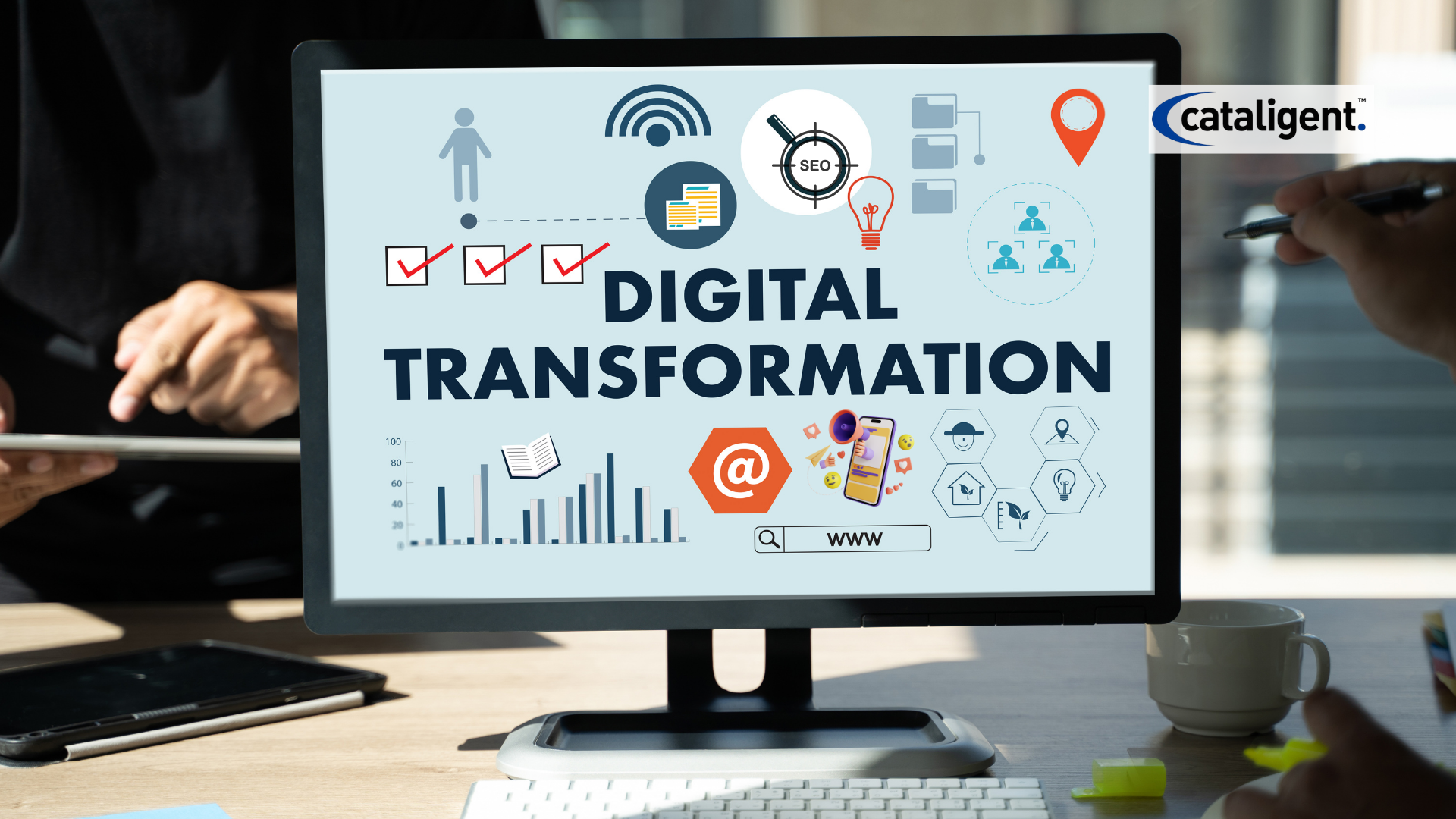
    Digital Transformation in Marketing & Operations: Redefining How Brands Connect and Perform

    Marketing is evolving faster than ever, and businesses that harness technology to enhance both marketing and operations gain a competitive edge. Digital Transformation in marketing empowers brands to reach audiences with precision, deliver personalized experiences, and optimize campaigns through data-driven insights. Meanwhile, operational transformation ensures that these marketing initiatives are executed seamlessly, efficiently, and with measurable impact.

    This blog explores digital transformation through the lens of marketing and operations, using a What, Why, and How framework. It demonstrates how Cataligent’s services help businesses modernize marketing strategies, optimize operations, and drive sustainable growth.


    1. What is Digital Transformation in Marketing & Operations?

    Digital Transformation is the integration of technology into every aspect of marketing and operations to improve efficiency, engagement, and outcomes. In marketing, it involves:

    • Marketing Automation: Automating email campaigns, social media posts, and lead nurturing to deliver timely and relevant messaging.
    • Data Analytics: Using insights from customer behavior, engagement metrics, and campaign performance to refine strategies.
    • Customer Experience Personalization: Leveraging AI and analytics to create tailored marketing experiences.
    • Cross-Functional Integration: Aligning marketing initiatives with operational workflows for consistent execution.

    In operations, digital transformation ensures marketing strategies are implemented efficiently, resources are optimized, and campaign performance is measurable.


    2. Why is Digital Transformation in Marketing Important?

    • Drives Campaign Effectiveness: Data-driven strategies improve targeting, engagement, and ROI.
    • Enhances Customer Connection: Personalized marketing builds trust and strengthens brand loyalty.
    • Accelerates Time-to-Market: Automated processes speed up campaign execution and response times.
    • Supports Scalable Growth: Digital workflows allow marketing strategies to expand effortlessly as the business grows.
    • Encourages Innovation: Technology enables creative experimentation and innovative approaches in marketing.
    • Aligns Marketing with Operations: Ensures seamless execution and measurable impact across all marketing channels.

    Without a digitally empowered marketing strategy, even the most creative campaigns may fall short due to inefficiency or lack of insight.


    3. How to Implement Digital Transformation in Marketing & Operations

    3.1 Assess Marketing and Operational Processes

    What: Examine current marketing campaigns, operational workflows, and technology usage.
    Why: Identifying inefficiencies and gaps allows businesses to prioritize transformation efforts.
    How: Cataligent’s Business Transformation services provide comprehensive audits and recommendations for marketing and operational optimization.

    3.2 Deploy Marketing Automation Tools

    What: Use software to automate email sequences, social media posting, and lead management.
    Why: Automation reduces manual effort, increases consistency, and ensures timely delivery of messaging.
    How: Cataligent’s solutions streamline marketing automation and enable precise tracking of campaign effectiveness.

    3.3 Leverage Data Analytics for Marketing Insights

    What: Collect and analyze data from campaigns, customer interactions, and operational metrics.
    Why: Insights inform targeting, content creation, and resource allocation to improve marketing outcomes.
    How: Cataligent’s Dashboards & Analytics consolidate data for actionable insights that guide smarter marketing decisions.

    3.4 Optimize Operational Processes for Marketing Execution

    What: Implement digital tools to streamline workflows such as campaign approvals, content management, and resource allocation.
    Why: Optimized operations ensure marketing initiatives are executed accurately and efficiently.
    How: Cataligent’s IT Service Management (ITSM) enhances workflow automation, minimizes errors, and supports seamless marketing operations.

    3.5 Personalize Customer Experiences Through Technology

    What: Deliver targeted content and campaigns that align with customer preferences and behaviors.
    Why: Personalization drives engagement, loyalty, and improved ROI.
    How: Cataligent integrates CRM, analytics, and automation to craft cohesive, tailored marketing journeys.

    3.6 Foster a Culture of Continuous Marketing Innovation

    What: Encourage teams to adopt new digital tools, experiment with campaigns, and optimize performance.
    Why: A culture of innovation keeps marketing strategies fresh, competitive, and impactful.
    How: Cataligent provides change management and training to help teams embrace digital marketing transformation effectively.


    4. Cataligent’s Role in Marketing Digital Transformation

    Cataligent empowers businesses to elevate marketing through:

    • Business Transformation Services: Assessing and optimizing marketing and operational workflows.
    • Dashboards & Analytics: Real-time insights into campaign performance, customer engagement, and operational efficiency.
    • Marketing Automation Tools: Streamlined campaign execution, lead nurturing, and engagement tracking.
    • IT Service Management (ITSM): Optimizing operational support to ensure marketing strategies are implemented efficiently.

    These services help businesses increase marketing efficiency, deliver personalized campaigns, and drive measurable growth.


    5. Real-World Scenarios

    • Small Businesses: A local retailer uses Cataligent dashboards and automation to run targeted campaigns and track engagement, leading to higher sales and customer loyalty.
    • Medium-Sized Businesses: An e-commerce company implements workflow automation and analytics to optimize marketing execution and personalize campaigns, resulting in increased ROI and reduced operational overhead.
    • Large Enterprises: A multinational organization leverages Cataligent ITSM and analytics to coordinate global marketing operations, monitor performance, and deliver consistent, engaging campaigns. Result: higher productivity, improved customer engagement, and scalable growth.

    6. Growth Impact of Marketing-Focused Digital Transformation

    Digital transformation in marketing and operations drives growth by:

    • Increasing Campaign Effectiveness: Data-driven strategies and automation maximize reach and engagement.
    • Enhancing Customer Experience: Personalized and timely marketing strengthens brand loyalty.
    • Improving Operational Efficiency: Streamlined processes ensure campaigns are executed flawlessly.
    • Supporting Scalable Growth: Marketing initiatives can expand rapidly without compromising quality.
    • Promoting Innovation: Teams can experiment with new strategies and tools, staying ahead of competitors.

    Digital transformation ensures that marketing efforts are effective, efficient, and strategically aligned with business goals.


    Final Thoughts

    Digital transformation is a critical driver for marketing success. By integrating technology, data analytics, and automation into marketing and operational workflows, businesses can deliver personalized experiences, optimize campaigns, and achieve sustainable growth.

    Cataligent provides the tools, expertise, and guidance to help businesses redefine marketing and operational performance, enabling innovation, efficiency, and measurable success.


    Elevate your marketing strategies and operational efficiency through digital transformation.
    Partner with Cataligent today to implement innovative, data-driven marketing and operational solutions that drive engagement, loyalty, and long-term growth. 📈 ★ˎˊ˗

  • Customer Relationship Management & Retention Strategies: Turning Every Interaction into Loyalty

    Customer Relationship Management & Retention Strategies: Turning Every Interaction into Loyalty

    In a fast-paced business world where customers have countless options at their fingertips, acquiring a new customer is just the first step. The real success lies in creating meaningful, lasting relationships that turn one-time buyers into loyal brand advocates. This is the essence of Customer Relationship Management (CRM) and Retention Strategies. By understanding customer behavior, delivering personalized experiences, and strategically managing interactions, businesses can significantly increase loyalty, satisfaction, and long-term revenue.

    This blog explores CRM and retention strategies using a What, Why, and How framework, highlighting their critical role across industries, and demonstrating how Cataligent’s services empower organizations to build strong customer connections and sustain growth.


    1. What is Customer Relationship Management & Retention?

    Customer Relationship Management (CRM) is the strategic practice of managing all interactions with current and potential customers, leveraging technology, data insights, and structured processes. Retention strategies focus on keeping customers engaged, satisfied, and loyal over time through targeted actions.

    Key aspects include:

    • CRM Systems: Platforms that consolidate customer data, track interactions, and analyze behaviors to guide business decisions.
    • Personalized Communication: Sending tailored messages, offers, and recommendations based on customer preferences and history.
    • Customer Support & Engagement: Offering responsive, proactive, and high-quality assistance that enhances the customer experience.
    • Loyalty Programs: Rewarding repeat purchases, referrals, and active engagement to strengthen long-term relationships.

    CRM and retention focus on building trust, fostering ongoing engagement, and driving measurable value beyond single transactions.


    2. Why is CRM & Retention Important?

    • Maximizes Customer Lifetime Value (CLV): Retained customers often spend more over time, reducing acquisition costs and increasing revenue.
    • Enhances Customer Experience: Personalized, attentive interactions make customers feel valued, encouraging loyalty.
    • Encourages Brand Advocacy: Loyal customers actively promote your brand, attracting new clients and enhancing reputation.
    • Reduces Churn: Proactive retention strategies prevent customers from switching to competitors.
    • Enables Data-Driven Marketing: CRM insights inform targeted campaigns, product development, and service improvements.
    • Strengthens Market Competitiveness: Businesses that understand and engage their customers maintain an edge in competitive markets.

    Neglecting CRM and retention can result in lost revenue, decreased loyalty, and weaker brand influence.


    3. How to Implement CRM & Retention Strategies

    3.1 Select the Ideal CRM Platform

    What: Identify a CRM system that aligns with business scale, industry needs, and engagement goals.
    Why: Centralized data and insights streamline communication and support informed decision-making.
    How: Cataligent’s Dashboards & Analytics facilitate integration, tracking, and management of customer interactions, providing actionable insights for strategic engagement.

    3.2 Segment Customers for Precision

    What: Classify customers based on behaviors, purchase patterns, demographics, and engagement levels.
    Why: Segmentation enables precise targeting, personalized offers, and highly relevant communication.
    How: Cataligent’s Business Transformation services assist in creating dynamic segmentation strategies, optimizing campaigns for each customer group.

    3.3 Personalize Communications and Offers

    What: Deliver customized messages and offers tailored to each customer’s preferences and behavior.
    Why: Personalization increases engagement, strengthens loyalty, and drives repeat purchases.
    How: Cataligent leverages analytics to monitor customer behavior and feedback, enabling timely, targeted, and effective communication.

    3.4 Design Loyalty Programs and Rewards

    What: Implement initiatives that reward repeat engagement, referrals, and purchases.
    Why: Loyalty programs incentivize continued business, creating brand advocates who actively promote your organization.
    How: Cataligent designs and monitors loyalty programs, tracks participation, and measures ROI to ensure maximum effectiveness and customer satisfaction.

    3.5 Collect and Analyze Customer Feedback

    What: Gather input via surveys, reviews, and social listening to understand satisfaction and pain points.
    Why: Feedback allows timely problem resolution, service improvements, and strengthens customer relationships.
    How: Cataligent’s Dashboards & Analytics consolidate feedback for actionable insights, guiding improvements and strategy refinement.

    3.6 Monitor Retention Metrics and Refine Strategies

    What: Track metrics such as churn rate, repeat purchase rate, and customer lifetime value.
    Why: Continuous monitoring ensures retention strategies remain effective, identifies gaps, and maximizes long-term profitability.
    How: Cataligent provides analytics tools to assess customer engagement, optimize retention efforts, and continuously improve business outcomes.


    4. Cataligent’s Role in CRM & Retention

    Cataligent empowers businesses to establish lasting customer relationships by providing:

    • Dashboards & Analytics: Centralized insights into behavior, engagement trends, and retention performance.
    • Business Transformation Services: Expert guidance for segmentation, personalized campaigns, and loyalty program development.
    • IT Service Management (ITSM): Efficient operational support ensures high-quality, responsive customer service.
    • Time-Card Management: Optimizes team productivity for consistent and effective customer engagement.

    These services help businesses increase retention, improve satisfaction, and drive sustainable growth.


    5. Real-World Scenarios

    • Small Businesses: A boutique retailer leverages Cataligent dashboards to monitor repeat customers and deliver tailored promotions, resulting in higher engagement and repeat purchases.
    • Medium-Sized Businesses: An e-commerce company uses Cataligent’s CRM analytics to run segmented campaigns and loyalty programs, reducing churn and boosting lifetime value.
    • Large Enterprises: A multinational corporation integrates Cataligent ITSM and dashboards to manage global customer interactions, streamline support operations, and implement retention campaigns. Result: consistent engagement, enhanced satisfaction, and stronger brand loyalty.

    6. Growth Impact of CRM & Retention

    CRM and retention strategies fuel growth by:

    • Increasing Customer Lifetime Value: Loyal customers contribute more revenue over time.
    • Enhancing Engagement: Personalized interactions keep customers connected to the brand.
    • Reducing Churn: Retention measures prevent loss to competitors.
    • Improving Marketing ROI: Data-driven strategies optimize campaigns and maximize returns.
    • Creating Brand Advocates: Satisfied customers actively promote the brand, expanding reach organically.

    Effective CRM ensures marketing, operational, and strategic initiatives translate into long-term loyalty and measurable growth.


    Final Thoughts

    Sustainable business growth depends on understanding, engaging, and retaining customers. While marketing, operational efficiency, and financial planning are critical, robust CRM and retention strategies transform customer interactions into lasting relationships.

    Cataligent provides the technology, insights, and strategic guidance necessary to build loyalty, enhance satisfaction, and drive sustainable growth.


    Turn customer interactions into lasting loyalty and growth.
    Partner with Cataligent today to implement advanced CRM and retention strategies that keep your customers engaged, satisfied, and loyal for years to come.

  • Operational Excellence & Process Management: Streamlining for Growth

    Operational Excellence & Process Management: Streamlining for Growth

    After mastering Marketing Fundamentals, Business Strategy, Customer Experience, Digital Transformation, Data-Driven Decision Making, and Financial Planning & Cost Optimization, the next essential pillar for business growth is Operational Excellence & Process Management. Efficient processes and operational excellence ensure that businesses deliver consistent value, maximize productivity, and support sustainable strategic growth.

    This blog explores Operational Excellence & Process Management using a What, Why, and How framework, emphasizing its importance in marketing, business operations, and organizational efficiency, while highlighting how Cataligent’s services help organizations achieve high performance, scalability, and operational efficiency.


    1. What is Operational Excellence & Process Management?

    Operational Excellence is the practice of continuously improving business processes, workflows, and operations to maximize efficiency, productivity, and customer satisfaction. Process Management involves designing, monitoring, and optimizing business processes to ensure consistency, compliance, and effectiveness.

    In the marketing and business context, this includes:

    • Streamlining campaign workflows: Ensuring marketing campaigns, content creation, and promotional activities are executed efficiently and without delays.
    • Standardizing processes: Implementing consistent procedures for repetitive tasks such as email marketing, social media posting, and customer communications to reduce errors and maintain quality.
    • Monitoring operational KPIs: Tracking metrics like cycle time, process completion rates, and error frequency to continuously improve operations.
    • Cross-functional integration: Coordinating teams across marketing, sales, and operations to minimize bottlenecks and improve project delivery.

    Operational excellence transforms businesses into high-performing organizations where efficiency, quality, and consistency drive growth.


    2. Why is Operational Excellence & Process Management Important?

    • Enhances Efficiency and Productivity: Optimized processes reduce wasted time and resources, allowing teams to focus on high-value tasks that directly impact business outcomes.
    • Improves Quality and Consistency: Standardized procedures reduce errors, ensure brand consistency, and enhance the overall customer experience.
    • Supports Scalable Growth: Well-designed processes can be scaled easily, enabling businesses to expand without operational bottlenecks or increased error rates.
    • Optimizes Resource Allocation: Clear processes help allocate staff, technology, and budgets effectively, ensuring maximum return on investments.
    • Aligns Operations with Strategic Goals: Operational excellence ensures every task and process contributes to the organization’s overall marketing and business strategy.
    • Boosts Customer Satisfaction: Efficient and predictable operations lead to faster delivery, better service, and higher customer retention rates.

    Without operational excellence, even the most well-funded marketing campaigns and strategic initiatives may fail due to inefficiency, miscommunication, or inconsistent execution.


    3. How to Implement Operational Excellence & Process Management

    3.1 Define and Map Processes

    What: Document key workflows across all departments, from marketing campaign execution to customer service operations.
    Why: Mapping processes provides clarity, identifies inefficiencies, and sets a baseline for improvement.
    How: Cataligent’s Business Transformation services help businesses visualize workflows, identify bottlenecks, and create clear documentation that serves as a foundation for continuous improvement.

    3.2 Standardize and Optimize Workflows

    What: Create consistent procedures for recurring activities to maintain quality and efficiency.
    Why: Standardization reduces errors, ensures compliance, and simplifies scaling operations as the business grows.
    How: Cataligent’s QMS (Quality Management System) enables businesses to enforce standardized procedures, optimize workflows, and maintain operational excellence across teams.

    3.3 Monitor Performance Metrics

    What: Track operational KPIs such as process cycle time, completion rates, customer response time, and resource utilization.
    Why: Regular monitoring highlights inefficiencies, process gaps, and areas needing improvement, enabling proactive action.
    How: Cataligent’s Dashboards & Analytics provide real-time insights into operational performance, helping managers make informed, data-driven decisions to boost efficiency and productivity.

    3.4 Implement Continuous Improvement

    What: Regularly review and enhance processes to maintain competitiveness and operational effectiveness.
    Why: Continuous improvement ensures that operations evolve with business needs, market trends, and customer expectations.
    How: Cataligent’s Business Transformation services guide organizations in implementing improvement frameworks, including Lean, Six Sigma, and other best practices, fostering innovation and operational agility.

    3.5 Foster a Process-Oriented Culture

    What: Encourage employees to adhere to established processes, identify inefficiencies, and suggest improvements.
    Why: A culture that values operational excellence ensures accountability, consistency, and proactive problem-solving at every level of the organization.
    How: Cataligent’s change management and training programs instill a process-oriented mindset, embedding operational excellence into the company culture.

    3.6 Leverage Technology for Process Automation

    What: Use digital tools and platforms to automate repetitive tasks, streamline operations, and enhance accuracy.
    Why: Automation reduces manual errors, speeds up processes, and allows teams to focus on strategic, high-value activities.
    How: Cataligent’s IT Service Management (ITSM) and workflow automation solutions help businesses implement automation, monitor performance, and continuously optimize operations for maximum efficiency.


    4. Cataligent’s Role in Operational Excellence & Process Management

    Cataligent equips businesses with tools and expertise to drive operational efficiency and scalability:

    • Business Transformation Services: Map, optimize, and monitor workflows to align operations with strategic objectives.
    • QMS (Quality Management System): Standardize processes across teams, ensuring consistent quality and compliance.
    • Dashboards & Analytics: Real-time insights into process performance, resource utilization, and efficiency metrics.
    • IT Service Management (ITSM): Automate repetitive tasks, streamline IT operations, and enhance overall productivity.

    By leveraging these services, Cataligent helps businesses achieve operational excellence, improving productivity, reducing costs, and enabling scalable, high-quality operations that support marketing and business growth.


    5. Real-World Scenarios

    • Small Businesses: A local retailer uses Cataligent dashboards to monitor order fulfillment, marketing workflows, and customer service processes. Result: faster delivery, fewer errors, and higher customer satisfaction.
    • Medium-Sized Businesses: A regional logistics company implements Cataligent QMS to standardize package handling, delivery processes, and customer communications. Result: improved consistency, operational reliability, and customer loyalty.
    • Large Enterprises: A multinational corporation leverages Cataligent ITSM and dashboards to optimize cross-border operations, automate routine IT tasks, and monitor global workflows. Result: higher productivity, cost savings, and better operational visibility.

    6. Growth Impact of Operational Excellence & Process Management

    Operational excellence drives growth by:

    • Increasing Efficiency: Teams spend less time on repetitive tasks and more on strategic initiatives that drive revenue.
    • Enhancing Customer Experience: Consistent, high-quality operations improve service delivery and strengthen brand reputation.
    • Supporting Scalable Growth: Optimized workflows allow businesses to expand without compromising quality or performance.
    • Optimizing Resource Utilization: Better allocation of human, financial, and technological resources increases overall productivity.
    • Aligning Strategy and Execution: Operational processes are aligned with marketing and business strategies, ensuring all initiatives contribute directly to growth.

    Operational excellence ensures that marketing campaigns, strategic projects, and financial initiatives are executed efficiently and effectively, forming a strong foundation for long-term growth.


    Final Thoughts

    Marketing, strategy, customer experience, digital transformation, data-driven decision-making, and financial planning lay the foundation for growth. Operational Excellence & Process Management ensures that all these initiatives are executed efficiently, consistently, and with measurable results.

    Cataligent provides the technology, expertise, and process guidance to help businesses achieve operational excellence, enabling scalable, high-quality operations that support marketing, strategy, and overall growth.


    Streamline your operations, enhance efficiency, and drive sustainable growth.
    Partner with Cataligent today to implement operational excellence and process management strategies that transform your business into a high-performing, scalable organization.ˎˊ˗

  • Financial Planning & Cost Optimization: Driving Smart Growth

    Financial Planning & Cost Optimization: Driving Smart Growth

    After covering Marketing Fundamentals, Business Strategy, Customer Experience, Digital Transformation, and Data-Driven Decision Making, the next critical pillar for business success is Financial Planning & Cost Optimization. Effective financial management ensures that businesses allocate resources wisely, optimize marketing spend, and make informed decisions to support sustainable growth.

    This blog explains Financial Planning & Cost Optimization using a What, Why, and How framework, emphasizing its importance for all businesses and highlighting how Cataligent’s services help companies achieve financial efficiency while driving growth.


    1. What is Financial Planning & Cost Optimization?

    Financial Planning involves forecasting revenues, expenses, and investment needs to support strategic goals. Cost Optimization focuses on reducing unnecessary expenditures, streamlining operations, and improving efficiency without compromising quality.

    In the marketing context, it includes:

    • Budgeting for campaigns: Allocating funds to the most impactful channels and initiatives.
    • Analyzing ROI: Continuously measuring the effectiveness of marketing campaigns to focus on high-performing efforts.
    • Resource allocation: Ensuring teams, time, and tools are used efficiently across departments.
    • Forecasting future costs: Predicting upcoming expenditures and revenues to plan campaigns and expansion wisely.

    Financial planning and cost optimization work hand-in-hand, ensuring every business decision is cost-effective, strategically sound, and growth-oriented.


    2. Why is Financial Planning & Cost Optimization Important?

    • Maximizes ROI: By carefully managing budgets and tracking expenses, businesses can focus resources on campaigns and initiatives that deliver the highest returns.
    • Supports Strategic Growth: Accurate financial planning allows businesses to confidently pursue expansion, launch new products, and enter new markets.
    • Improves Efficiency: Streamlining processes and eliminating waste frees up resources for more impactful projects.
    • Ensures Sustainability: Proper planning prevents cash flow issues, overspending, and resource mismanagement.
    • Enhances Decision-Making: With detailed financial data, leaders can make informed choices and avoid costly mistakes.
    • Promotes Accountability: Teams understand how spending aligns with strategic goals and are more mindful of costs.

    Without financial planning and cost optimization, even the best strategies or marketing campaigns risk underperformance due to poor resource management.


    3. How to Implement Financial Planning & Cost Optimization

    3.1 Set Clear Financial Goals

    What: Establish revenue targets, budget allocations, and investment priorities for the business and marketing campaigns.
    Why: Clear goals provide direction and ensure spending is purposeful and aligned with growth objectives.
    How: Cataligent’s Business Transformation services help businesses define clear, measurable financial goals and align them with marketing and operational plans for maximum impact.

    3.2 Track and Analyze Expenses

    What: Monitor costs across all departments, projects, and campaigns.
    Why: Detailed tracking helps identify inefficiencies, unnecessary expenses, and opportunities for savings.
    How: Cataligent’s Dashboards & Analytics provide real-time insights into financial performance, enabling quick identification of high-cost areas and actionable steps to reduce waste.

    3.3 Prioritize Investments

    What: Allocate resources to projects and campaigns that provide the greatest return on investment.
    Why: Focusing on high-value activities ensures that both marketing and operations deliver maximum impact.
    How: Using Cataligent’s Business Transformation and QMS services, businesses evaluate projects against strategic goals and prioritize initiatives that align with desired outcomes.

    3.4 Implement Cost-Saving Measures

    What: Reduce unnecessary expenses and optimize workflows without sacrificing quality.
    Why: Lower costs free up resources to invest in innovation, growth, and marketing efficiency.
    How: Cataligent’s IT Service Management (ITSM) streamlines processes, automates repetitive tasks, and ensures resource optimization to cut costs effectively.

    3.5 Monitor and Refine Financial Strategies

    What: Continuously review spending, budget allocations, and ROI to ensure goals are being met.
    Why: Markets, costs, and opportunities evolve; ongoing monitoring ensures strategies remain effective and adaptable.
    How: Cataligent’s Dashboards & Analytics offer continuous visibility into financial performance, enabling timely adjustments to budgets, allocations, and campaigns.

    3.6 Foster a Financially Aware Culture

    What: Promote awareness and accountability around costs and budgets across all teams.
    Why: A culture of financial mindfulness ensures that employees at every level make decisions that align with the company’s growth and efficiency goals.
    How: Cataligent’s Business Transformation services include training and processes that integrate financial awareness into day-to-day operations, ensuring sustainable and consistent cost management.


    4. Cataligent’s Role in Financial Planning & Cost Optimization

    Cataligent provides the tools and expertise to integrate financial efficiency with growth strategies:

    • Dashboards & Analytics: Offer a clear view of budgets, marketing ROI, and operational costs in real time.
    • Business Transformation Services: Ensure financial planning aligns with strategic initiatives and growth goals.
    • IT Service Management (ITSM): Streamline processes, reduce operational costs, and maintain quality standards.
    • Time-Card Management: Optimize workforce productivity and align labor costs with strategic priorities.

    By leveraging these services, businesses can achieve financial discipline, optimize marketing spend, and drive growth sustainably.


    5. Real-World Scenarios

    • Small Businesses: A local retail store uses Cataligent dashboards to track marketing spend and monthly expenses, reallocating funds to campaigns with the highest returns. Result: better budget utilization and increased revenue.
    • Medium-Sized Businesses: A regional logistics company automates reporting and process monitoring with Cataligent ITSM, saving costs and improving decision-making. Result: more efficient operations and faster financial insights.
    • Large Enterprises: A multinational corporation integrates Cataligent QMS and dashboards to monitor global spending, streamline budgets, and maintain service quality. Result: optimized costs and improved profitability across regions.

    6. Growth Impact of Financial Planning & Cost Optimization

    Financial planning and cost optimization contribute to growth by:

    • Maximizing Marketing ROI: Ensuring campaigns are funded and targeted effectively.
    • Boosting Profitability: Reducing unnecessary costs without compromising quality.
    • Enabling Strategic Expansion: Accurate forecasting allows confident investment in new markets, products, and initiatives.
    • Supporting Informed Decision-Making: Data-driven insights guide strategic choices and reduce financial risks.
    • Fostering Innovation: Efficient resource use allows reinvestment into new ideas, campaigns, and process improvements.

    For modern businesses, financial discipline is as critical as creative marketing or operational efficiency, ensuring resources drive measurable growth.


    Final Thoughts

    Marketing, strategy, customer experience, digital transformation, and data-driven decision-making lay the foundation for growth. Financial planning and cost optimization ensure this growth is sustainable, scalable, and profitable. Businesses that master budgeting, resource allocation, and operational efficiency maximize ROI and confidently pursue strategic initiatives.

    Cataligent equips businesses with tools to monitor, analyze, and optimize finances, integrating cost control with marketing and operational strategies to deliver measurable results.


    Control your resources, maximize your ROI, and drive sustainable growth.
    Partner with Cataligent today to optimize your financial planning, streamline costs, and ensure every investment contributes to your business success. ★💲

  • Data-Driven Decision Making: Turning Insights into Marketing Success

    Data-Driven Decision Making: Turning Insights into Marketing Success

    After mastering Marketing Fundamentals, Business Strategy, Customer Experience, and Digital Transformation, the next essential pillar for business growth is Data-Driven Decision Making (DDDM). In a world overflowing with information, businesses that leverage data effectively can make smarter marketing choices, optimize operations, and maximize ROI.

    This blog explores DDDM through a What, Why, and How framework, emphasizing its importance in marketing and highlighting how Cataligent’s services empower businesses to turn insights into actionable results.


    1. What is Data-Driven Decision Making?

    Data-Driven Decision Making is the practice of collecting, analyzing, and acting on data to guide business decisions. Instead of relying on intuition or assumptions, companies use facts and analytics to understand customer behavior, market trends, and internal performance.

    In marketing, this includes:

    • Tracking campaign performance metrics such as click-through rates, conversions, engagement, and bounce rates.
    • Analyzing customer journeys to identify where users drop off, what encourages purchase, and which channels are most effective.
    • Segmenting audiences to deliver highly personalized campaigns and improve targeting accuracy.
    • Monitoring brand reputation and customer feedback in real time to quickly address issues and enhance satisfaction.
    • Leveraging predictive analytics to anticipate customer needs and market trends.

    DDDM isn’t limited to marketing alone—it informs strategy, operations, finance, and customer service, ensuring every decision is backed by evidence. It transforms marketing from a set of activities into measurable, accountable, and targeted actions.


    2. Why is Data-Driven Decision Making Important?

    • Improved Accuracy: Decisions based on data reduce guesswork, increasing the likelihood of success. Marketing campaigns can be tested, measured, and optimized continuously for better results.
    • Optimized Marketing ROI: Understanding which campaigns, channels, and messages perform best ensures that every marketing dollar is spent efficiently, avoiding wasted investment.
    • Customer-Centric Strategies: Data reveals what customers truly want, enabling hyper-personalized experiences that foster loyalty, repeat purchases, and brand advocacy.
    • Competitive Advantage: Companies that act on insights can respond faster to market shifts, emerging trends, and competitor moves, staying ahead in crowded markets.
    • Risk Reduction: Predictive analytics, monitoring, and scenario planning highlight potential issues before they escalate, allowing businesses to take proactive action.
    • Enhanced Strategic Planning: With accurate data, businesses can plan campaigns, allocate budgets, and forecast results with confidence.

    For businesses of all sizes, DDDM is a game-changer—turning raw numbers into strategic insights that directly influence growth and marketing effectiveness.


    3. How to Implement Data-Driven Decision Making

    A structured approach ensures businesses extract maximum value from data. Here’s how:

    3.1 Define Clear Objectives

    What: Set specific goals for how data will be used—whether improving engagement, increasing sales, or optimizing marketing spend.
    Why: Clear objectives focus analysis on relevant data, prevent overwhelm, and ensure insights are actionable.
    How: Align objectives with KPIs measuring success in marketing and business outcomes. Cataligent’s Business Transformation services assist in defining objectives and ensuring that data collection is meaningful and aligned with goals.

    3.2 Collect Relevant Data

    What: Gather data from multiple sources such as website analytics, social media interactions, CRM systems, sales data, surveys, and customer feedback.
    Why: Comprehensive data provides a holistic view of customer behavior and campaign performance, preventing partial or misleading insights.
    How: Cataligent’s Dashboards & Analytics consolidate and visualize data from multiple sources, enabling real-time understanding, trend analysis, and easy interpretation by teams across the business.

    3.3 Analyze and Interpret Data

    What: Examine patterns, correlations, and trends to extract actionable insights.
    Why: Analysis identifies what is working and what needs adjustment, allowing teams to prioritize strategies that yield the highest impact.
    How: Cataligent helps organizations connect insights to marketing actions, creating clear plans to improve campaign performance, customer engagement, and operational efficiency.

    3.4 Act on Insights

    What: Make strategic and tactical decisions based on analyzed data.
    Why: Insights are valuable only when applied effectively to optimize campaigns, products, and customer interactions.
    How: Cataligent’s IT Service Management (ITSM) and workflow tools ensure businesses implement data-driven changes efficiently, monitor outcomes, and maintain consistency across teams and departments.

    3.5 Monitor and Refine Strategies

    What: Continuously observe performance after implementing decisions.
    Why: Markets evolve, customer behavior shifts, and competitors adapt. Ongoing monitoring ensures strategies remain effective and allows businesses to pivot when needed.
    How: Cataligent’s Dashboards & Analytics allow businesses to track KPIs, identify trends, and refine campaigns in real time, ensuring continuous improvement and adaptability.

    3.6 Encourage a Data-Driven Culture

    What: Foster an organizational mindset where data guides decisions at every level.
    Why: Technology alone cannot drive growth; employees must trust and utilize data in their daily work.
    How: Cataligent’s Business Transformation services include training and process integration to ensure teams embrace data-driven practices consistently.


    4. Cataligent’s Role in Enabling Data-Driven Decisions

    Cataligent provides the infrastructure, expertise, and tools to make DDDM practical and actionable:

    • Dashboards & Analytics: Offer real-time visualization of KPIs and customer metrics, making complex data easily understandable.
    • Business Transformation Services: Connect insights to strategic actions, ensuring data is applied to marketing, operational, and growth initiatives.
    • IT Service Management (ITSM): Ensures smooth execution, monitoring, and optimization of data-driven initiatives across departments.
    • Time-Card Management: Tracks workforce productivity, aligning human resources with data-informed priorities.

    By integrating these services, Cataligent helps businesses turn raw data into actionable insights, ensuring marketing campaigns, operational decisions, and growth strategies are backed by evidence.


    5. Real-World Examples

    • Small Businesses: A local café uses Cataligent dashboards to track customer footfall, identify peak hours, and optimize staff schedules. Result: improved operational efficiency, reduced wait times, and enhanced customer satisfaction.
    • Medium-Sized Businesses: A regional e-commerce company leverages Cataligent analytics to identify trending products, refine promotions, and personalize email campaigns. Result: higher engagement, increased conversions, and better customer retention.
    • Large Enterprises: A multinational firm uses Cataligent QMS and dashboards to standardize reporting across regions, monitor marketing ROI, and implement global campaigns consistently. Result: seamless global marketing strategies powered by data.

    6. The Growth Impact of Data-Driven Decisions

    Data-driven decision-making fuels growth by:

    • Enhancing Marketing Effectiveness: Targeted campaigns improve engagement, reduce wasted spend, and deliver measurable results.
    • Increasing Customer Retention: Understanding customer behavior enables personalized communication, driving loyalty and repeat business.
    • Optimizing Resource Allocation: Data ensures budgets, staff, and time are focused on high-impact activities.
    • Boosting Strategic Agility: Quick access to insights allows businesses to pivot effectively in response to market changes and customer needs.
    • Fostering Innovation: Continuous monitoring highlights opportunities for product, service, and campaign improvements.

    In the modern business landscape, DDDM is not optional—it’s essential for sustainable growth, competitive advantage, and marketing success.


    Final Thoughts

    Marketing, strategy, digital transformation, and customer experience build the foundation for growth—but Data-Driven Decision Making ensures businesses make the right moves at the right time. By turning information into insight, insight into action, and action into measurable results, companies can confidently drive growth and marketing performance.

    Cataligent equips businesses with tools to collect, analyze, and act on data, bridging the gap between insight and execution, and ensuring marketing strategies are precise, effective, and growth-oriented.


    Stop guessing and start knowing.
    Partner with Cataligent today and transform your data into actionable insights that drive marketing success and business growth. 🚀🌟

  • Digital Transformation for Growth: Powering the Future of Marketing

    Digital Transformation for Growth: Powering the Future of Marketing

    Growth is inseparable from digital transformation. No matter the size—small, medium, or enterprise-level—companies must embrace technology to stay competitive, connect with customers, and maximize returns. At its core, digital transformation is not just about adopting new tools—it’s about reimagining business models, marketing strategies, and customer engagement in a digital-first world.

    This blog explores the essentials of Digital Transformation for Growth, framed in a What, Why, and How approach, while showcasing how Cataligent’s services help businesses align technology, strategy, and marketing into one seamless engine for success.


    1. What is Digital Transformation?

    Digital transformation (DX) is the integration of digital technologies into all areas of business, fundamentally changing how organizations operate and deliver value to customers. It goes beyond digitizing processes—it’s about reinventing how marketing, customer service, operations, and decision-making work in harmony.

    In the marketing context, this means:

    • Leveraging data analytics to understand customer behavior.
    • Using automation tools to streamline campaigns.
    • Delivering personalized experiences through AI and smart platforms.
    • Ensuring seamless omnichannel communication with customers.

    It’s a cultural and operational shift—where businesses use digital-first strategies to drive growth, not just efficiency.


    2. Why is Digital Transformation Important for Growth?

    Digital transformation is the engine behind modern growth strategies. Here’s why it matters:

    • Changing Customer Expectations: Customers expect fast, personalized, and reliable interactions. A business that can’t deliver risks losing them to competitors.
    • Competitive Advantage: Digitally mature companies innovate faster, adapt quicker, and reach wider audiences.
    • Scalability: Digital processes make it easier to scale marketing campaigns, expand to new markets, and manage growing customer bases.
    • Data-Driven Decisions: Instead of guessing, businesses use analytics to make smarter marketing investments and optimize ROI.
    • Efficiency & Cost Savings: Automation reduces repetitive work, freeing teams to focus on creativity and strategy.

    For marketing specifically, digital transformation enables brands to turn insights into impact—transforming raw data into actionable campaigns.


    3. How to Drive Digital Transformation in Marketing

    A successful digital transformation requires a structured approach. Here are the key steps:

    3.1 Define Clear Objectives

    What: Set clear goals—whether it’s improving lead generation, boosting customer engagement, or expanding market share.
    Why: Without direction, digital adoption becomes scattered and ineffective.
    How: Businesses should align digital strategies with marketing KPIs like conversion rates, engagement, and retention.


    3.2 Optimize Processes with Automation

    What: Automation tools streamline marketing workflows—like lead nurturing, social media posting, and customer responses.
    Why: It reduces manual effort, ensures consistency, and saves time.
    How: Cataligent’s CAT4 platform integrates process automation into business operations, improving accuracy and speed.


    3.3 Harness Data & Analytics

    What: Collect, analyze, and use customer data to understand behavior and trends.
    Why: Data reveals what works and what doesn’t, enabling smarter campaign decisions.
    How: With Cataligent Dashboards & Analytics, businesses get real-time insights into customer journeys, campaign performance, and ROI.


    3.4 Elevate Customer Experience

    What: Deliver seamless, consistent, and personalized experiences across all channels.
    Why: Customers don’t just buy products—they buy experiences. Poor CX leads to churn.
    How: Cataligent’s Quality Management System (QMS) and IT Service Management (ITSM) ensure consistency, compliance, and responsiveness, improving every customer touchpoint.


    3.5 Empower Teams with Digital Tools

    What: Equip marketing and operations teams with the right platforms and training.
    Why: A digital transformation succeeds only if people can use the tools effectively.
    How: Cataligent’s Time-Card Management boosts productivity by tracking employee efficiency, while its transformation services align people and processes.


    3.6 Ensure Agility & Continuous Improvement

    What: Continuously adapt strategies as technology and customer needs evolve.
    Why: Digital transformation is ongoing, not a one-time project.
    How: Cataligent’s Business Transformation services help organizations set KPIs, measure results, and pivot quickly when needed.


    4. Cataligent’s Role in Driving Digital Transformation

    Cataligent brings structure, technology, and strategy together to power growth. Here’s how its services support transformation:

    • CAT4 Platform: The backbone of process automation and efficiency.
    • Dashboards & Analytics: Actionable, real-time insights for data-driven marketing.
    • Quality Management System: Ensures high standards and compliance in service delivery.
    • IT Service Management: Enhances reliability and responsiveness, keeping digital systems running smoothly.
    • Time-Card Management: Improves workforce productivity, enabling faster campaign delivery.
    • Business Transformation Services: Align business goals with measurable outcomes, ensuring marketing and operations drive growth together.

    With Cataligent, digital transformation becomes a growth accelerator, not just a technical upgrade.


    5. Real-World Scenarios

    • Small Businesses: A boutique retailer leverages Cataligent dashboards to analyze customer buying patterns and optimize online marketing spend. Result: higher conversions with minimal waste.
    • Medium Businesses: A regional logistics company uses Cataligent’s ITSM to reduce downtime, ensuring customer portals are always active. Result: improved trust and customer satisfaction.
    • Large Enterprises: A global services provider adopts Cataligent’s QMS to standardize processes across geographies, ensuring brand consistency. Result: stronger reputation and loyal global clients.

    6. The Growth Impact of Digital Transformation

    Digital transformation drives marketing and business growth by:

    • Increasing customer acquisition through data-driven targeting.
    • Boosting customer retention with better experiences.
    • Improving ROI by streamlining campaigns and reducing costs.
    • Enhancing brand reputation with consistent delivery.

    Simply put, it helps businesses do more with less—faster, smarter, and at scale.


    Final Thoughts

    Digital transformation isn’t about technology for technology’s sake—it’s about building a foundation for growth, adaptability, and customer-centric marketing. Businesses that embrace this shift thrive, while those that delay risk falling behind.

    With Cataligent’s integrated services, companies can confidently navigate their transformation journey—turning challenges into opportunities and technology into growth.


    Your customers are already digital. The question is: are you?
    Partner with Cataligent today and transform your business into a growth powerhouse, ready for the digital future. ★🗲