Month: August 2025

  • Phase-Gate Protocols: Driving Project Management Excellence and Business Transformation

    Phase-Gate Protocols: Driving Project Management Excellence and Business Transformation


    Understanding Phase-Gate Protocols in Project Management

    Phase-Gate protocols, also referred to as Stage-Gate methodologies, are structured governance models that break down projects into distinct phases separated by “gates.” Each phase involves a set of activities, deliverables, and performance metrics, while gates act as decision points where project viability, alignment with organizational strategy, and resource allocation are reassessed. This framework provides discipline and clarity, enabling organizations to move projects forward systematically while reducing the risks of cost overruns and scope creep.

    Unlike traditional linear approaches, Phase-Gate protocols encourage iterative evaluation and evidence-based decision-making, ensuring that every step contributes toward overall business value. For organizations pursuing business transformation, this approach is particularly powerful, as it ensures that innovation is strategically guided and financial resources are optimized.


    Why Phase-Gate Protocols Matter for Project Management

    1. Strategic Alignment: Each gate serves as a checkpoint to confirm whether the project is aligned with broader organizational priorities and investment strategies.
    2. Risk Management: By embedding decision-making at every phase, companies can identify risks earlier, preventing costly mistakes during execution.
    3. Resource Optimization: Resources are allocated based on evidence, ensuring that only the most promising projects progress to subsequent phases.
    4. Transparency and Accountability: Phase-Gate introduces clear ownership of deliverables and performance tracking, which is critical for managing complex project portfolios.
    5. Business Transformation Enablement: Transformation projects often span multiple teams and functions. The structured governance provided by Phase-Gate protocols ensures that change initiatives stay on track, measurable, and outcome-driven.

    Key Phases and Gates in the Protocol

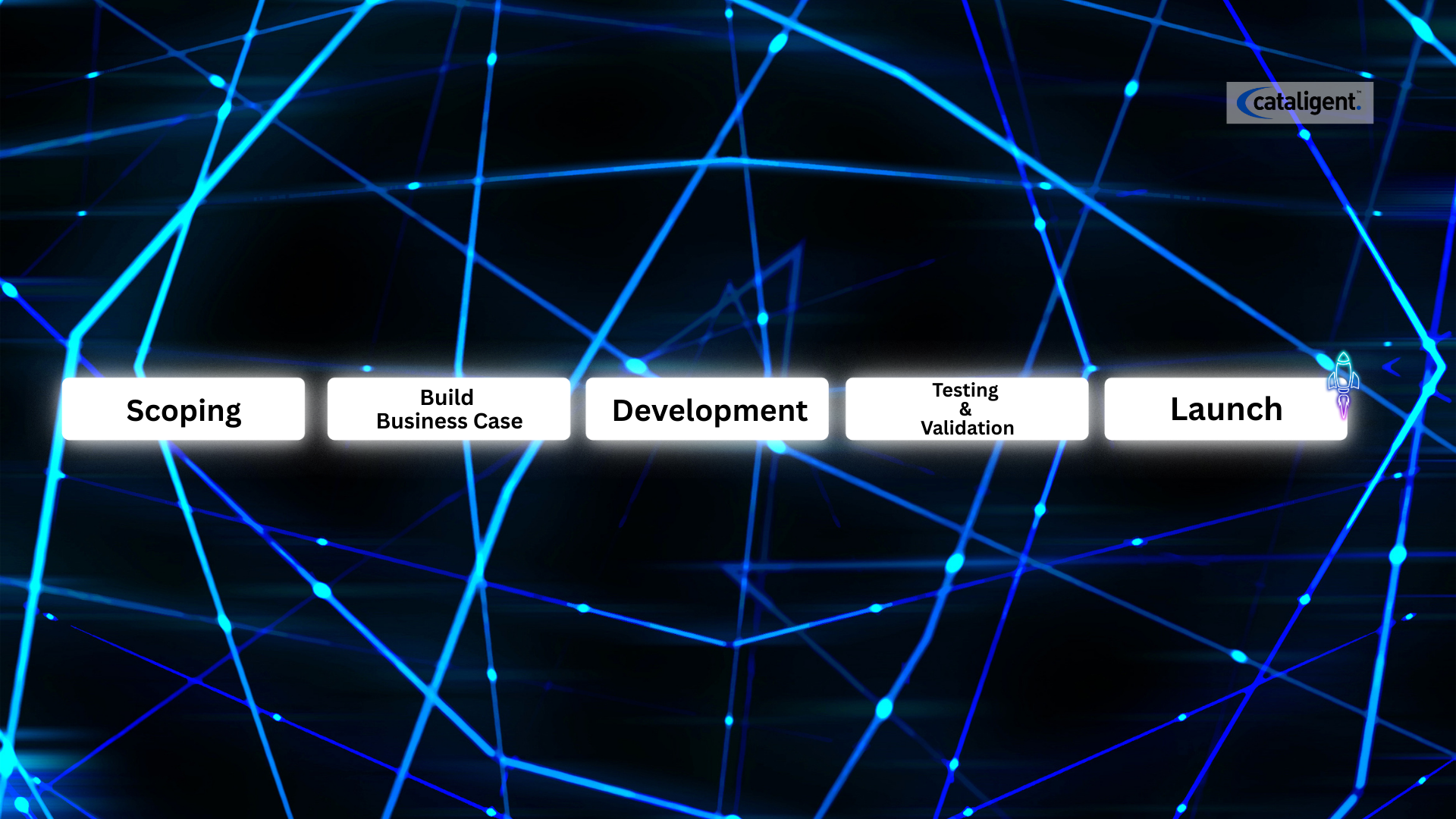
    1. Idea Generation (Gate 0: Idea Screen)
      • Activities: Brainstorming, opportunity identification, and initial feasibility assessments.
      • Decision Point: Screening ideas to eliminate weak proposals and prioritize those aligned with strategy.
    2. Scoping (Gate 1: Preliminary Assessment)
      • Activities: High-level evaluation of market opportunity, technical feasibility, and resource needs.
      • Decision Point: Approval to invest in preliminary research and market validation.
    3. Business Case Development (Gate 2: Business Case Review)
      • Activities: Detailed market research, financial analysis, and risk evaluation.
      • Decision Point: Investment committee approval to proceed with full-scale development.
    4. Development (Gate 3: Development Review)
      • Activities: Full-scale project execution, product or service design, and iterative testing.
      • Decision Point: Verification of progress and adjustment of scope, cost, and timelines.
    5. Testing & Validation (Gate 4: Validation Review)
      • Activities: Pilot testing, end-user validation, and operational readiness assessment.
      • Decision Point: Approval to prepare for launch or implementation.
    6. Launch & Post-Implementation (Gate 5: Launch Decision)
      • Activities: Market entry, full deployment, and performance monitoring.
      • Decision Point: Final approval for scaling operations, supported by ROI and impact evaluation.

    How Phase-Gate Protocols Drive Business Transformation

    1. Structured Innovation
    Transformation requires balancing creativity with control. Phase-Gate ensures that innovation initiatives are not chaotic but strategically filtered, maximizing the chances of successful implementation.

    2. Cross-Functional Collaboration
    Transformation projects typically involve diverse teams. The Phase-Gate model fosters collaboration by setting clear deliverables and review points, making handoffs between teams smoother.

    3. Financial Discipline
    By requiring a rigorous business case at each stage, organizations can ensure capital efficiency. Projects that don’t meet evolving standards can be terminated early, saving costs and enabling reallocation of funds.

    4. Continuous Learning and Adaptation
    At each gate, decision-makers evaluate lessons learned, which can be applied across projects, fostering organizational agility and resilience.

    5. Measurable Transformation Outcomes
    Phase-Gate protocols emphasize measurable deliverables such as cost savings, process efficiencies, or market impact, aligning transformation with tangible business results.


    Cataligent’s Role in Enabling Phase-Gate Excellence

    Cataligent specializes in empowering organizations to execute project management and business transformation strategies with precision. Through its CAT4 platform, Cataligent provides an integrated environment where Phase-Gate protocols can be digitized, monitored, and enhanced with real-time analytics.

    • Integrated Strategy Execution: Aligns every Phase-Gate decision with organizational goals.
    • Advanced Portfolio Management: Ensures that transformation initiatives are prioritized based on ROI, feasibility, and strategic importance.
    • Data-Driven Insights: The platform’s analytics engine transforms performance metrics into actionable intelligence at every gate.
    • Customizable Governance Frameworks: Cataligent adapts the Phase-Gate methodology to the unique needs of each client, ensuring governance without rigidity.
    • Cross-Functional Coordination Tools: Facilitates collaboration across departments, making it easier to implement enterprise-wide transformation programs.

    Conclusion

    Phase-Gate protocols are not just about project management efficiency; they are catalysts for business transformation. By providing a structured, disciplined, and measurable approach, they help organizations maximize value from their investments, minimize risks, and achieve long-term sustainability. With Cataligent’s expertise and technology-driven solutions, businesses can unlock the full potential of Phase-Gate methodologies, turning projects into transformative growth engines.


  • Resource Load Balancing: Enhancing Project Management Efficiency and Organizational Performance

    Resource Load Balancing: Enhancing Project Management Efficiency and Organizational Performance


    Understanding Resource Load Balancing

    Resource Load Balancing is the practice of distributing workloads evenly across available resources—whether human, technological, or financial—to ensure projects are executed efficiently, without overburdening teams or underutilizing assets. In the context of project management, it is a strategic process that ensures the right people and tools are allocated to the right tasks at the right time.

    Poorly managed resource allocation can lead to bottlenecks, missed deadlines, team burnout, or increased costs due to over-reliance on overtime and reactive hiring. Resource Load Balancing resolves these challenges by aligning demand with capacity, ensuring smooth execution of initiatives, particularly during business transformation projects where demands are often high and dynamic.


    Why Resource Load Balancing Matters in Project Management

    1. Prevents Burnout and Improves Morale
      Balanced workloads prevent team fatigue, ensuring sustained productivity and higher engagement levels.
    2. Optimizes Asset Utilization
      Ensures every team member, system, and tool is used effectively, eliminating idle time and resource wastage.
    3. Improves Delivery Timelines
      By smoothing out workloads, project timelines become more predictable and less prone to delays.
    4. Supports Scalability
      With load balancing in place, organizations can take on more projects without overwhelming existing teams.
    5. Cost Efficiency
      Proper workload allocation reduces overtime costs, contract labor expenses, and delays that typically inflate budgets.
    6. Enables Business Transformation
      Transformation projects often require significant cross-functional collaboration. Balanced resources ensure that efforts are sustained without compromising other critical business operations.

    Core Principles of Resource Load Balancing

    1. Capacity Planning
      Forecasting workloads and matching them with available skills and resources to avoid overcommitment.
    2. Prioritization
      Ensuring that resources are allocated to high-value tasks and projects that align with strategic goals.
    3. Flexibility and Agility
      Adjusting workloads dynamically as project scopes shift or unexpected changes occur.
    4. Cross-Training and Skill Development
      Expanding employee skillsets so workloads can be distributed more flexibly across the organization.
    5. Technology-Driven Allocation
      Leveraging project management software and analytics to automate the distribution of resources across projects.

    Resource Load Balancing in Business Transformation

    1. Sustaining Ongoing Operations
    Transformation often diverts attention from day-to-day business. Load balancing ensures that routine operations continue smoothly even as transformation initiatives progress.

    2. Managing Multiple Initiatives
    Transformation programs typically involve several parallel projects. Load balancing prevents resource clashes and ensures each project receives adequate attention.

    3. Enhancing Collaboration
    Cross-functional initiatives benefit when resources are allocated strategically, ensuring the right expertise is available when needed.

    4. Driving Measurable Results
    Balanced workloads enhance delivery predictability, ensuring transformation milestones are achieved within budget and on schedule.


    Cataligent’s Role in Resource Load Balancing

    Cataligent empowers organizations to master resource load balancing as part of its broader project management and transformation services. Through its CAT4 platform, businesses gain access to advanced tools and insights that make resource allocation both intelligent and dynamic.

    • Real-Time Resource Tracking: Monitor workload distribution across teams and projects, ensuring no resource is under or overutilized.
    • Dynamic Allocation Tools: Reallocate resources instantly based on project needs, scope changes, or shifting business priorities.
    • Integrated Portfolio View: Manage resources across an entire portfolio, making prioritization decisions more strategic and data-driven.
    • Predictive Analytics: Anticipate future workload demands, enabling proactive adjustments rather than reactive fixes.
    • Cross-Functional Alignment: Cataligent ensures balanced workloads across transformation projects and daily operations, reducing the risk of bottlenecks.

    Conclusion

    Resource Load Balancing is not just a project management technique; it is a strategic enabler of business transformation and organizational performance. By aligning capacity with demand, it ensures that projects are delivered on time, within budget, and without compromising employee wellbeing. With Cataligent’s expertise and the CAT4 platform, businesses can achieve optimized resource allocation that drives efficiency, cost savings, and sustainable transformation outcomes.

  • Strategic Investment Planning: Driving Impact Through Project Management Excellence

    Strategic Investment Planning: Driving Impact Through Project Management Excellence


    Understanding Strategic Investment Planning

    Strategic investment planning is more than allocating financial resources to projects. It is the structured process of aligning organizational resources—time, budget, people, and technology—with the company’s long-term objectives. Unlike traditional budgeting, strategic investment planning ensures that every investment is outcome-driven, directly mapped to growth, innovation, or efficiency targets.

    When project management is woven into this framework, investments are no longer viewed in isolation. Instead, they become integrated parts of a well-coordinated portfolio, creating synergy across the enterprise. This approach reduces redundancy, optimizes resource usage, and improves accountability at every stage of execution.


    The Role of Project Management in Strategic Investment Planning

    Project management is at the heart of turning strategic investments into measurable results. It ensures that planning does not remain theoretical but translates into executable actions with trackable outcomes.

    Key contributions of project management include:

    1. Alignment with Strategy
      Every project initiated under strategic investment planning must align with organizational goals. Project management frameworks ensure continuous alignment between execution and corporate vision.
    2. Portfolio Prioritization
      Not all investments can be pursued simultaneously. Through portfolio management techniques, organizations can prioritize high-impact projects, balancing risks, costs, and potential returns.
    3. Resource Optimization
      Project management brings structured scheduling, capacity planning, and workload balancing, ensuring that resources are not stretched thin or underutilized.
    4. Performance Measurement
      Strategic investments require accountability. With project management, KPIs and success metrics are defined upfront, enabling stakeholders to evaluate impact effectively.
    5. Risk Governance
      Large investments carry inherent risks. A mature project management framework anticipates risks early, builds mitigation strategies, and embeds governance controls.

    Why Strategic Investment Planning Needs Strong Project Management

    1. Transforming Strategy into Execution
      Organizations often excel at defining strategy but struggle with execution. Project management provides the structured methodology to translate strategic goals into actionable roadmaps.
    2. Avoiding Project Overload
      Without effective project governance, companies fall into the trap of funding too many initiatives at once. Project management avoids fragmentation by focusing resources on fewer, high-value projects.
    3. Enhancing Transparency
      Through real-time dashboards, reporting tools, and portfolio management systems, project management enhances visibility across investments, enabling stakeholders to track progress at any time.
    4. Balancing Short-Term and Long-Term Goals
      Strategic investment planning must deliver quick wins without losing sight of long-term sustainability. Project management techniques like agile sprints and phased roadmaps provide this balance.
    5. Cost Efficiency
      Poorly executed projects drain capital. By embedding discipline into planning and execution, project management ensures optimal returns on every dollar invested.

    Key Components of Strategic Investment Planning with Project Management

    1. Investment Portfolio Framework
      • Define categories: growth, innovation, compliance, cost optimization.
      • Use project portfolio management (PPM) to allocate resources according to organizational priorities.
    2. Project Prioritization & Selection
      • Leverage scoring models to compare potential investments.
      • Apply risk-adjusted ROI and payback period analysis to select the right projects.
    3. Execution Roadmaps
      • Break down investments into actionable initiatives.
      • Use Gantt charts, agile boards, and milestone mapping for structured delivery.
    4. Governance & Oversight
      • Establish steering committees to oversee high-value investments.
      • Define escalation protocols for delays, budget overruns, or risk triggers.
    5. Performance Monitoring
      • Deploy real-time project management dashboards.
      • Monitor metrics such as schedule variance, budget variance, resource utilization, and benefits realization.

    Methods for Effective Project Management in Strategic Investment Planning

    • Agile Project Management: Flexible planning for fast-changing environments, ensuring strategic investments adapt to market shifts.
    • Lean Methodologies: Eliminating wasteful practices in R&D and operations, ensuring efficient use of investment capital.
    • Stage-Gate Process: Structured review checkpoints to validate whether projects should proceed, pivot, or stop.
    • Earned Value Management (EVM): Measuring financial and operational performance against original forecasts.
    • Scenario Planning: Building multiple investment pathways to prepare for uncertainty.

    The Cost-Saving Impact of Project-Driven Strategic Investments

    1. Eliminating Redundancy
      By centralizing oversight, organizations avoid duplicating efforts across business units, reducing waste.
    2. Maximizing ROI
      Focused project execution ensures capital is directed to initiatives that create measurable business value.
    3. Shortening Timelines
      Agile and lean practices accelerate project delivery, cutting down time-to-value for investments.
    4. Mitigating Risks Early
      Anticipating challenges reduces cost overruns and prevents project failure.
    5. Improving Resource Allocation
      Project management ensures talent, technology, and financial capital are deployed where they create the most impact.

    Challenges in Strategic Investment Planning Without Project Management

    • Misaligned Priorities: Investments that don’t tie back to strategy drain resources.
    • Siloed Execution: Lack of collaboration leads to inefficiency.
    • Limited Accountability: Without KPIs, projects cannot be measured against business outcomes.
    • Escalating Costs: Projects without structured governance often face budget overruns.
    • Unclear ROI: Inadequate tracking makes it difficult to assess whether investments deliver value.

    How Cataligent Helps Drive Strategic Investment Planning

    Cataligent addresses the complexity of strategic investment planning with its advanced CAT4 platform, which integrates project management, portfolio oversight, and strategy execution in one seamless solution. Unlike standalone project management tools, CAT4 ensures that investments are directly aligned with organizational goals, supported by real-time insights and analytics.

    Key Capabilities of CAT4 in Strategic Investment Planning:

    • Integrated Portfolio Management: Enables organizations to view all investments in one place, prioritize strategically, and avoid project overload.
    • Strategic Alignment Engine: Ensures every project directly contributes to defined business outcomes.
    • Multi-Project Management: Tracks interconnected initiatives simultaneously, optimizing resource allocation.
    • Advanced Analytics & Reporting: Converts raw project data into actionable insights, improving decision-making.
    • Customizable Dashboards: Provides executives with real-time visibility into ROI, risks, timelines, and performance metrics.

    With Cataligent’s expertise, strategic investment planning becomes a driver of measurable impact. Projects are no longer just cost centers but strategic vehicles for transformation and growth. By embedding project management discipline into every investment decision, Cataligent helps organizations maximize value, minimize risks, and accelerate execution.


    Conclusion

    Strategic investment planning is the bridge between vision and execution. Without effective project management, even the best investment strategies risk falling apart in execution. By prioritizing alignment, accountability, and efficiency, organizations can ensure that every dollar invested drives tangible results.

    Cataligent’s CAT4 platform stands as a powerful enabler in this journey, transforming how enterprises plan, execute, and monitor strategic investments. With its blend of integrated project management, analytics, and portfolio governance, Cataligent empowers businesses to not just invest but to invest wisely, strategically, and profitably

  • Technology Integration for Cost Efficiency

    Technology Integration for Cost Efficiency

    Reframing Technology as a Cost Efficiency Enabler

    Technology is often perceived as an expense—hardware upgrades, software licenses, and ongoing maintenance all appear on the cost side of the balance sheet. However, when strategically integrated, technology transforms from a cost center into a driver of sustainable cost efficiency. Organizations that adopt structured technology integration not only streamline operations but also achieve measurable financial gains by reducing redundancies, optimizing processes, and enabling smarter decision-making.

    What is Technology Integration for Cost Efficiency?

    Technology integration for cost efficiency refers to the deliberate alignment of digital tools, platforms, and systems with operational processes to maximize output at minimal expense. It is not about implementing every new technology trend, but about embedding the right solutions where they directly eliminate waste, cut costs, and enhance productivity.

    Key elements include:

    • System Interoperability: Connecting disparate platforms to reduce duplication and improve data flow.
    • Process Automation: Leveraging Robotic Process Automation (RPA) and AI for repetitive, high-volume tasks.
    • Cloud Migration: Reducing IT infrastructure costs by moving workloads to scalable cloud environments.
    • Data-Driven Decision Making: Integrating analytics for smarter resource allocation.
    • Standardized Digital Workflows: Ensuring technology adoption follows lean and agile principles.

    Why Technology Integration Saves Costs

    When technology is fragmented, it creates inefficiencies: duplicate tools, siloed data, excessive manual intervention, and high maintenance expenses. Strategic integration addresses these pain points, reducing operational complexity and ensuring resources are used optimally.

    Key cost-saving benefits include:

    1. Lower IT Maintenance Costs: Consolidated systems reduce license redundancies and infrastructure spend.
    2. Productivity Gains: Automation frees human talent for higher-value tasks.
    3. Fewer Errors and Rework: Integrated workflows minimize mistakes caused by manual handovers.
    4. Energy Efficiency: Optimized infrastructure reduces energy consumption, especially in data-intensive environments.
    5. Scalability with Control: Cloud and modular platforms expand capacity on demand, preventing over-investment.
    6. Faster Time-to-Market: Digital tools accelerate innovation cycles, enabling quicker monetization.

    Cost-Saving Strategies Using Technology Integration

    1. Platform Consolidation
      Eliminate redundant tools and unify operations under fewer, multifunctional platforms to save licensing and training costs.
    2. Automating Manual Workflows
      Deploy RPA to cut labor hours on repetitive processes, reducing operational expenditure.
    3. Cloud-First Strategy
      Migrate workloads to scalable cloud environments, lowering infrastructure and maintenance costs.
    4. Data Lake Integration
      Centralize data for analytics and insights, reducing inefficiencies from siloed reporting systems.
    5. API-Driven Interoperability
      Connect systems seamlessly through APIs to prevent costly duplication of efforts and misaligned workflows.
    6. Energy-Efficient Infrastructure
      Adopt virtualization, server optimization, and workload balancing to reduce energy consumption.
    7. AI-Powered Resource Optimization
      Use AI-driven insights for demand forecasting, resource allocation, and predictive maintenance.

    The “What” – Where Technology Integration Delivers

    • Finance: Automated reconciliation, invoice processing, and fraud detection.
    • Operations: Streamlined workflows through ERP, CRM, and supply chain integrations.
    • Human Resources: Unified platforms for recruitment, training, and payroll.
    • Customer Service: Omnichannel integration delivering seamless customer experiences at lower costs.
    • Manufacturing & R&D: Digital twins, IoT integration, and automated production planning.

    The “Why” – Business Case for Technology Integration

    • Operational Streamlining: Elimination of redundancies cuts expenses across departments.
    • Risk Mitigation: Fewer manual interventions reduce compliance and error-related costs.
    • Employee Efficiency: Staff focus on innovation rather than repetitive work.
    • Sustainable Savings: Energy-efficient IT and cloud strategies ensure long-term cost reductions.
    • Competitive Advantage: Lower costs enable reinvestment into growth and innovation.

    The “How” – Implementing Technology Integration for Cost Efficiency

    1. Assessment of Current Systems: Map out all existing platforms and identify overlaps.
    2. Integration Blueprint: Create a roadmap focusing on interoperability and consolidation.
    3. Prioritize High-Cost Workflows: Target processes with the most resource drain for early integration.
    4. Leverage APIs and Middleware: Ensure smooth data exchange across systems.
    5. Adopt Agile Deployment: Implement integration in iterative sprints for faster ROI.
    6. Measure Efficiency Gains: Track KPIs such as cost savings per process, system downtime reduction, and productivity improvements.

    Cataligent’s Role in Technology Integration for Cost Efficiency

    Cataligent’s expertise lies in aligning technology with business objectives through its Cost Saving Program and CAT4 business transformation platform. With Cataligent, enterprises can:

    • Evaluate Technology ROI: Identify which integrations will yield the highest cost savings.
    • Streamline IT Ecosystems: Consolidate redundant platforms and reduce licensing costs.
    • Enable Intelligent Automation: Deploy RPA and AI where they deliver measurable savings.
    • Facilitate Cloud Adoption: Guide migration strategies that balance scalability with cost control.
    • Monitor Ongoing Performance: Provide transparency on efficiency gains through agile reporting.

    By combining domain expertise with structured methodologies, Cataligent transforms technology integration into a measurable cost-saving strategy, ensuring every investment directly contributes to financial efficiency.


    Closing Thought

    Technology integration, when designed with cost efficiency at its core, is not about chasing the latest trend—it’s about creating a lean, connected, and intelligent digital ecosystem. The result is streamlined operations, reduced overheads, and faster innovation cycles. With Cataligent’s frameworks, organizations can move from fragmented technology spending to sustainable cost efficiency, turning IT into a true business value driver.

  • Optimizing Operations through Lean R&D and Agile Processes

    Optimizing Operations through Lean R&D and Agile Processes

    Reengineering R&D for Efficiency and Cost Control

    Research and Development (R&D) is the backbone of innovation, but it is also notorious for high costs, long timelines, and inefficiencies. In industries where competitive advantage depends on rapid innovation and precise execution, traditional R&D approaches create financial bottlenecks. Lean R&D combined with Agile processes presents a powerful strategy to optimize operations, reduce waste, and achieve measurable cost savings without stifling innovation.

    What is Lean R&D?

    Lean R&D applies lean principles—eliminating waste, improving flow, and maximizing value—to the research and development function. The focus shifts from endless experimentation to targeted, value-driven discovery and delivery. It ensures every resource invested generates tangible output aligned with business priorities.

    Key aspects include:

    • Streamlined Prototyping: Rapid testing with minimal material consumption.
    • Prioritized Development: Efforts aligned to features and solutions with the highest business value.
    • Data-Driven Decisions: Using metrics and validation over assumptions.
    • Waste Elimination: Identifying non-value-added activities and removing them from workflows.

    What are Agile Processes in R&D?

    Agile in R&D introduces iterative, flexible development cycles, borrowing principles from Agile software development. Instead of rigid, multi-year plans, teams operate in short sprints, adapting to new data and requirements quickly.

    Core elements include:

    • Iterative Development: Delivering results in incremental cycles.
    • Cross-Functional Collaboration: Engineers, designers, and business stakeholders working seamlessly.
    • Continuous Feedback Loops: Customer and market inputs integrated early and often.
    • Rapid Pivoting: Adjusting direction when tests show inefficiencies or risks.

    Why Lean R&D and Agile Processes Enable Cost Savings

    Traditional R&D consumes resources on lengthy, linear processes and redundant tasks. Lean and Agile approaches cut these inefficiencies, focusing on maximum value delivery with minimum waste. The outcome is not just faster timelines but substantial financial savings.

    Cost-saving advantages include:

    1. Reduced Time-to-Market: Faster iterations mean quicker revenue generation.
    2. Lower Prototype Expenses: Lean experimentation minimizes costly physical trials.
    3. Optimized Workforce Utilization: Agile sprints prevent idle time and focus talent on high-value tasks.
    4. Fewer Late-Stage Failures: Early and frequent testing identifies flaws before expensive reworks.
    5. Budget Control: Lean governance aligns R&D spending tightly with business priorities.
    6. Operational Efficiency: Eliminating redundant approvals, documentation, and miscommunication reduces overhead.

    Cost-Saving Strategies Using Lean R&D and Agile Processes

    1. Minimum Viable Prototypes (MVPs)
      Focus on simplified prototypes that validate core concepts before investing in full-scale development, saving material and labor costs.
    2. Value Stream Mapping
      Identify wasteful steps in the R&D cycle and redesign processes to eliminate non-value-added tasks.
    3. Agile Sprint Budgeting
      Assign budgets to short, focused cycles rather than long-term fixed plans, ensuring tighter control of R&D expenditure.
    4. Cross-Functional Collaboration
      Break silos between R&D, manufacturing, and business teams to prevent costly misalignments.
    5. Early Testing & Validation
      Test assumptions in early iterations, reducing expensive late-phase changes.
    6. Continuous Feedback Integration
      Leverage customer and market data during R&D to align features with demand and avoid wasted effort.
    7. Scalable Digital Tools
      Employ simulation, collaboration platforms, and analytics to accelerate iterations while reducing dependency on costly physical assets.

    The “What” – Where Lean & Agile Fit in R&D

    • Product Development: Streamlining design and testing cycles for new products.
    • Process Innovation: Improving operational workflows with agile pilot projects.
    • Technology Research: Rapidly validating emerging technologies before committing heavy investments.
    • Market-Driven Innovation: Using Agile insights to align R&D outputs with customer needs.

    The “Why” – Business Value of Lean & Agile Strategies

    • Financial Discipline: Direct correlation between resource usage and business value.
    • Accelerated Competitive Advantage: Speed enables first-mover benefits.
    • Flexibility in Uncertainty: Agile methods ensure adaptability in volatile markets.
    • Sustainability Gains: Lean eliminates material and energy waste, cutting costs and supporting ESG commitments.
    • Measurable ROI: Each sprint or lean experiment can be measured for financial contribution.

    The “How” – Implementing Lean R&D and Agile Processes for Cost Savings

    1. Audit Current R&D Workflows: Identify inefficiencies and map them against cost centers.
    2. Redesign for Lean Principles: Eliminate redundancies, focusing only on high-value tasks.
    3. Adopt Agile Frameworks: Implement sprints, scrums, and iterative feedback loops in R&D cycles.
    4. Upskill Teams: Train staff on Agile methodologies and Lean tools to build a cost-conscious culture.
    5. Integrate Digital Platforms: Use tools for simulation, collaboration, and predictive analytics.
    6. Govern with Metrics: Monitor cost-per-sprint, prototype efficiency, and ROI as part of routine reporting.

    Cataligent’s Role in Lean & Agile R&D Transformation

    Cataligent’s CAT4 business transformation platform is built to embed financial discipline and operational efficiency across R&D. Through its Cost Saving Program, organizations can:

    • Set Strategic Cost-Saving Goals: Link R&D lean initiatives directly to enterprise savings targets.
    • Apply Maturity Assessments: Evaluate readiness for Lean and Agile adoption, identifying gaps in current workflows.
    • Enable Agile Reporting: Provide transparent cost and timeline tracking across sprints.
    • Validate Efficiency Gains: Ensure strategies translate into measurable operational savings.
    • Sustain Results: Embed a culture of lean thinking and agile responsiveness across R&D teams.

    Cataligent empowers enterprises to transform R&D into a lean, agile, and cost-optimized function—where speed, efficiency, and financial outcomes are integrated into every innovation cycle.


    Closing Thought

    Organizations that adopt Lean R&D and Agile processes are not just optimizing operations—they are future-proofing their innovation pipelines. By cutting waste, accelerating cycles, and instilling cost-saving discipline, businesses can achieve stronger financial outcomes while maintaining a competitive edge. With Cataligent’s frameworks, these strategies move from theory to measurable results, delivering sustainable savings and smarter innovation.

  • Virtual Simulation & Digital Testing to Slash R&D Timelines

    Virtual Simulation & Digital Testing to Slash R&D Timelines

    Rethinking R&D Through Simulation and Digitalization

    Research and development (R&D) has traditionally been one of the most resource-intensive functions of any enterprise. Prototyping, physical testing, trial iterations, and lengthy validation cycles drain both time and budgets. In competitive markets where speed-to-market defines success, organizations can no longer afford to rely solely on conventional R&D processes. Virtual simulation and digital testing have emerged as transformative strategies to slash R&D timelines while delivering significant cost savings and operational efficiency.

    What are Virtual Simulation and Digital Testing?

    Virtual simulation refers to creating digital models of products, systems, or processes that can be tested under various conditions—without building physical prototypes. Digital testing complements this by enabling organizations to validate performance, safety, and reliability using software-driven environments instead of expensive labs or real-world trials.

    Together, these approaches allow organizations to:

    • Replicate real-world scenarios virtually using computational models.
    • Identify flaws early in design before costly production begins.
    • Run multiple iterations simultaneously, reducing trial-and-error cycles.
    • Accelerate validation processes across engineering, manufacturing, and product development.

    Why Virtual Simulation and Digital Testing Drive Cost Savings

    Physical prototyping and testing consume vast resources—raw materials, labor, logistics, and facility costs. Every iteration that requires a physical prototype significantly extends R&D budgets. Virtual testing eliminates or reduces many of these expenses by moving experimentation into a controlled digital environment.

    Cost-saving advantages include:

    1. Reduced Prototype Costs: Digital twins and simulation models cut down the number of physical prototypes required.
    2. Faster Time-to-Market: Shorter R&D cycles mean products reach customers sooner, improving revenue timelines.
    3. Lower Material Waste: Testing virtually reduces waste from discarded prototypes and failed physical tests.
    4. Decreased Facility Expenses: Less dependency on labs, workshops, and testing facilities minimizes overhead costs.
    5. Optimized Resource Allocation: R&D teams can focus on high-value innovation rather than repetitive testing tasks.
    6. Failure Risk Reduction: Simulations expose weaknesses early, avoiding costly late-stage design changes.

    Cost-Saving Strategies with Virtual Simulation & Digital Testing

    1. Digital Twin Integration
      Create a digital twin of products or systems to replicate their lifecycle. This reduces the need for costly real-world trials and helps refine designs with minimal expense.
    2. Scenario Testing at Scale
      Run thousands of test conditions simultaneously—something impossible in traditional labs. This saves both time and costs while improving the accuracy of predictions.
    3. Cloud-Based Simulation Platforms
      Leveraging scalable cloud infrastructure reduces hardware investment and allows pay-as-you-go simulation, cutting fixed IT costs.
    4. Virtual Compliance and Regulatory Testing
      Simulate industry-specific compliance tests virtually, avoiding multiple rounds of costly certification failures.
    5. Collaborative Simulation Environments
      Cross-functional teams can work on a unified virtual platform, reducing miscommunication, design errors, and rework costs.
    6. Iterative Design Validation
      Instead of long development cycles, organizations can validate features iteratively through continuous virtual testing, preventing expensive redesigns late in the process.
    7. Integration with AI & Analytics
      AI-driven predictive analytics in simulations can forecast failure modes early, saving costs associated with warranty claims and recalls.

    The “What” – Scope of Application

    • Manufacturing: Simulating assembly line changes before implementation to avoid downtime.
    • Automotive & Aerospace: Testing safety, durability, and aerodynamics without building multiple prototypes.
    • Healthcare & Pharma: Running drug trials and device validations virtually to reduce lab dependency.
    • Software Development: Simulating user environments for stress testing and performance validation.

    The “Why” – Business Value of Simulation Strategies

    • Immediate Financial Impact: Fewer prototypes and tests directly lower operational costs.
    • Accelerated Innovation: Teams can innovate faster without being constrained by long physical testing cycles.
    • Risk Mitigation: Early detection of defects reduces the likelihood of expensive recalls.
    • Scalable R&D: Simulations allow simultaneous projects without requiring parallel physical labs.
    • Sustainability Gains: Less material usage and energy consumption align with ESG and cost-saving goals.

    The “How” – Implementing Virtual Simulation for Cost Efficiency

    1. Baseline R&D Audit: Identify current prototyping costs, testing cycles, and inefficiency points.
    2. Select Simulation Tools: Deploy platforms that align with industry standards and scalability needs.
    3. Build Digital Frameworks: Create standardized models for product lines to reduce rework in future projects.
    4. Train Teams in Simulation: Upskilling staff ensures faster adoption and maximizes cost savings.
    5. Iterative Rollouts: Start with high-cost testing areas, then expand simulation across product portfolios.
    6. Measure ROI: Track savings achieved per project to validate efficiency gains and improve strategies.

    Cataligent’s Role in Driving Cost Savings with Simulation

    Cataligent’s CAT4 business transformation platform is designed to embed cost-saving strategies into critical business functions—including R&D. By applying the Cost Saving Program within CAT4, organizations can:

    • Set Top-Down Targets: Align R&D simulation initiatives with corporate cost-saving goals.
    • Use Maturity Level Methodology: Assess readiness for virtual simulation adoption and identify gaps in current R&D processes.
    • Apply Status Reporting: Monitor cost savings achieved through reduced prototypes and faster timelines.
    • Validate Bottom-Up Results: Ensure simulations translate into real-world savings by validating across teams.
    • Mitigate Risks: Incorporate risk management frameworks to reduce potential oversights in digital testing.

    Cataligent helps enterprises turn R&D into a leaner, more cost-efficient function without compromising innovation quality. By embedding structured financial discipline into simulation initiatives, it ensures organizations achieve both faster product development and measurable cost savings.


    Closing Thought

    Virtual simulation and digital testing are no longer futuristic concepts—they are proven cost-saving strategies that redefine R&D efficiency. By reducing prototypes, compressing timelines, and minimizing waste, organizations gain both financial and competitive advantages. With Cataligent’s structured frameworks, these strategies become practical, measurable, and sustainable drivers of innovation and profitability.