Month: May 2025

  • Reduce Innovation Risks with Pilot Testing

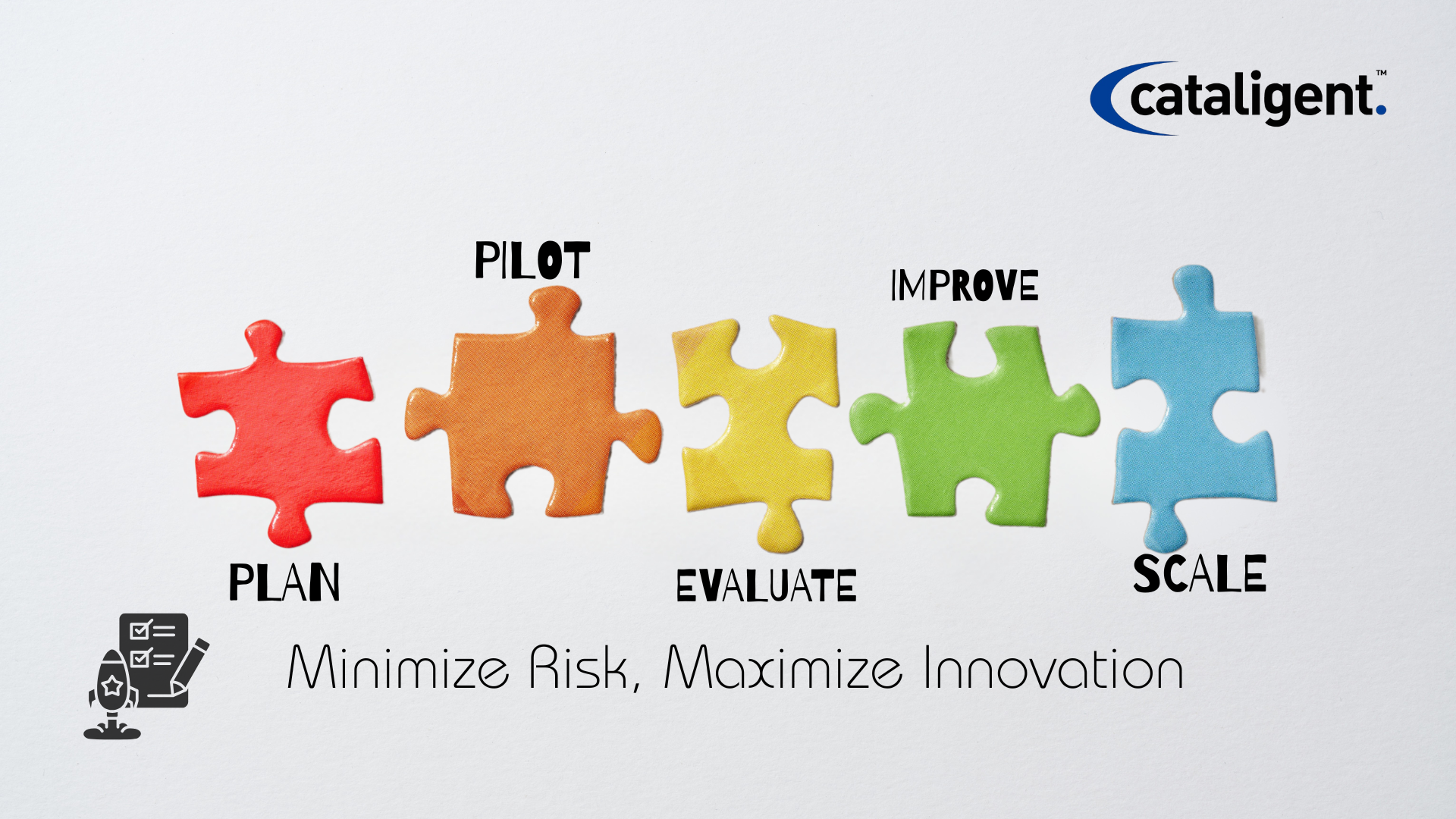
    Reduce Innovation Risks with Pilot Testing

    Introduction

    Imagine launching a groundbreaking product or service with the confidence that it has been rigorously vetted and refined in real-world scenarios. This isn’t wishful thinking; it’s the achievable outcome of strategically employing pilot testing as an integral part of your innovation process. By conducting small-scale trials before full implementation, organizations can significantly reduce innovation risks, avoid costly failures, and gather invaluable insights to optimize their offerings for widespread success.

    This comprehensive exploration delves into the critical practice of using pilot testing to reduce innovation risks. We will meticulously examine what pilot testing entails, thoroughly analyze its profound cost-saving impact, and provide a detailed framework for its effective implementation, covering various methodologies and best practices. By embracing pilot testing, businesses can move forward with their innovations with greater assurance, minimizing potential pitfalls and maximizing the likelihood of market acceptance and profitability.

    Understanding Pilot Testing: A Controlled Experiment for Innovation Validation

    At its core, pilot testing involves conducting small-scale trials of a new product, service, feature, or process in a controlled environment before its full-scale launch or implementation. It’s a crucial step in the innovation lifecycle that allows organizations to gather real-world feedback, identify potential issues, and refine their innovations based on empirical data rather than assumptions.

    Key characteristics of pilot testing include:

    • Small-Scale Deployment: The innovation is introduced to a limited group of users or in a specific geographic area.
    • Controlled Environment: While aiming for real-world conditions, the pilot test is often monitored and managed closely to gather specific data and insights.
    • Focused Objectives: Each pilot test typically has clearly defined objectives, such as evaluating user experience, assessing technical feasibility, or gauging market acceptance.
    • Data Collection: A key aspect of pilot testing is the systematic collection of both quantitative (e.g., usage metrics, conversion rates) and qualitative (e.g., user feedback, satisfaction surveys) data.
    • Iterative Refinement: The data and insights gathered during the pilot test are used to identify areas for improvement and refine the innovation before broader rollout.

    The Cost-Saving Impact: Preventing Costly Failures and Optimizing Investments

    Integrating pilot testing into the innovation process yields significant cost savings by mitigating risks and ensuring that resources are invested wisely in well-validated innovations.

    • Prevents Costly Failures by Testing Ideas in Controlled Environments: Launching a flawed innovation on a large scale can lead to significant financial losses, including wasted development costs, marketing expenses, and potential damage to brand reputation. Pilot testing acts as a crucial safety net, allowing organizations to identify and address critical issues in a controlled environment before committing substantial resources to a full-scale launch. Catching problems early can save significant sums that would otherwise be spent on rectifying a failed product or service.
    • Provides Real-World Data to Refine Innovations Before Mass Production: Assumptions made during the innovation process may not always align with real-world user behavior and preferences. Pilot testing provides invaluable real-world data on how users interact with the innovation, what they like and dislike, and where improvements are needed. This feedback allows organizations to refine their innovations, optimize features, and ensure a better market fit before committing to expensive mass production or widespread implementation. Making data-driven adjustments at this stage significantly reduces the risk of investing in features that users don’t value or a product that doesn’t meet market needs.
    • Reduces Marketing and Launch Costs for Unsuccessful Innovations: Launching a new product or service involves significant marketing and launch expenses. If the innovation ultimately fails due to unforeseen issues or lack of user acceptance, these costs are largely wasted. Pilot testing provides an early indication of potential market reception, allowing organizations to make informed decisions about whether to proceed with a full launch, pivot their approach, or even abandon a flawed concept before incurring substantial marketing and launch expenditures.
    • Optimizes Resource Allocation for Promising Innovations: By identifying promising innovations through successful pilot tests, organizations can allocate their resources more effectively. Instead of spreading resources thinly across multiple unproven ideas, they can focus their investments on those that have demonstrated real-world potential and a higher likelihood of success. This targeted resource allocation maximizes the return on innovation investments.
    • Improves Customer Satisfaction and Reduces Negative Feedback: Launching a well-tested and refined innovation is more likely to result in higher customer satisfaction and positive feedback. Pilot testing allows organizations to address usability issues and incorporate user suggestions, leading to a more polished and user-friendly final product or service. This proactive approach can reduce negative feedback, minimize customer churn, and enhance brand loyalty.

    Implementing Pilot Testing: A Practical Framework for Risk Reduction

    Effectively integrating pilot testing into the innovation process requires a structured approach and a commitment to learning and adapting based on the gathered data. Here’s a practical framework for its successful implementation:

    1. Define Clear Objectives and Scope: Before initiating a pilot test, clearly define the specific objectives you want to achieve and the scope of the test. What aspects of the innovation are you evaluating? What key metrics will you track? Who will be the participants?
    2. Identify Target Participants: Select a representative group of users or customers who align with your target market. The size of the pilot group should be large enough to provide meaningful data but small enough to manage effectively.
    3. Develop a Testing Plan: Create a detailed plan outlining the testing methodology, duration, data collection methods (e.g., surveys, interviews, usage analytics), and success criteria.
    4. Choose the Right Pilot Testing Method: Select the pilot testing method that best suits your innovation and objectives. Common methods include:
      • Beta Programs: Releasing a pre-release version of a product or service to a select group of external users for feedback.
      • A/B Testing: Comparing two or more versions of an innovation (e.g., different features, designs) with different user groups to see which performs better.
      • Usability Testing: Observing users interacting with the innovation to identify usability issues and areas for improvement.
      • Market Testing: Launching the innovation in a limited geographic area to gauge market acceptance and gather real-world sales data.
      • Internal Pilots: Testing new processes or tools within the organization before broader rollout.
    5. Establish Data Collection Mechanisms: Implement robust systems for collecting both quantitative and qualitative data during the pilot test. This might involve using analytics tools, surveys, feedback forms, and conducting interviews or focus groups.
    6. Provide Adequate Support and Communication: Ensure that pilot test participants have the necessary support and clear communication channels to provide feedback and report issues.
    7. Monitor and Analyze Data Regularly: Continuously monitor the data being collected during the pilot test and analyze it to identify trends, patterns, and key insights.
    8. Iterate and Refine the Innovation: Based on the data and feedback gathered, iterate on your innovation, making necessary adjustments and improvements. This might involve modifying features, redesigning interfaces, or even pivoting your approach.
    9. Evaluate Pilot Test Success: Once the pilot test is complete, evaluate its success against the pre-defined objectives and success criteria. Did you gather the necessary insights? Are you confident in moving forward with a full-scale launch?
    10. Document Learnings and Best Practices: Document the key learnings from the pilot test, including what worked well, what didn’t, and any best practices that emerged. This knowledge will be valuable for future innovation projects.

    Conclusion:

    By systematically incorporating pilot testing into their innovation lifecycle, organizations can significantly reduce innovation risks, make more informed decisions about their investments, and ultimately increase the likelihood of launching successful and impactful products, services, and processes. Pilot testing is not just a step in the process; it’s a strategic tool for de-risking innovation and paving the way for sustainable growth.


  • Embracing Modular and Scalable Innovation Models: The Strategic Imperative for Cost-Effective Innovation

    Embracing Modular and Scalable Innovation Models: The Strategic Imperative for Cost-Effective Innovation

    Imagine a world where your products and services effortlessly adapt to evolving customer needs, where new features can be added with minimal disruption, and where you can scale your offerings without incurring exorbitant costs. This isn’t a futuristic fantasy; it’s the tangible reality unlocked by strategically embracing modular and scalable innovation models. By designing products and services with inherent flexibility and adaptability, organizations can significantly reduce development costs, accelerate time-to-market, and achieve cost-effective growth, all while delivering highly tailored and personalized experiences.

    This comprehensive exploration delves into the strategic advantages and practicalities of adopting modular and scalable innovation models. We will meticulously examine what these models entail, thoroughly analyze their compelling cost-saving impact, and provide a detailed framework for their effective implementation, addressing the nuances of design, development, and ongoing management. By embracing modularity and scalability, businesses can transform their innovation processes, unlock unprecedented levels of agility and efficiency, and achieve sustainable growth in an increasingly dynamic and competitive marketplace.

    Understanding Modular and Scalable Innovation Models: A Foundation for Agility and Efficiency

    At their core, modular and scalable innovation models are design and development philosophies that prioritize flexibility, adaptability, and cost-effectiveness. They represent a departure from traditional, monolithic approaches, where products and services are often conceived as single, tightly integrated entities. Instead, they embrace a component-based approach, where functionality is broken down into independent, reusable modules that can be easily combined, modified, and scaled.

    • Modularity: This principle focuses on creating products and services from self-contained, interchangeable components or modules. Each module encapsulates a specific function or feature and has well-defined interfaces for interacting with other modules. This allows for significant reusability, where modules can be reused across different products or services, directly reducing development effort and overall costs. The inherent flexibility of modular design means products and services can be easily customized or adapted by adding, removing, or replacing specific modules. Furthermore, maintainability is greatly improved, as changes or updates to one module have minimal impact on other modules, simplifying maintenance procedures and reducing the risk of introducing errors. Finally, parallel development becomes a viable strategy, where different teams can work on distinct modules concurrently, significantly accelerating the development process.
    • Scalability: This principle focuses on designing products and services that can easily adapt to changing demand or increasing complexity. Scalable systems are engineered to handle larger workloads, accommodate more users, or incorporate additional features without requiring significant redesign or redevelopment. This inherent scalability allows for cost-effective growth, enabling organizations to expand their offerings as needed without incurring disproportionate increases in costs. The adaptability of scalable designs ensures that products and services can evolve to meet new requirements or market demands without major disruptions. Moreover, scalable systems are built to maintain optimal performance levels even under heavy load. Ultimately, scalable designs inherently offer reduced risk, minimizing the potential for systems to become bottlenecks or fail to meet future operational needs.

    The Cost-Saving Impact: Unlocking Efficiency and Reducing Waste Throughout the Product Lifecycle

    Adopting modular and scalable innovation models yields significant cost savings across the entire product or service lifecycle, from initial development to ongoing maintenance and future expansion.

    • Reduced Development Costs: The reusability of modules is a cornerstone of cost reduction, as developing reusable modules significantly reduces the amount of code that needs to be written from scratch for each new product or feature. This directly translates into lower development hours, a faster time-to-market, and reduced overall development expenses. The enablement of parallel development through modularity further contributes to cost savings by shortening the development cycle and reducing associated labor costs. Furthermore, well-defined interfaces in modular design lead to simplified integration, minimizing the occurrence of integration-related bugs and the subsequent rework, which can often be a significant source of cost overruns in traditional development projects. Finally, the testing effort is inherently reduced with modularity, as testing individual modules is generally simpler and faster than attempting to test a complex, monolithic system. The practice of reusing thoroughly tested modules further compounds these cost savings by minimizing the need for redundant testing.
    • Accelerated Time-to-Market: The combined benefits of reusability and parallel development, inherent in modular design, contribute to significantly faster development cycles, allowing organizations to bring new products and features to market more quickly. Moreover, modular designs also lead to a reduced time to customization, enabling rapid adaptation of products to meet specific customer needs, thereby shortening the sales cycle and ultimately increasing customer satisfaction. This faster time-to-market provides a significant competitive advantage, allowing organizations to effectively capitalize on emerging market opportunities and maintain a crucial edge over the competition.
    • Lower Maintenance Costs: Modular systems inherently offer simplified maintenance, as changes or updates to one module have minimal impact on other modules. This significantly reduces the risk of introducing errors during the maintenance process and simplifies the overall debugging efforts. Furthermore, the ability to update or replace individual modules without necessitating a complete system shutdown minimizes downtime and its associated operational costs. Over the long term, modular designs also facilitate longer product lifecycles by enabling easier upgrades and extensions, thereby reducing the need for costly and disruptive replacements.
    • Cost-Effective Scalability: Scalable systems are designed to offer cost-effective growth, as they can be easily expanded to handle increasing demand without requiring significant upfront investments in new hardware or software. This allows organizations to grow their offerings in a financially prudent manner. The underlying principle of scalability also promotes efficient resource utilization, as systems can dynamically allocate resources based on current demand, minimizing waste and optimizing overall resource utilization. This efficient use of resources directly translates into reduced operational costs, such as lower energy consumption and decreased infrastructure maintenance expenses.
    • Enhanced Customization and Personalization at Scale: Modular designs are instrumental in enabling cost-effective tailoring of products and services, allowing organizations to offer a wide array of customized or personalized options without incurring prohibitive costs. Moreover, scalable systems can effectively handle the inherent complexity of mass customization, allowing organizations to tailor products and services to individual customer needs on a large scale. The ability to provide highly personalized experiences can lead to significantly increased customer satisfaction and loyalty, which, in turn, can translate into higher revenues and notably reduced customer acquisition costs.

    Implementing Modular and Scalable Innovation Models: A Practical Framework for Success

    Successfully implementing modular and scalable innovation models requires a strategic and well-planned approach, encompassing sound design principles, efficient development methodologies, and effective ongoing management practices.

    1. Embrace a Modular Design Philosophy: The initial step involves a fundamental shift towards a modular design philosophy. This requires organizations to identify core functionality within their products or services and then strategically decompose these functionalities into independent, reusable modules with clearly defined interfaces. A key principle is to prioritize reusability during the design phase, ensuring that modules are created in a way that allows them to be easily adapted and integrated into various products or services. Establishing clear interfaces between these modules is crucial for ensuring seamless communication and integration. Finally, maintaining loose coupling between modules, minimizing interdependencies, enhances overall flexibility and long-term maintainability.
    2. Adopt Scalable Development Frameworks: To build truly scalable systems, organizations should adopt scalable software development frameworks. This might involve embracing a microservices architecture, where applications are structured as a collection of small, independent services that can be deployed and scaled individually. Leveraging containerization technologies, such as Docker and Kubernetes, provides a powerful way to package and deploy applications in a portable and scalable manner. Furthermore, exploring and utilizing cloud-native technologies, such as serverless computing and message queues, can lead to the creation of highly scalable and resilient systems. Finally, the strategic design of APIs (Application Programming Interfaces) is paramount, as well-defined APIs allow for easy integration with other systems and services, facilitating future expansion and extensibility.
    3. Implement Agile Development Methodologies: The adoption of agile development methodologies is highly conducive to building modular and scalable systems. Iterative development, using frameworks like Scrum or Kanban, allows for breaking down large projects into smaller, manageable sprints. Implementing Continuous Integration and Continuous Delivery (CI/CD) pipelines automates the build, test, and deployment processes, significantly accelerating development cycles and improving overall quality. Employing Test-Driven Development (TDD), where tests are written before the actual code, helps ensure that individual modules and the overall system function correctly from the outset. Finally, fostering DevOps practices, which promote close collaboration between development and operations teams, streamlines the deployment and ongoing management of scalable systems.
    4. Leverage Technology for Automation and Efficiency: Achieving cost-effective innovation through modularity and scalability often involves strategically leveraging technology for automation and efficiency. Implementing automated testing frameworks is crucial for ensuring the quality and reliability of individual modules and the integrated systems. Utilizing Infrastructure as Code (IaC) tools allows for the automation of infrastructure provisioning and management, enabling rapid scaling and deployment. Employing configuration management tools ensures consistency and repeatability across different development and production environments. Finally, implementing robust monitoring and logging systems provides valuable insights into system performance and helps identify potential issues proactively.
    5. Foster a Culture of Innovation and Collaboration: The successful adoption of modular and scalable innovation models requires fostering a strong culture of innovation and seamless collaboration. Encouraging cross-functional teams, bringing together expertise from design, development, marketing, and operations, ensures that modularity and scalability are considered holistically throughout the entire product lifecycle. Promoting knowledge sharing and the reuse of well-tested modules and established best practices across the organization maximizes efficiency and reduces redundant effort. Cultivating a mindset of experimentation and learning from both successes and failures drives continuous improvement in the innovation process. Finally, actively soliciting and incorporating customer feedback is essential to ensure that the developed products and services effectively meet evolving user needs.
    6. Establish Clear Governance and Standards: To ensure consistency and maintainability, establishing clear governance and standards is vital. This includes defining comprehensive modular design guidelines for creating and managing reusable modules. Setting consistent API standards ensures seamless interoperability between different modules and systems. Clearly defining scalability requirements for various products and services provides a target for the design and development teams. Finally, implementing rigorous testing and quality assurance processes guarantees the reliability and optimal performance of both modular and scalable systems.
    7. Continuously Monitor and Optimize: The journey towards cost-effective innovation through modularity and scalability is an ongoing process that requires continuous monitoring and optimization. Regularly tracking the performance of modular and scalable systems helps identify potential bottlenecks or areas where improvements can be made. Conducting thorough cost analysis of development, maintenance, and scaling efforts allows for the identification of opportunities for further cost reduction. Finally, establishing effective feedback loops to gather input from developers, users, and customers ensures that the design and implementation of modular and scalable systems are constantly evolving and improving.

    Conclusion:

    By diligently implementing these principles and practices, organizations can fundamentally transform their innovation processes, unlocking unprecedented levels of agility, efficiency, and cost-effectiveness. Modular and scalable innovation models are not merely a technological trend; they represent a strategic imperative for organizations seeking to thrive in a rapidly evolving and increasingly competitive landscape. They empower businesses to deliver highly tailored experiences, adapt swiftly to changing market demands, and achieve sustainable growth while minimizing waste and maximizing the return on their crucial innovation investments.

  • Outsource Non-Core Innovation Activities: Unlocking Expertise and Speed through Strategic Partnerships

    Outsource Non-Core Innovation Activities: Unlocking Expertise and Speed through Strategic Partnerships

    When it comes to innovation, the process doesn’t always need to be an internal endeavor. As businesses grow and evolve, it becomes increasingly important to focus on core competencies while finding ways to stay ahead of the competition through smart and efficient strategies. Outsourcing non-core innovation activities allows organizations to tap into specialized expertise, reduce research and development (R&D) costs, and speed up their time-to-market for new products or services.

    In today’s fast-paced business world, relying solely on internal resources for innovation can be limiting. Often, the expertise and technology required to push the boundaries of innovation may be outside the reach of internal teams or too costly to develop in-house. By outsourcing specific innovation functions to third-party experts or startups, businesses can stay agile, reduce expenses, and continuously bring fresh, innovative products to market.

    What It Involves: Delegating Specific R&D Functions to External Partners or Startups

    Outsourcing non-core innovation activities refers to the practice of delegating certain parts of the R&D process to external partners, including third-party innovation labs, research organizations, or startups. While the core activities related to a company’s main products and services should generally stay in-house, many businesses find it effective to outsource the specialized aspects of innovation that require expertise they do not possess internally.

    This could involve engaging with external teams for specific functions such as technology development, prototype testing, material research, or regulatory compliance. By doing so, companies can avoid the high costs of building and maintaining their own R&D infrastructure while ensuring that they are still utilizing cutting-edge technologies and specialized expertise to drive innovation.

    Partnering with external innovators can provide several advantages. External experts bring a fresh perspective, specialized skills, and resources that may not be available within the organization. As businesses look to accelerate their product development cycles or research efforts, external partners can help fill knowledge gaps, provide the latest technological advancements, and boost efficiency.

    Cost-Saving Impact of Outsourcing Non-Core Innovation Activities

    Reduces Internal R&D Costs While Accessing Specialized Expertise

    One of the biggest benefits of outsourcing non-core innovation activities is the cost savings. Maintaining an in-house R&D department can be expensive. Internal teams need to be equipped with the latest technologies, and specialized expertise must be brought in at high salaries to stay competitive. Additionally, R&D requires substantial time and resources for development, which can tie up capital and slow down the speed of innovation.

    By outsourcing non-core functions, businesses can access specialized expertise without the need to hire full-time employees or purchase expensive equipment. Third-party innovation labs and research institutions often have the necessary resources and experience to perform tasks like product testing, material research, and prototyping more efficiently than an in-house team might be able to. This leads to significant cost reductions and the ability to direct internal resources towards more critical activities.

    For example, if a company is developing a new technology but lacks specific expertise in artificial intelligence (AI), it can partner with an AI-focused startup or consulting firm to provide the technical know-how needed to integrate AI into their product. Instead of investing heavily in training staff or hiring AI experts, the company can leverage external expertise at a fraction of the cost.

    Speeds Up Time-to-Market for New Innovations

    In industries where speed is key to gaining a competitive edge, time-to-market can make or break a product launch. The faster a company can develop and release new products, the better its chances of gaining market share and staying ahead of competitors. Outsourcing non-core innovation activities significantly reduces the time it takes to bring a product to market.

    External partners, especially startups and third-party innovation labs, can operate more quickly than larger, in-house teams. Startups are known for their agility and flexibility, allowing them to move quickly and iterate on prototypes faster than a more rigid internal R&D team. By partnering with these external innovators, businesses can shorten development cycles, eliminate bottlenecks, and reduce product launch delays.

    For instance, a company looking to introduce a new consumer product might work with an external design lab to quickly prototype several versions, test them with consumers, and iterate on feedback. This fast-paced process allows the company to adjust to market demands without spending months or years developing an internal solution.

    Implementation of Outsourcing Non-Core Innovation Activities

    Use Third-Party Innovation Labs for Specific Research Needs

    Third-party innovation labs are organizations that specialize in helping businesses with specific aspects of the innovation process, such as prototype development, testing, or advanced material research. These labs are typically equipped with cutting-edge technologies and staffed by experts in various technical fields, making them ideal partners for outsourcing specific R&D functions.

    A business looking to create a new material for a product may not have the necessary expertise to research, develop, and test the material internally. Instead, it can partner with a third-party innovation lab that specializes in material science. This way, the business can save time and money by leveraging the lab’s resources and technical knowledge to perform the research needed to innovate and push forward their product development.

    By working with external innovation labs, businesses also gain access to state-of-the-art technologies and facilities that they would otherwise need to invest in themselves. Whether it’s specialized equipment, advanced software, or high-level research capabilities, these labs provide the tools necessary to accelerate development without requiring significant investment.

    Partner with Startups for Agile Product Development

    Startups are often at the forefront of new technologies and innovation trends. Due to their smaller size and nimbleness, startups can rapidly iterate on product designs, perform small-scale tests, and push forward new concepts. Their agile methodologies allow them to operate at speed, which is crucial for businesses looking to innovate quickly.

    By partnering with startups, businesses can tap into new technologies and trends that might be difficult or time-consuming to develop internally. Startups often have deep expertise in specific areas, such as blockchain, machine learning, artificial intelligence, or robotics, making them ideal collaborators for companies looking to stay ahead of the curve.

    A partnership with a startup can allow a larger organization to develop new features, test new products, or launch a service before the competition. For example, a tech company looking to incorporate AI capabilities into its software platform might partner with a machine learning startup to develop the necessary algorithms and train models efficiently. This collaboration allows the tech company to deploy the new feature much faster than if it had tried to build the AI capabilities from scratch in-house.

    Conclusion

    Outsourcing non-core innovation activities is a powerful strategy for businesses aiming to reduce costs, access specialized expertise, and accelerate their time-to-market for new products. By partnering with third-party innovation labs and startups, organizations can remain agile, innovative, and cost-efficient while ensuring they stay competitive in an increasingly fast-paced market.

    The benefits of outsourcing innovation are clear—businesses can leverage cutting-edge technologies, accelerate development cycles, and reduce the financial burden of maintaining in-house R&D teams. Furthermore, outsourcing allows businesses to focus on their core strengths while tapping into external expertise to drive innovation forward.

    As industries evolve and the pace of innovation quickens, outsourcing non-core innovation activities will continue to be a critical strategy for businesses seeking to stay ahead of the curve and drive sustainable growth. By working with the right partners, companies can unlock new opportunities, optimize product development processes, and accelerate their innovation journeys.

  • Implement Employee-Led Innovation Programs: Harnessing In-House Creativity for Cost-Effective Innovation

    Implement Employee-Led Innovation Programs: Harnessing In-House Creativity for Cost-Effective Innovation

    When it comes to innovation, the solutions don’t always need to come from external sources. Often, the best ideas for cost-saving and efficiency improvements are already within an organization—sitting with the employees who are closest to day-to-day operations. By implementing employee-led innovation programs, businesses can tap into this internal talent, creating a culture of continuous improvement and innovation while driving down costs and increasing engagement.

    What It Involves: Encouraging Internal Teams to Contribute Cost-Effective Innovation Ideas

    Employee-led innovation programs involve actively encouraging employees at all levels of the organization to propose ideas that can improve efficiency, reduce costs, or enhance the business. This could mean identifying better processes, suggesting new product features, or recommending improvements to existing workflows. By empowering employees to become part of the innovation process, businesses can foster an environment where everyone feels valued for their contributions.

    These programs can take many forms, from innovation challenges to structured idea submission platforms, where employees have a direct channel to propose solutions. The key is creating a culture where innovation is celebrated, and every employee knows their ideas can make a difference.

    Cost-Saving Impact of Employee-Led Innovation Programs

    Reduces Reliance on Expensive External Consultants

    Consulting firms often charge high fees to provide strategic recommendations and innovation insights, which can be prohibitively expensive, especially for small to medium-sized businesses. By fostering internal innovation, businesses can reduce the need for costly external consultants. Instead, they can rely on the creativity and expertise of their own workforce, which brings intimate knowledge of company operations and customer needs.

    Moreover, internal teams can often identify issues that external consultants might miss. Employees are already familiar with the challenges the company faces, and they’re well-positioned to suggest practical, cost-effective solutions that align with the organization’s goals and culture.

    Enhances Employee Engagement and Productivity

    One of the most significant benefits of employee-led innovation programs is the boost in employee engagement and productivity. When employees feel like their voices are heard and their ideas are valued, they’re more likely to take ownership of their work, feel motivated, and contribute more to the company’s success.

    Encouraging innovation from within also builds a culture of collaboration, where employees from different departments or levels of seniority work together to refine and implement ideas. This not only improves productivity but also fosters cross-functional collaboration, which can lead to more creative solutions and better alignment across the organization.

    Implementation of Employee-Led Innovation Programs

    Create Internal Innovation Challenges and Hackathons

    One effective way to kickstart employee-led innovation is by organizing innovation challenges or hackathons. These events encourage teams to brainstorm and collaborate on solutions to specific problems or challenges the company is facing.

    Hackathons, which are often time-bound and competitive, encourage rapid problem-solving and creative thinking. They also help build a sense of urgency and excitement around the innovation process. Employees can compete individually or in teams to come up with the most effective ideas, and the winning concepts are often implemented or further developed.

    Innovation challenges can also focus on company-wide goals, such as improving customer service, reducing operational costs, or streamlining internal processes. By framing the challenge around clear objectives, employees are empowered to think strategically and come up with solutions that align with broader organizational goals.

    Reward Employees for Submitting Cost-Saving and Efficiency-Improving Ideas

    To incentivize participation, businesses should implement a reward system that acknowledges the contributions of employees who come up with valuable innovation ideas. These rewards can be monetary or non-monetary, ranging from cash bonuses to extra vacation days, public recognition, or career advancement opportunities.

    Rewarding employees for their contributions to innovation not only motivates them to continue submitting ideas but also reinforces the importance of cost-saving and efficiency across the organization. Additionally, recognizing successful ideas helps to create a sense of achievement and satisfaction, further increasing employee engagement.

    It’s also important for businesses to acknowledge the contributions of all employees, even those whose ideas may not be immediately actionable. Acknowledging effort and creativity fosters a positive work environment and encourages continued participation in the innovation process.

    Conclusion

    Implementing employee-led innovation programs is an effective strategy for businesses seeking to innovate cost-effectively and foster a culture of continuous improvement. By empowering employees to contribute ideas, companies not only reduce their reliance on expensive consultants but also engage their workforce in meaningful ways that drive productivity and creativity.

    Through innovation challenges, hackathons, and reward systems, businesses can tap into the creativity of their employees, leading to practical solutions that improve efficiency, reduce costs, and enhance overall organizational performance. More importantly, this approach strengthens the connection between employees and the company’s goals, creating a more engaged, motivated, and productive workforce.

    As companies look to navigate the challenges of the modern business landscape, embracing employee-led innovation is an excellent way to stay ahead of the curve, leverage in-house talent, and drive long-term success.

  • Use Cloud Computing for R&D and Testing: Driving Innovation with Scalable Solutions

    Use Cloud Computing for R&D and Testing: Driving Innovation with Scalable Solutions

    As companies strive to innovate rapidly and efficiently, shifting to cloud-based solutions for research and development (R&D) and testing provides a cost-effective way to access scalable resources. Traditional R&D setups often require significant investment in physical infrastructure, making it difficult for companies to scale operations quickly and affordably. By leveraging cloud computing, businesses can access powerful computing capabilities on demand, reduce overhead costs, and accelerate their innovation cycles.

    What It Involves: Shifting Innovation Infrastructure to Cloud-Based Solutions

    Cloud computing involves moving your organization’s data and operations to remote servers, which can be accessed via the internet, instead of relying on expensive on-premises infrastructure. For R&D and testing, this means utilizing cloud platforms to run simulations, perform calculations, store data, and test products without the need to invest in and maintain physical servers or other hardware.

    Cloud-based systems are particularly useful for businesses looking to experiment, iterate, and scale their innovation efforts. With cloud platforms, businesses can access a vast range of tools and services, from data storage to machine learning algorithms, all hosted remotely and available for use at any time.

    Cost-Saving Impact of Cloud Computing in R&D

    Reduces the Need for Expensive Physical Infrastructure

    One of the most immediate and impactful cost-saving benefits of shifting R&D to the cloud is the reduction in the need for costly physical infrastructure. Traditional R&D requires businesses to purchase, maintain, and upgrade physical servers, storage systems, and computing hardware—expenses that can quickly add up. With cloud computing, organizations can eliminate these capital expenditures and instead pay for computing power on a subscription or usage-based model.

    By using cloud platforms like Amazon Web Services (AWS), Microsoft Azure, or Google Cloud, businesses can scale their resources according to demand, paying only for what they need. This not only reduces upfront costs but also minimizes ongoing maintenance and management expenses associated with physical infrastructure.

    Enables Scalable Computing Power at Lower Costs

    Cloud computing offers businesses the ability to access powerful computing resources that can scale up or down depending on the size of their R&D projects. For example, cloud platforms provide access to high-performance servers and virtual machines that can be provisioned as needed. As projects grow or new needs arise, businesses can instantly increase their computing capacity without worrying about physical limitations.

    This scalability means that businesses no longer need to over-invest in hardware just to accommodate future growth. Instead, they can pay for additional capacity during peak periods and scale back during quieter times, keeping costs in check while still benefiting from advanced computing power.

    Implementation of Cloud Computing for R&D and Testing

    Use Cloud Platforms like AWS, Microsoft Azure, or Google Cloud for R&D

    Leading cloud providers offer a range of tools specifically designed to support R&D efforts. These platforms provide computing power, storage solutions, and advanced analytics capabilities that allow businesses to run simulations, analyze data, and conduct tests efficiently.

    1. AWS (Amazon Web Services): AWS offers a suite of services for data storage, machine learning, data analysis, and computational simulations. AWS can handle high-performance computing (HPC) tasks, enabling businesses to run complex simulations and perform high-speed calculations without the need for dedicated physical servers.
    2. Microsoft Azure: Azure provides a wide range of cloud-based services that can support both R&D and testing. From AI-driven analytics to cloud-based development environments, Azure allows businesses to innovate faster and with lower costs.
    3. Google Cloud: Google Cloud’s tools, such as Google Kubernetes Engine (for managing containers) and BigQuery (for data analysis), enable businesses to conduct extensive R&D without worrying about infrastructure limitations. Google Cloud is particularly effective for data-heavy research, offering advanced machine learning and AI tools.

    These platforms allow businesses to take advantage of a variety of tools tailored for research and development needs, offering a level of flexibility that traditional infrastructure simply cannot match.

    Implement Virtual Testing Environments to Simulate Product Performance

    In addition to running simulations and storing data, cloud platforms enable businesses to create virtual testing environments where products can be tested in realistic settings. For example, companies can simulate user experiences, product functionality, and stress-test systems in a cloud environment before conducting physical tests or launching products to market.

    Virtual testing offers multiple benefits:

    1. Reduced physical prototyping costs: Virtual environments allow companies to test concepts and ideas without building multiple physical prototypes. This reduces material costs and manufacturing time.
    2. Accelerated product validation: With cloud-based testing environments, businesses can quickly simulate product performance under different conditions, adjusting parameters as needed without incurring the cost of multiple rounds of physical testing.
    3. Global collaboration: Cloud computing allows teams from different parts of the world to collaborate on testing efforts in real time, improving innovation speed and efficiency.

    For instance, a software company developing a new mobile app can create a virtual environment in the cloud to simulate user interactions, run stress tests, and track bugs—all before a single line of code is deployed to users. This reduces the chances of issues arising in the later stages of development.

    Conclusion

    Shifting R&D and testing efforts to cloud computing platforms offers businesses a way to reduce infrastructure costs, scale their computing resources efficiently, and accelerate product innovation. The ability to access powerful computing resources on demand, test products virtually, and collaborate with remote teams makes cloud computing an invaluable tool for driving innovation.

    By leveraging AWS, Microsoft Azure, and Google Cloud, businesses can ensure they have the tools necessary to support continuous development and iteration, improving product quality while reducing costs. With cloud platforms, companies can simulate real-world scenarios, validate new ideas quickly, and ensure they bring market-ready products to the forefront faster and more affordably than ever before.

    For businesses looking to remain competitive, cloud computing is no longer just a nice-to-have—it’s a necessity for driving innovation and efficiency in today’s rapidly evolving business landscape.

  • Adopt Agile and Lean Innovation Approaches: Streamlining Innovation for Maximum Impact

    Adopt Agile and Lean Innovation Approaches: Streamlining Innovation for Maximum Impact

    Introduction

    Innovation is no longer confined to research labs or large development teams. With Agile and Lean methodologies, businesses of all sizes can drive transformative change in a more nimble and cost-effective way. By focusing on small, rapid iterations and continuous feedback, these approaches allow companies to develop high-value products while reducing wasted time and resources. The real challenge lies not just in having ideas, but in executing them efficiently and adapting to new insights along the way—this is where Agile and Lean innovation truly shine.

    What Are Agile and Lean Innovation Approaches?

    Agile Innovation

    Agile innovation is an iterative and incremental approach to product development that focuses on flexibility, collaboration, and delivering value early and often. Unlike traditional waterfall models, which rely on linear progress and complete development before release, Agile emphasizes rapid cycles, feedback, and continuous improvement.

    In Agile, product development is broken down into sprints—short, manageable work cycles that allow teams to deliver functional parts of the product in stages. After each sprint, feedback is collected, and adjustments are made based on market or customer input, ensuring the product evolves in line with real-world needs.

    Lean Innovation

    Lean innovation focuses on eliminating waste and optimizing efficiency throughout the development process. The core principle of Lean is to create value while minimizing resources, time, and effort. By emphasizing small, incremental improvements, Lean approaches enable companies to build, test, and refine innovations quickly, reducing the risk of investing heavily in unproven ideas.

    The Lean Startup methodology, developed by Eric Ries, is a key framework within the Lean approach. It stresses the importance of validating assumptions early and using real-world data to guide decisions rather than relying solely on theoretical planning.

    Cost-Saving Impact of Agile and Lean Innovation

    Reducing Waste

    One of the primary cost-saving benefits of adopting Agile and Lean innovation approaches is the ability to reduce waste. Traditional product development often involves creating extensive plans, prototypes, and processes before market testing. If the product or concept doesn’t meet market needs or expectations, these efforts can result in significant financial losses.

    With Agile and Lean, waste is minimized by continuously testing small incremental innovations and making adjustments based on real-world feedback. By validating ideas early in the process, businesses avoid the risk of investing heavily in products that may not succeed. This iterative approach also enables businesses to develop products with higher value and relevance to the target audience.

    Faster Time-to-Market

    Another major advantage of Agile and Lean innovation is accelerated time-to-market. By breaking down development into smaller chunks and continuously releasing features, companies can bring their products to market much faster than traditional methods would allow. This speed is crucial in a fast-moving business environment, where first-mover advantage can lead to a significant market share.

    By testing prototypes and products on a smaller scale (e.g., via pilot tests), businesses can gauge the product’s viability without fully committing all their resources. This allows companies to refine and iterate before launching full-scale production, reducing both time and cost.

    Ensuring High-Value Ideas Move Forward

    The focus on small, iterative testing ensures that only the most successful ideas move forward. Rather than committing substantial resources to unproven concepts, businesses using Agile and Lean approaches focus on creating minimum viable products (MVPs). These are the simplest versions of a product that provide enough value to gather feedback and learn from customers or users.

    Through constant testing, companies can identify which ideas have the most potential for success and refine them, while eliminating those that show little promise. This approach ensures that resources are allocated to ideas with high potential for return on investment.

    Implementation of Agile and Lean Innovation

    Lean Startup Methodology for Product Development

    The Lean Startup methodology is a popular approach to innovation that combines Lean and Agile principles. It emphasizes starting with an idea, creating a minimum viable product (MVP), testing it in the market, and using real-world feedback to iterate and improve the product.

    Here are the core components of the Lean Startup methodology:

    1. Build: Start by creating a basic version of the product or service (MVP) that includes the core features needed to address the problem or need you’ve identified.
    2. Measure: Once the MVP is built, measure its performance by gathering data from early adopters and potential customers. This includes tracking user engagement, gathering feedback, and identifying areas for improvement.
    3. Learn: Based on the data collected, evaluate the results and determine whether the product meets customer needs. Use this information to pivot (make a significant change to the product or service) or persevere (make incremental improvements).

    By following this cycle of Build-Measure-Learn, businesses can test ideas quickly, reduce wasted effort, and ensure that they are creating products with actual market demand.

    Conducting Small-Scale Pilot Tests

    Before scaling up a product or service, businesses should conduct small-scale pilot tests. These tests allow companies to release their product in a controlled environment, gather feedback, and make improvements before launching a broader rollout.

    Small-scale tests can be done in several ways:

    1. Beta Testing: Release the product to a small group of early adopters who are willing to provide feedback and test the product in real-world conditions.
    2. A/B Testing: Test two or more versions of a product or feature to see which performs better with customers.
    3. Soft Launch: Introduce the product in a limited market or geographic area before expanding it to a wider audience.

    By using pilot tests, companies can identify potential flaws or issues early in the process, which saves time and money in the long run.

    Overcoming Common Challenges in Agile and Lean Innovation

    Balancing Speed and Quality

    While Agile and Lean approaches emphasize speed and efficiency, it’s essential not to compromise on quality. In some cases, the desire to get to market quickly can lead businesses to release products that don’t meet the expected standards. Companies must maintain a balance between rapid development and ensuring that the product meets customer needs and expectations.

    To mitigate this risk, businesses should maintain clear communication with stakeholders, establish quality metrics, and ensure that iterations are thorough and reflect actual customer feedback.

    Managing Organizational Change

    Adopting Agile and Lean methodologies often requires a significant shift in organizational culture and mindset. Traditional, hierarchical structures may need to be redefined to promote collaboration, autonomy, and cross-functional teams. Training employees to adopt Agile principles, as well as fostering a culture of continuous improvement, is essential to successfully implementing these approaches.

    Investing in Agile coaching and providing ongoing support to teams can help organizations make the transition smoothly and foster an environment conducive to innovation.

    Conclusion

    Adopting Agile and Lean innovation approaches is an effective way for businesses to stay competitive in a rapidly changing market. These methodologies help reduce waste, speed up development, and ensure that only high-value ideas move forward. By focusing on iterative development, continuous feedback, and small-scale testing, businesses can innovate more efficiently and cost-effectively.

    With the Lean Startup methodology and Agile sprints as guiding principles, companies can create minimum viable products (MVPs), test their ideas, and make data-driven decisions that optimize resource allocation. Implementing these approaches requires careful planning, cross-functional collaboration, and a willingness to adapt to changing conditions. However, the long-term benefits—such as reduced development costs, faster time-to-market, and more successful products—are well worth the effort.

    By embracing Agile and Lean innovation, businesses can achieve greater agility, responsiveness, and efficiency in their innovation processes, enabling them to meet the demands of today’s dynamic market while staying ahead of the competition.